
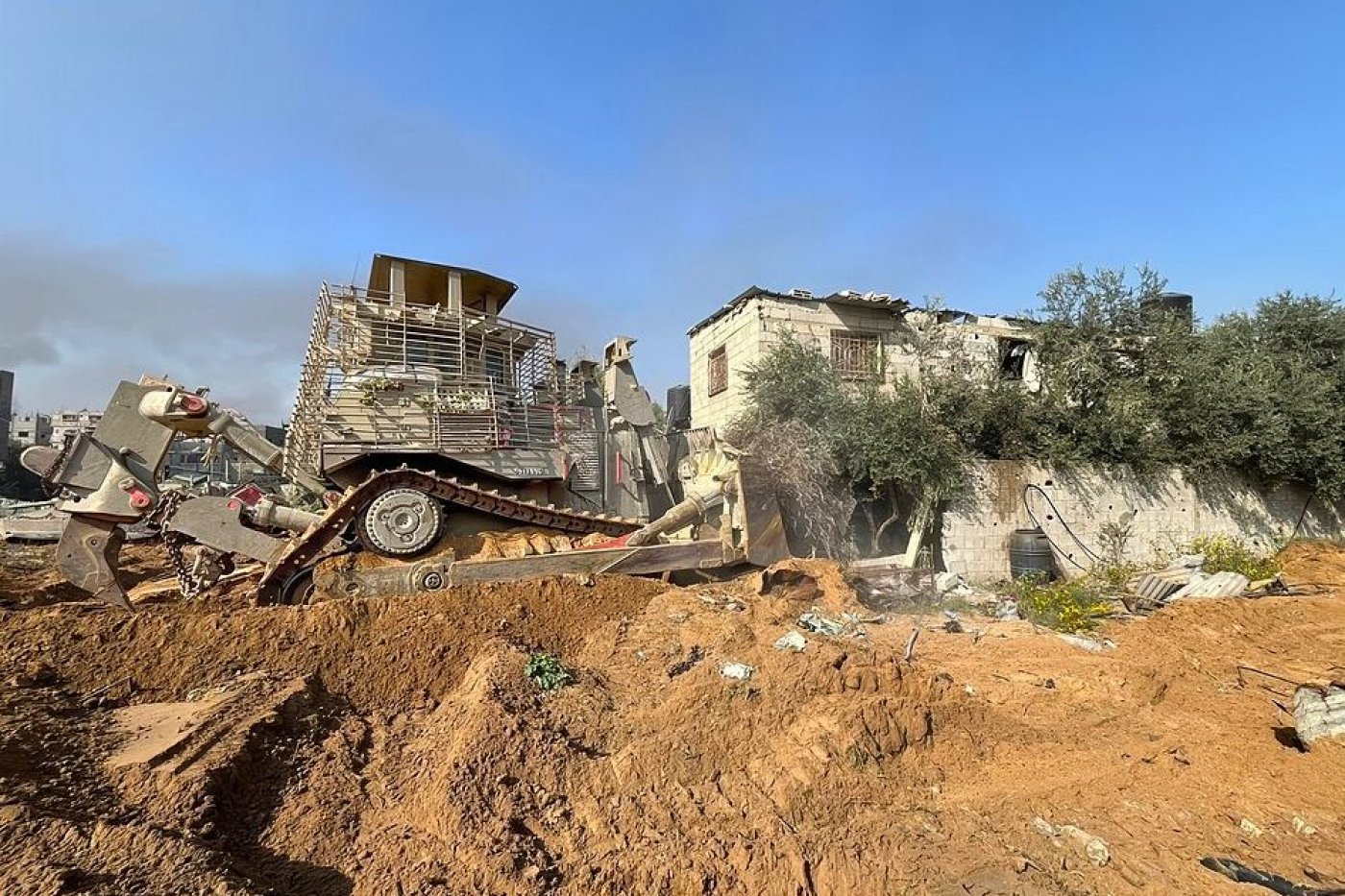
New Delhi: In both Israel and India, bulldozers have become tools of state power, transforming homes into sites of punishment and public spectacle. In the occupied Palestinian territories, Israeli authorities have for decades demolished Palestinian homes as a form of collective punishment, targeting families of accused individuals rather than only the accused and, often, the larger community.
Scholars and human rights observers (here, here and here) describe these as “punitive home demolitions” that contravene international law. Article 33 of the Fourth Geneva Convention states that, “No protected person may be punished for an offence he or she has not personally committed. Collective penalties and likewise all measures of intimidation or of terrorism are prohibited. Pillage is prohibited. Reprisals against protected persons and their property are prohibited.”
In India, particularly in BJP-ruled states, a similar pattern has clearly emerged over the last five years, as this series has noted. Muslim homes and properties have been demolished following protests, alleged crimes, or peripheral associations with accused individuals. The practice has continued even after Supreme Court bans, highlighting a growing impunity in the use of state power.
In June 2022, senior research associate at the Centre for Policy Research in New Delhi, Angshuman Choudhury, noted the parallels in an interview to Coda, a global journalism collective: “There is an uncanny similarity between the modus operandi of the Hindu nationalist Modi government and how the Israeli state has been conducting itself in Palestine. Just as Israel has used bulldozers to punish Palestinians, India uses them to create a chilling effect against Muslims who resist or protest.”
As experts have noted (here and here), demolitions expose structural weaknesses in democratic institutions and highlights the profound human cost of state-sanctioned demolition.
Ideological Affinities
Pranay Somayajula, a writer and advocacy coordinator for Hindus for Human Rights, a US-based advocacy group, argues that beyond personal or military ties, a shared ideological logic shapes these policies. Hindutva in India and Zionism in Israel both seek to establish majoritarian states—Hindu and Jewish, respectively—while framing minority populations as threats to national homogeneity.
Both regimes foster a sense of victimhood among the majority, justify repression, and deny equal citizenship rights to minorities. They adopt an exclusionary approach to national minorities, turning them into scapegoats. Criticism of either government is labelled Hinduphobia or anti-Semitism.
Both also link national security concerns to minority populations, casting suspicion on Muslims as potential threats.
The consequences are evident in state practice. In Israel, homes of accused Palestinians are demolished; in India, families of Muslim men accused of crimes, protests, or cow slaughter-related incidents have faced similar destruction.
Legal Facades & Bureaucratic Tactics
In Israel, demolition notices are often delivered just hours before action, leaving residents no time for legal recourse. Jeff Halper, an anthropologist and Director of the Israeli Committee Against House Demolitions, describes a typical pattern: “In Jerusalem, a favoured practice is to deliver an order at night and demolish early in the morning.”
“What is notable about this policy of punitive demolitions (of the Israeli government) is that it is meant to be a form of collective punishment, designed to punish those related to the accused, instead of the accused themselves,” Choudhury wrote in 2022 in Scroll.in.
India mirrors this approach. Demolition notices are typically issued with minimal notice. Authorities invoke anti-encroachment or building regulations to present a veneer of legality while leaving residents powerless to contest the action.
The public messaging differs in the two countries. In Israel, demolitions are justified as security measures. In India, public rhetoric portrays Muslims as threats to the Hindu majority, linking demolitions to alleged crimes or protests. The legal justifications often serve as formalities, while the underlying intent is punitive.
Collective Punishment, Public Spectacle
Both states deploy demolitions as tools of collective punishment. In Israel, family members of accused Palestinians are targeted; in India, entire families of accused Muslim men have been affected.
In Prayagraj, as the first essay in this series detailed, activist Javed Mohammed’s home was demolished after his arrest, affecting his wife and two daughters. In Nuh, Aas Mohammad lost his modest home and two tea stalls after communal violence.
In Palestine, similar demolitions extend beyond homes to townships, farmland, orchards, and water resources, aiming to erase both physical and cultural presence. Scholars Shivangi Mariam Raj and Somdeep Sen argue that India’s demolitions draw inspiration from this pattern, targeting Muslim heritage and culture.
Demolitions are often public spectacles designed to communicate authority in both countries.
Bulldozers operate in daylight, sometimes with media coverage, creating visual evidence of state power.
Afreen Fatima, Javed Mohammed’s daughter, described the dual message: “To the Hindu population, we are showing Muslims their place. To Muslims, stay in line, or your homes will be demolished.”
In Israel, too, demolitions are highly visible, intended to deter perceived threats (here and here), reinforcing a sense of fear and compliance, amplifying the punishment, experts said, beyond the immediate victims.
Human Cost Of Domicide
Scholar Ghazala Jamil explains that domicide, the destruction of one’s home by the state, erodes both material security and identity. Families lose not only shelter but also the sense of belonging and safety. Each demolition reverberates through communities, causing long-term trauma.
In India, residents have recorded their experiences with domicide:
- In Jahangirpuri, Delhi, 40-year-old Akhtanum watched her only home reduced to rubble. “How can they do this?” she wept, speaking to Scroll in 2022. “This is the only home I have known.”
- In Prayagraj, Tauheed Fatima, a 25-year-old teacher of Urdu and Arabic, was haunted by the noise of bulldozers on the day of demolition, four days before she was to move into the house her father had built for her in 2023. She never got to live there.
- In Khargone, baker Amjad Khan, 45, father of six, saw his bakery demolished in 2022 after communal tensions; he rebuilt but expressed his fear: “Being Muslim in India today means that anything can happen to you at any time.”
In the West Bank and Gaza in Palestine, demolitions have included entire villages, agricultural lands, and water infrastructure, erasing communities’ ability to sustain life.
- Human rights monitoring organisations report that thousands of Palestinians in rural communities across Area C of the West Bank are subjected to home demolitions, evictions, and ongoing threats of displacement, as authorities dismantle housing and essential infrastructure, intensifying pressures that force communities to leave.
- A 2025 assessment by the FAO-UNOSAT found widespread devastation: by late 2025, about 87% of Gaza’s farmland, greenhouses, and irrigation wells had been damaged or destroyed, severely undermining food production and livelihoods.
- The United Nations found that demolition campaigns in the West Bank included water wells, sanitation and hygiene-related structures, and cisterns.
Cultural Erasure
Demolitions often target not just homes but also cultural and religious landmarks. In India, mosques, dargahs, mazaars, and madrassas have been razed. Scholars argue this echoes Israel’s erasure of Palestinian history, legacy, and culture from the landscape.
Writers Shivangi Mariam Raj and Somdeep Sen, who view demolitions in India as having been at least in part inspired by the Israeli treatment of Palestinian land, buildings and people, describe the impact: “This seems to be inspired by Israel’s effort to systematically erase Palestinian history, legacy, and culture from the landscape.”
The persistence of demolitions highlights the limits of legal safeguards. The Polis Project, a New York-based website and a research and journalism organisation, explains: “The law alone cannot stop the bulldozer. It is not merely being misused; it is being reinterpreted, retooled, and performed as violence.”
Even rare court orders for compensation do not hold officials personally accountable. High courts have occasionally intervened, but no public authority has faced meaningful censure for lawless demolitions, as the previous part of this series noted. Civil services and police have largely complied with partisan directives, undermining constitutional obligations.
‘The Essence Of All I am’
Writing in the Indian Express in 2022, the Supreme Court lawyer Kapil Sibal—who has argued several cases where Muslims have been at the receiving end of State action—said that his home “is not just a brick-and-mortar structure.”
“Within its womb lies all that I cherish,” he wrote. “It saves me from the heat of the blazing sun, protects me from chilling winter nights, and holds the memories that live with me.”
His home, wrote Sibal, was a place “where I can freely breathe, laugh, cry, and give vent to my emotions, away from the gaze of outsiders. It may be a palace or a little hut, but it is my space”.
“When you allow a bulldozer to wade through it, you don’t just destroy a structure, you destroy the essence of all I am,” wrote Sibal.
“A bulldozer is a symbol of power, emotionless, cold as steel. When it razes my home, it seeks to demolish not just the structure I built, but my courage to speak up.”
(Harsh Mander is a peace and justice worker and writer. Omair Khan provided research support. This work was supported by Diaspora In Action for Democracy and Human Rights.)
Get exclusive access to new databases, expert analyses, weekly newsletters, book excerpts and new ideas on democracy, law and society in India. Subscribe to Article 14.