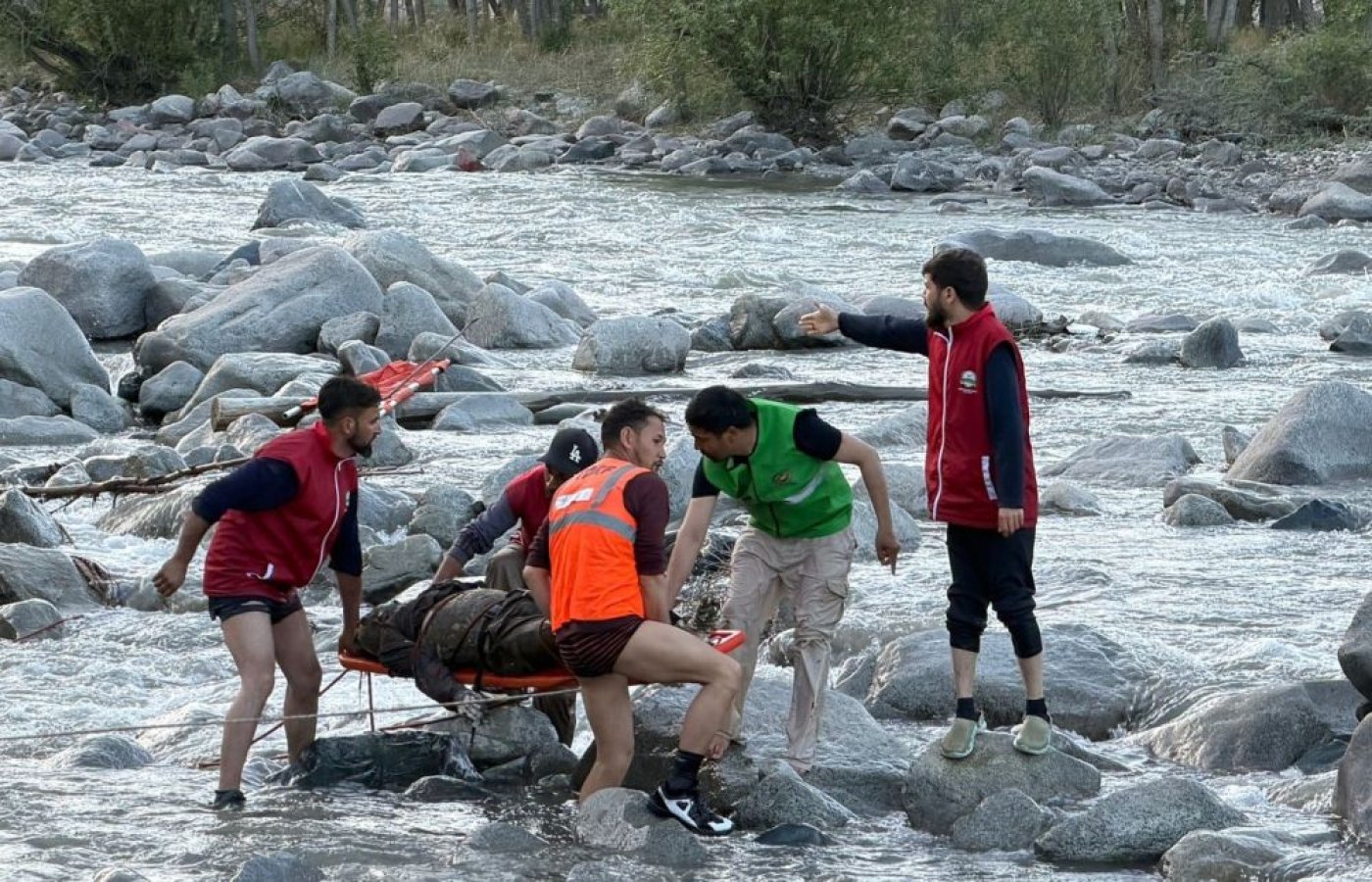
Hundurman, Kargil (Ladakh): On the afternoon of 20 March 2026, nine-year-old Zulqarnain Ali and his six-year-old cousin, Ali Akbar, left home in Hunderman, the last inhabited village before the Line of Control (LoC) in Ladakh's Kargil district, to play by the Suru River.
The boys slipped into the icy, fast-flowing water, swollen where the Suru meets the Shingo River, which crosses the LoC from Pakistan-administered Gilgit-Baltistan. Akbar's body was recovered the next day near Hunderman. Zulqarnain's was not.
His family searched the riverbanks and filed a missing-person complaint with the Kargil police. Two days later, relatives living across the LoC called on WhatsApp with the news they had dreaded: Zulqarnain's body had been found downstream in Pakistan-administered territory.
Hunderman itself was under Pakistani control until 1971, and the shifting LoC left many families divided across the border. Today, relatives often learn through social media or cross-border phone calls—not official channels—that the bodies of loved ones swept away by the river have been found.
“I never believed I would get my son's body back,” said Zulqarnain's father, Mohammad Hussain, 37, a government schoolteacher. “Everyone has to die, but it hurts more when the body of your loved one is not returned.”
Ladakh has no recognised humanitarian exchange point for the return of bodies. Families can wait weeks or months for their loved ones to be repatriated—if they are returned at all.
“Countless bodies have been buried in Pakistan-administered Gilgit-Baltistan,” Hussain said.
After six weeks of negotiations between Indian and Pakistani officials, Zulqarnain Ali’s body was handed over at the Teetwal Bridge in Jammu and Kashmir’s Kupwara district on 5 May 2026 and returned to his family in Kargil.
Such cross-border transfers are rare, with many families waiting months—or never recovering the bodies of loved ones swept across the Line of Control.
‘Give Our Body Back’
Zulqarnain's case is the exception. Those washed across the Line of Control into Pakistan-administered territory are rarely brought home, leaving families waiting months—or forever—for a final farewell.
On 21 July 2023, Shabir Ahmed, 35, a contractor from Hulyal village in Drass, lost his life in a midnight accident when his car fell off the Kaksar bridge in Kargil into the Drass River.
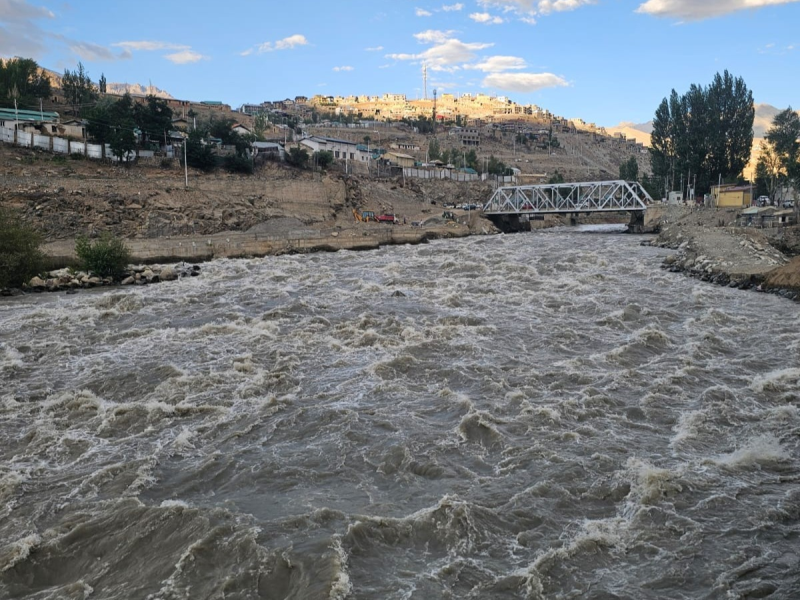
His colleague Mustafa, who was driving, was found inside the vehicle. Ahmed and three others were swept across the Line of Control.
Thirteen days later, Ahmed's family learnt—not through official channels but from social media posts originating in Pakistan-administered Gilgit-Baltistan—that his body had been recovered in Kharmang.
“We watched his funeral online but could not attend because Kharmang is under Pakistani control,” said Ahmed’s cousin, Mohammed Hussain. “Give us his body. We will bury him in India.”
Despite appeals to officials on both sides of the LoC, including the Gilgit-Baltistan government and the Kharmang district administration, Ahmed’s body was never returned.
“It is a dream that will never come true,” Hussain said. “They didn't hand him over.”
A Recurring Tragedy
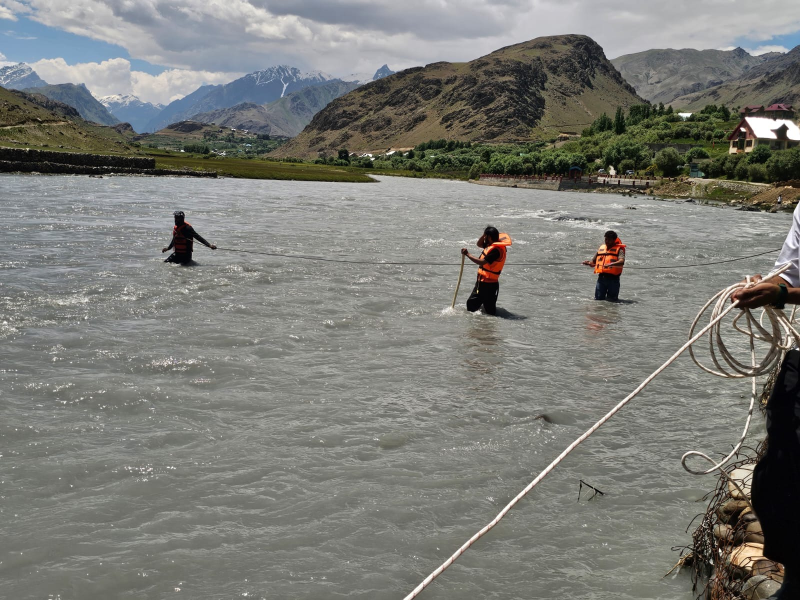
“There have been at least 10 or 12 cases in the last two years where we could not recover bodies because strong river currents carried them into Pakistan,” said Javid Ali, who heads Al Mehdi Scouts, a volunteer group of retired army personnel that conducts rescue operations in the Kargil-Drass region.
The group helps search for and recover bodies from the Shingo and Suru rivers, whose currents become especially treacherous in summer as melting snow and ice swell their flow.
According to 2024 National Crime Records Bureau's (NCRB) data for accidental deaths, the latest year for which data is available, 12 people drowned in Ladakh, while the 2023 data show that nine people drowned in the union territory that year.
The NCRB’s crime in India report for 2024 showed that 83 missing people were untraced or not recovered in Ladakh that year.
Article 14 contacted the senior superintendent of police, Kargil, via phone and email on 19 June 2026, to request data on the number of bodies found or buried across the LoC. We did not receive a response. We will update the story when we do.
The Al Mehdi Scouts listed some of the recovery attempts they had participated in over the last few years.
In addition to the March 2026 incident with the two children from Hunderman, the body of a 22-year-old man was recovered from the Suru River in April 2026, followed by the recovery of the body of a 24-year-old Nepali man from the same river in May 2026.
Among those who remain untraced, they said, included an 18-year-old boy from Karkit Budgam, a village in Kargil, who fell into the Shingo River in May 2025, and a 22-year-old woman from Drass, in Ladakh, who fell into the Drass River in June 2025.
The most recent search they were involved in was for the body of Sajjad Ali, 30, from Barsoo, Kargil, who drowned while washing clothes in the Suru River at Titichumik, Kargil, on 19 July 2026. His body is yet to be found.
Two more young men from Drass could not be found after their vehicle plunged into the river following an accident while they were travelling from Kargil to Drass in March 2025.
They also mentioned the case of a boy from Kharbu Kargil, who fell into a river in April 2025 and has not been found, as well as that of two young men who went missing after a car accident near Kaksar, in the Kargil district, in 2023. A 30-year-old man from Chanigund, Kargil, is similarly listed as missing after falling into a river.
Several older cases remain unresolved, including two boys from Hardass in Drass, who fell into the Shingo River in 2018, a 25-year-old woman from Kaksar who fell into the same river in 2022, and an eight-year-old girl from Chanigund who went missing after falling into the Shingo River in June 2023.
Javid Ali, of the Al Mehdi Scouts, said they believed that most of these bodies had been washed across the LoC.
“We came to know that bodies have been found there via social media,” he said.
In a 2023 incident, the body of a 28-year-old Indian woman, identified as Belqees Banoo, who had gone missing in the Kargil district of Ladakh, was found in Pakistan's Gilgit-Baltistan region. The woman was buried in the Kharmang district, according to Muhammad Jaffar, the deputy commissioner of the district, the Dawn newspaper reported.
Mohd Jaffer Akhoon, chief executive councillor of the Ladakh Autonomous Hill Development Council in Kargil, told Article 14 that they have raised concerns with the Indian government multiple times but have yet to receive a response.
“Pakistan is not denying that dead bodies come from Indian territory of Ladakh,” said Jaffar and added that after finding bodies, Pakistan claimed they started a “feasible mechanism” to hand the bodies over to the Indian army, “but we demand the Government of India establishes an exchange point in the Kargil region”.
‘A Miracle’
Zulkarnain Ali’s family had to wait for 46 days for the return of his body to Indian authorities. Yet, since the Ladakh region lacks a recognised exchange location for these kinds of humanitarian cases, they are one of the luckier families.
“I am 31, I have never seen Pakistan hand over a dead body to Ladakhi residents. Handing over Zulkarnain was a miracle,” Javid Ali, of the Al Mehdi Scouts, told Article 14.
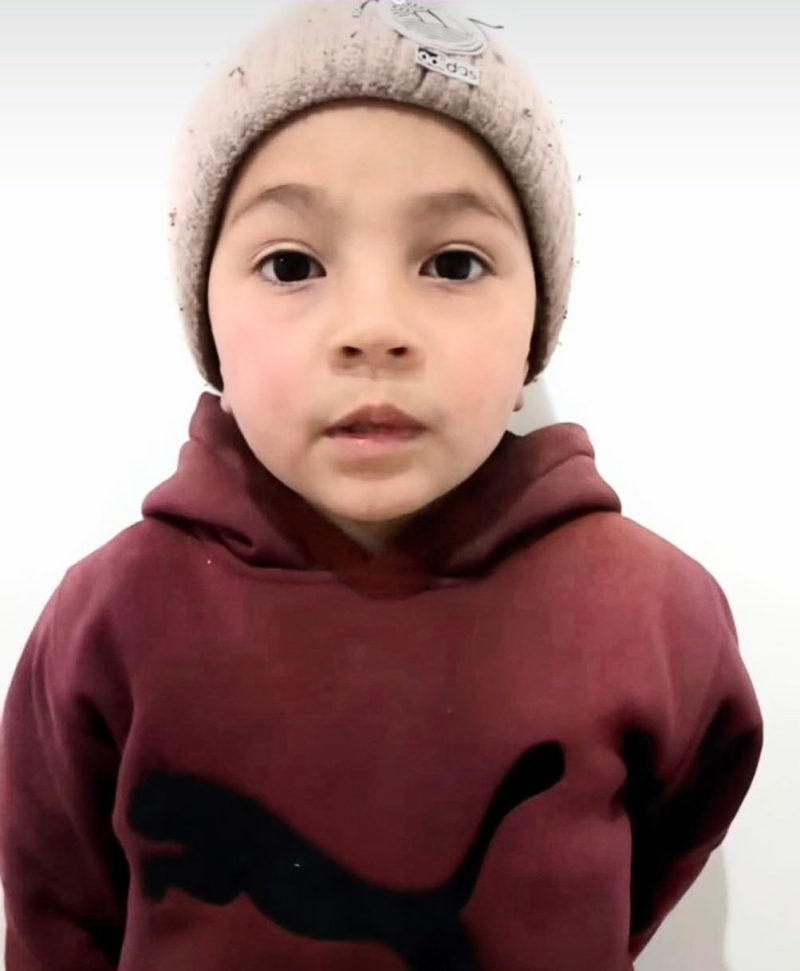
The handover took place at Kupwara’s Teetwal Bridge, which was initially constructed as a crossing point between the two sides of Kupwara in Jammu & Kashmir (J&K) more than 450 kilometres from his family's home.
Closed since 2019, the crossing was reopened on humanitarian grounds for just this handover.
The mortal remains were received at the bridge, Ladakh’s top police officer confirmed, before it was transported home.
Residents and activists in Kargil urged both countries to establish a designated exchange point along the Ladakh–Baltistan border to ensure the timely and dignified return of other such bodies.
No Exchange Point
India and Pakistan had five official border crossings in J&K. In the past, the official crossing locations along the LoC were essential humanitarian lifelines that allowed India and Pakistan to exchange bodies, conduct cross-border trade, and for families split by the border to visit their relatives.
India suspended all cross LoC travel and commerce in April 2019, claiming that the routes were “being misused by the Pakistan-based elements for funnelling illegal weapons, narcotics and fake currency”.
With no exchange point in Ladakh, the Kaman post in Uri, Kashmir, nearly 500 km from Ladakh, remains the only operational exchange point for humanitarian handovers, including the transfer of bodies.
Hundreds of families in Kashmir and Kargil have been left in limbo as a result of the restrictions. They said they have found it more and more difficult to retrieve the bodies of those who are swept beyond the LoC by rivers or pass away close to the border, which prolongs grief and complicates humanitarian coordination between the two nations.
An Official Mechanism
Many organisations in Kargil have urged the governments of India and Pakistan to establish an official mechanism for the exchange of bodies on humanitarian grounds.
One of Kargil’s leading socio-religious organisations, the Jamiat ul Ulama Isna Asharia had previously called on the governments of Pakistan and India to set up an exchange point for victims of cross-border tragedies.
So has the Kargil Democratic Alliance (KDA), a political and social coalition based in Ladakh’s Kargil district. It was formed in 2020 after the abrogation of Article 370 and the reorganisation of the former state of J&K.
Sajad Kargili, chairman of the KDA, told Article 14 that Pakistan does not deny the existence of the dead bodies and has reported when bodies are found.
“The problem is that there is no positive approach from Pakistan regarding the return of these bodies,” Kargili said. “There should be no politics over dead bodies. This is a humanitarian issue, and both sides need to address it seriously because it is a human concern.”
He said that governments on both sides must recognise that they are the same people; they are from the same race, culture, and family ties. They have been divided by a border that they did not create.
“When people drown in the river, and their bodies reach Baltistan, information often comes through WhatsApp groups, Facebook, and other social media platforms,” Kargili said. “We are then compelled to contact people across the border.”
He said that it would be preferable if there were an official mechanism for the return of bodies so that families do not have to rely on informal channels during such difficult times.
‘The Right To A Dignified Disposal’
Given that border areas continue to witness such tragedies year after year, Vertika Mani, a human rights lawyer and secretary of the People's Union for Civil Liberties (PUCL), said that it is imperative to establish a dedicated humanitarian coordination point and a robust repatriation mechanism to facilitate cross-border cooperation and the dignified humanitarian handover of mortal remains.
Mani said that the right of the dead to a dignified disposal has long been recognised in international law.
The Geneva Conventions of 1929 first codified obligations relating to the respectful treatment of the dead. The four Geneva Conventions of 1949, to which both India and Pakistan are full signatories and states parties to, further developed these principles.
The obligation to treat the dead with dignity is recognised under customary international humanitarian law, particularly Rules 113 and 115 of the International Committee of the Red Cross study on customary international humanitarian law.
Additionally, the International Covenant on Civil and Political Rights, which India ratified in 1979 and Pakistan acceded to in 2010, has consistently emphasised that respect for human dignity extends beyond life and informs the treatment of the dead and their families.
“Unless there is a legitimate forensic or humanitarian justification, such conduct (the refusal to return bodies) violates obligations concerning the respectful treatment of the dead and the rights of families to know the fate of their relatives,” said Mani. “It is inconsistent with obligations requiring the respectful treatment, identification, and repatriation of the dead wherever feasible.”
(Irshad Hussain and Mubashir Naik are independent journalists based in Jammu and Kashmir.)
Get exclusive access to new databases, expert analyses, weekly newsletters, book excerpts and new ideas on democracy, law and society in India. Subscribe to Article 14.