
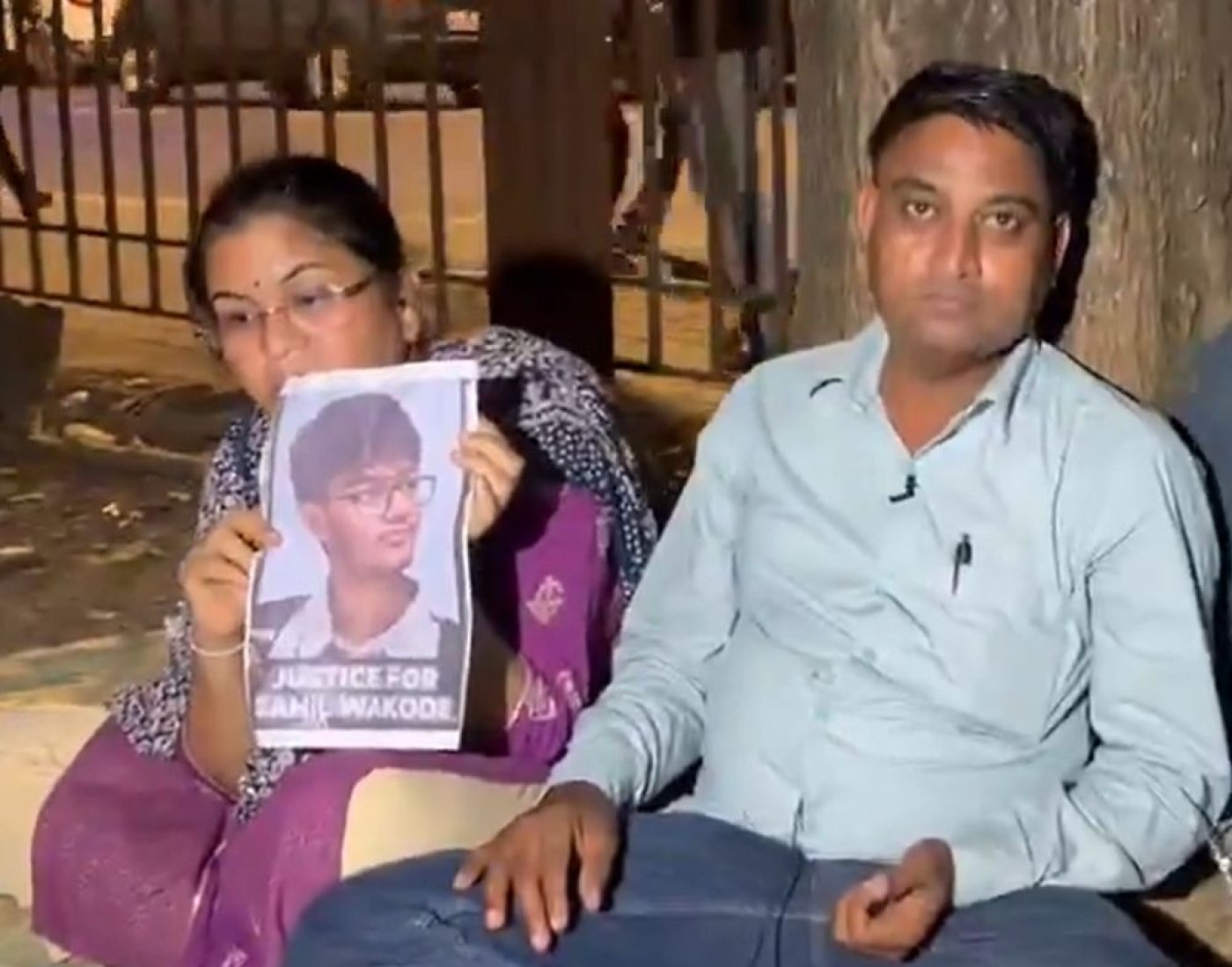
Hyderabad: The death by suicide of Sahil Wakode, a young Dalit student at IIT Bombay, on 18 September has—again—highlighted the persistence of ancient schisms in Indian society and how they have crept into every institution. His parents have alleged that caste discrimination and harassment by one of his faculty members contributed to his death.
Even before the investigation and due process could take their course, some oppressor-caste commentators on television and social media questioned the allegations of caste harassment, expressed support for the accused professor, attributed responsibility for Sahil’s death to him, and questioned his family’s invocation of the Scheduled Castes and the Scheduled Tribes (Prevention of Atrocities) Act, 1989. The focus thus shifted from the allegation of caste harassment to claims of misuse of the Act before the facts had been established.
Wakode was not the first Dalit student at an IIT to die by suicide. Forty-five students died by suicide across 23 IITs between 2020-21 and 2024-25; 28, or 62%, were from SC, ST or OBC communities, according to data collected from the IITs for a Lok Sabha question.
His death must be understood in the wider context of caste discrimination in educational institutions. In her book, “The Caste of Merit”, anthropologist Ajantha Subramanian examines how upper-caste ideas of “merit” operate in elite institutions such as the IITs. Dalit students entering through reservations can be perceived as lacking merit, a stigma that can contribute to their exclusion and marginalisation.
The Law & Its Effect
The Atrocities Act was enacted to address caste-based humiliation and violence. Its Statement of Objects and Reasons recognised that education had enabled Scheduled Castes and Scheduled Tribes to assert their rights, provoking attempts by dominant-caste groups to “cow them down and terrorise them”.
It acknowledged that existing criminal laws were “inadequate to check these crimes”, making special legislation necessary. As the Supreme Court explained in Prathvi Raj Chauhan vs Union of India (2020), the legislation addresses the gap between constitutional rights and the continuing oppression of these communities.
The Atrocities Act was significant because it recognised that caste violence required a specific legal response. It strengthened the ability of Dalits and Adivasis to seek justice and placed specific obligations on the state to address caste-based offences.
The Act serves two connected purposes: preventing atrocities through deterrence, and securing justice through prosecution, protection, relief and rehabilitation. Its provisions recognise that caste oppression can involve humiliation, dispossession, and social and economic exclusion as well as physical violence.
The Act’s provisions also seek to ensure that victims can participate in proceedings and raise concerns about the investigation. Section 15A, for instance, requires that victims or their dependents be notified “at any proceeding” under the Act and given an opportunity to be heard. This enables them to raise concerns about deficiencies in an investigation and participate in proceedings concerning their cases.
The Atrocities Act has been invoked in thousands of cases each year. For instance, in 2024, 5,192 cases ended in conviction, involving 10,839 persons convicted. These included cases in which persons in positions of authority were held accountable for offences against Dalits and Adivasis.
The Implementation Gap
In 2021, a Bikaner court convicted a teacher of rape and the principal and hostel warden of abetment to suicide in the case of minor Dalit student Delta Meghwal.
The convictions included offences under the Atrocities Act. Instead of reporting the rape, the principal and warden had made her write an apology, while previously forcing her to wash utensils and clean rooms in her hostel.
Like Sahil, Delta Meghwal was subjected to character assassination after her death in 2016. A Hindi daily ran a campaign questioning her character and claimed she had been in regular contact with the accused teacher. Her educational institution portrayed the rape as consensual. Yet the trial resulted in convictions.
While the appeal is pending in the high court, Meghwal’s case illustrates why allegations concerning a deceased student should be tested through due process, and why complaints of caste oppression require investigation and adjudication on the evidence.
The Atrocities Act, however, faces a significant implementation gap. Government statistics show that registered cases concerning scheduled castes increased from 45,995 in 2020 to 48,669 in 2024.
This may reflect more atrocities, greater willingness or ability to report them, or both. Yet, at the end of 2024, 287,694 cases were pending trial—nearly six times the number of cases registered that year, including cases registered in earlier years. The backlog had grown by 62% from 177,379 cases in 2020.
For complainants and their families, the large backlog means that cases can remain unresolved for years.
The Supreme Court's Record
Opponents of the Act invoke low conviction rates to suggest that complaints are false. In 2024, conviction rates stood at 33.9% in cases concerning scheduled castes. These percentages concern cases in which trials were completed, not all registered complaints. They therefore cannot, by themselves, establish that the remaining cases were fabricated.
In Subhash Kashinath Mahajan vs State of Maharashtra (2018), the Supreme Court relied in part on concerns about low conviction rates when framing additional conditions on investigation and arrest under the Act. The Court subsequently recalled those directions, observing that the earlier judgment had been “discriminatory” against SC/ST complainants.
A police closure report or an acquittal does not, by itself, establish that a complaint was false. The Supreme Court later recognised in Hariram Bhambhi vs Satyanarayan (2020) that defective investigations and inadequate prosecution can result in acquittals, which can then contribute to the perception that complaints under the Act are false.
The Court footnoted the article “Misconstruction of the Anti-atrocities Act’s Misuse” by Sthabir Khora in Economic & Political Weekly, which cautioned against treating police classifications as proof that complaints were false while overlooking investigative bias and pressure on complainants.
Under unequal social conditions, fear of violence, retaliation or public humiliation can deter Dalits and Adivasis from seeking justice. As Disha Wadekar argued, any law can be misused, but that possibility does not by itself justify reducing legal protection for marginalised communities. Whether a complaint is false must be established separately. Lack of evidence or failure to prove a complaint does not, by itself, establish that a complaint was false.
Recurring Opposition
The recurring campaign against the Act by oppressor-caste voices must therefore be examined as resistance to accountability.
In a democratic India governed by the Constitution, oppressor castes cannot claim a legitimate right to practice caste discrimination or morally justify caste violence. Promoting a narrative of “misuse” of the Atrocities Act has therefore become another way of maintaining the caste order.
The issue extends beyond IIT Bombay.
Dalits and Adivasis should not have to defend their right to seek justice every time they report an atrocity. After all, this right is not dependent on the willingness of oppressor castes to face scrutiny.
In an ideal society, the demand must be to end caste oppression, not to weaken the law that holds its perpetrators accountable.
(Dr. Anurag Bhaskar is an Adjunct Professor of Law at NALSAR University of Law, Hyderabad, and author of ‘The Foresighted Ambedkar: Ideas That Shaped Indian Constitutional Discourse’, 2024, and ‘The Constitution and the People: Debates, Myths, Conversations’, forthcoming in November 2026.)
Get exclusive access to new databases, expert analyses, weekly newsletters, book excerpts and new ideas on democracy, law and society in India. Subscribe to Article 14.