
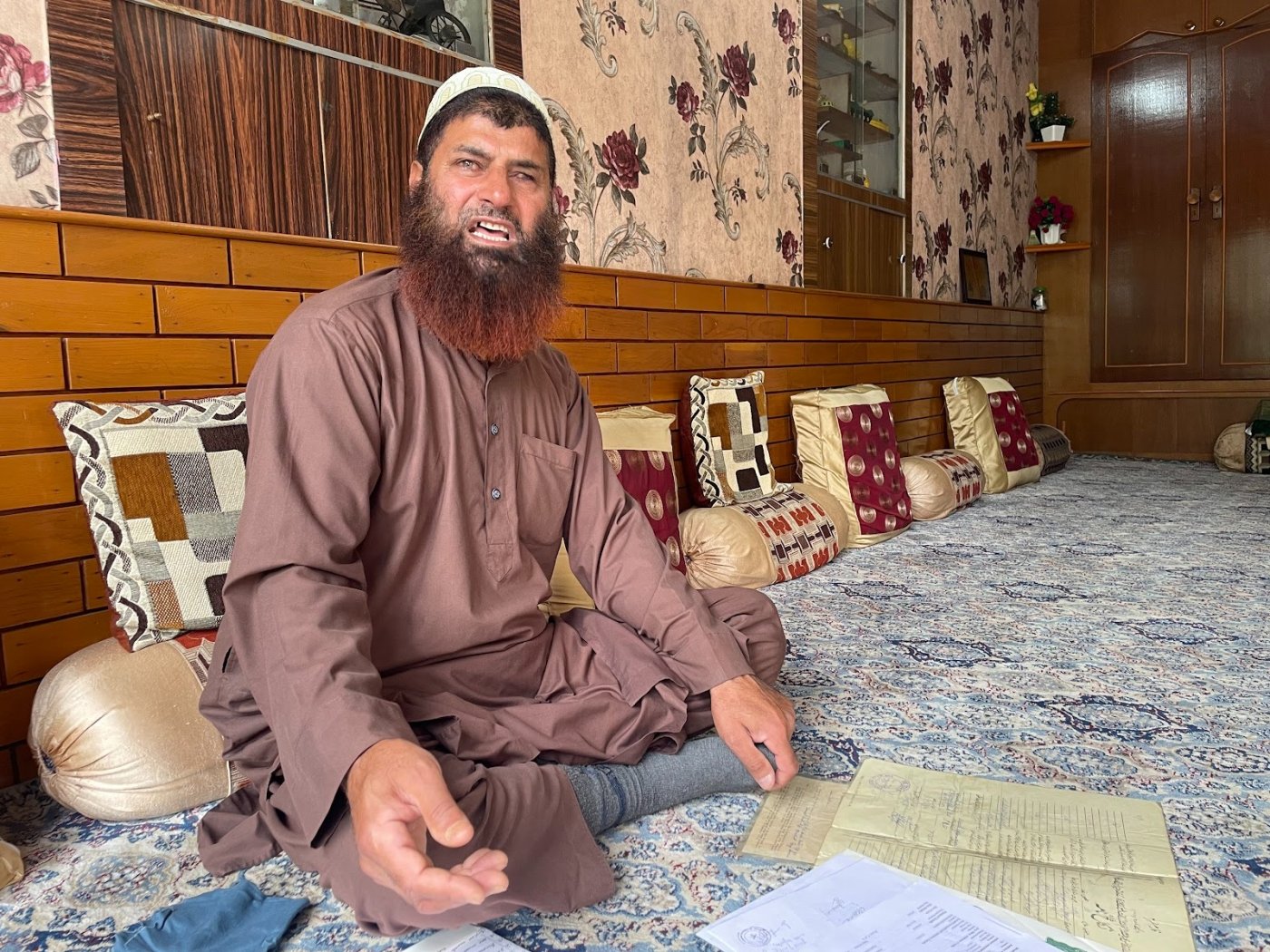
Baramulla (Jammu & Kashmir): For four months, Anjum Tanveer's life in Poonch, a border district of Jammu and Kashmir (J&K), followed an exhausting pattern.
Every morning, he would set out to the local police station and then to the office of a Bharatiya Janata Party (BJP) politician, where he would spend long hours pleading that his pregnant wife, now in Pakistan, be allowed to return to India and deliver her baby here.
On 28 April 2025, his wife, 29-year-old Attiya Aslam of Gujranwala, in Pakistan’s Punjab, was deported along with 59 other Pakistani nationals living in J&K, following the killing of 26 tourists by terrorists in a picturesque Pahalgam meadow in Kashmir.
Sometimes, they would ignore Tanveer. On other days, they would ask him to take his case elsewhere. In the end, on 5 September, his wife gave birth to a baby boy.
“My heart bleeds, longing for them,” Tanveer said.
The Indian government announced the deportation of Pakistani citizens living in India after the terror attack, which was followed by armed conflict between the two nuclear-armed countries. The Pakistani government, which denied any involvement in the attack, retaliated with measures of its own, including the cancellation of most visas held by Indians.
The brunt of these decisions, however, fell on some of Kashmir’s most vulnerable people, such as Tanveer's wife. At the Attari-Wagah border, the main land border crossing between the two countries, as people from both sides said painful goodbyes.
Pakistan nationals living in other states were deported too, but those made to leave Kashmir left behind emotional scars dating back to Partition in 1947. Over the years, particularly along the Line of Control (LoC), the de facto border between the two neighbours, families torn apart by Partition have sought to reconnect, often through marriage.
Many Kashmiris living near the border areas have married relatives and acquaintances across the border to restore family ties. Their count is not known, but officials in Kashmir said there are probably hundreds.
Women from Pakistan have thus lived in various parts of the Jammu and Kashmir region for decades, raising families and embracing India as their country. Most arrived on long-term visas (LTV), a special visa for certain foreign nationals and spouses of Indian nationals, permitting extended stays in the country. These visas are, often, valid for five years initially, with two-year extensions, renewed annually.
After 22 April 2025, these individuals were rounded up by the J&K police from various districts and taken in buses to the Attari-Wagah border in Punjab, where they were handed over to the Pakistani authorities.
More than eight months after the deportation, the families grapple with separation, uncertainty, and the challenges of navigating the legal and diplomatic process of trying to bring back a loved one.
A Phone Call & A Separation
Tanveer married Aslam, a distant relative, in February 2020. Their families arranged the marriage to “renew ties” that had long been strained by the borders separating them.
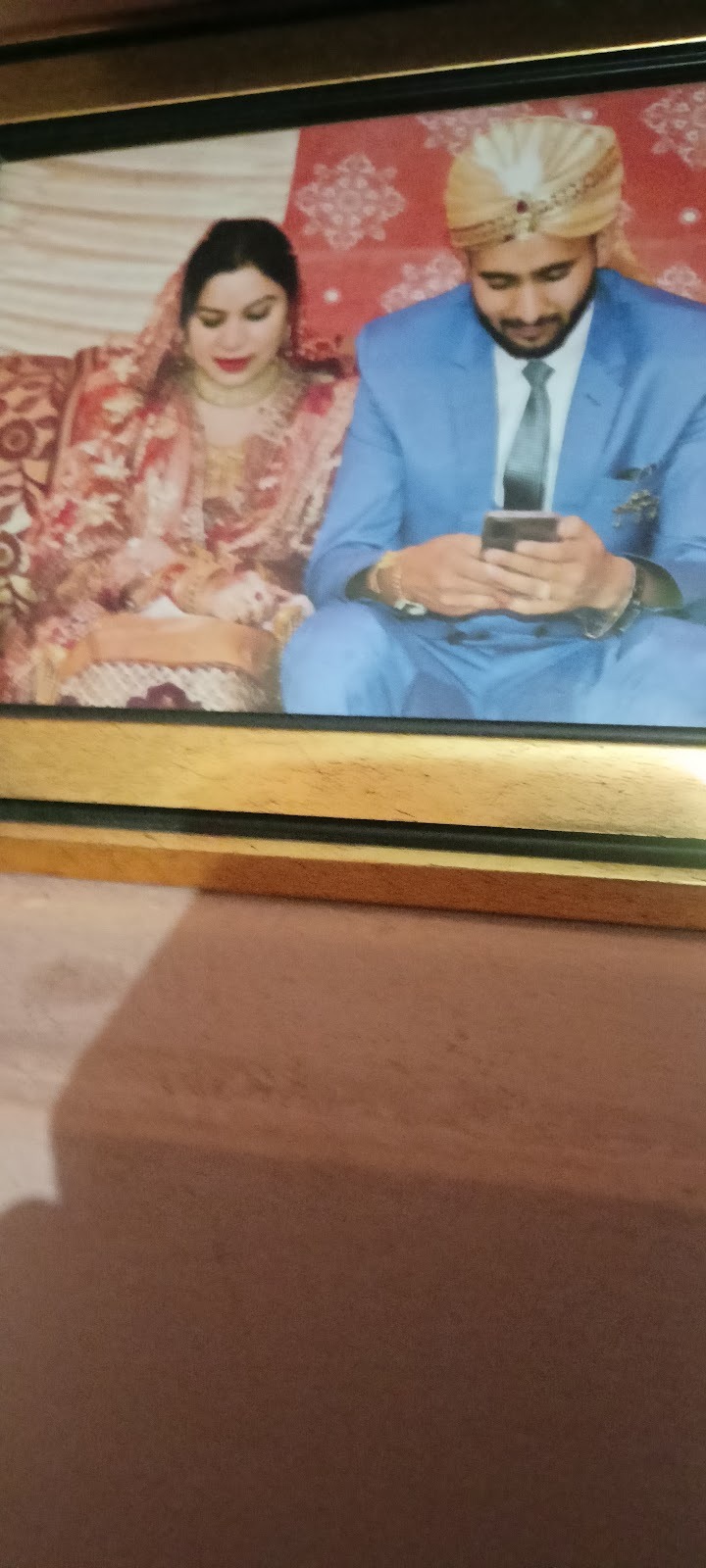
Tanveer said his wife arrived in India bearing proper documents, including the LTV. A year later, she gave birth to a daughter, Aiyza Anjum, who has now been separated from her mother for eight months.
“My daughter was more attached to her mother,” said Tanveer. “There is not a single day when she doesn’t cry to plead with us to bring Aslam back.”
The two-year-old girl has gone mostly silent, Tanveer said.
Days after the terror attack in Pahalgam, Tanveer received a call from the Rajouri police station asking him to report to the police station along with his wife, for “verification”.
“We thought it was a general verification,” Tanveer said. “As my wife didn’t arrive here illegally and as we have all the documents, I was satisfied that nothing would happen.”
At the police station, however, Aslam was served a deportation notice directing her to leave India “within 24 hours”.
“We were absolutely shocked,” said Tanveer.
Before they could think of what to do, they were asked to board a police vehicle that took them to the Attari-Wagah border, 260 km south of Rajouri.
“I can’t put into words what we went through while traveling from our home to Punjab,” Tanveer said. On reaching Wagah, Aslam was handed over to Pakistani officials.
“A part of me was torn away,” said Tanveer. Aslam was six months pregnant.
For the next few months, Tanveer and his family explored every avenue they thought might help bring Aslam back to India. She has had to face various difficulties back in Pakistan, Tanveer said, struggling to meet expenses while the future remains uncertain.
The biggest problem for Aslam has been that Tanveer isn’t able to send her money for expenses. Transactions directly into her bank account do not go through.
The family has now approached the J&K and Ladakh High Court through their counsel Ankur Sharma, pleading that Aslam’s deportation during her pregnancy was “harsh, arbitrary” and violates Article 14 (right to equality), Article 19 (right to freedom of speech and expression) and Article 21 (right to life and liberty) of the Indian Constitution.
‘Punishing Blameless Families’
Among families weeping and pleading before television cameras at the Attari-Wagah border, begging the government not to tear them from families were lactating mothers and grandmothers, suddenly forced to leave behind homes, families and memories of a lifetime.
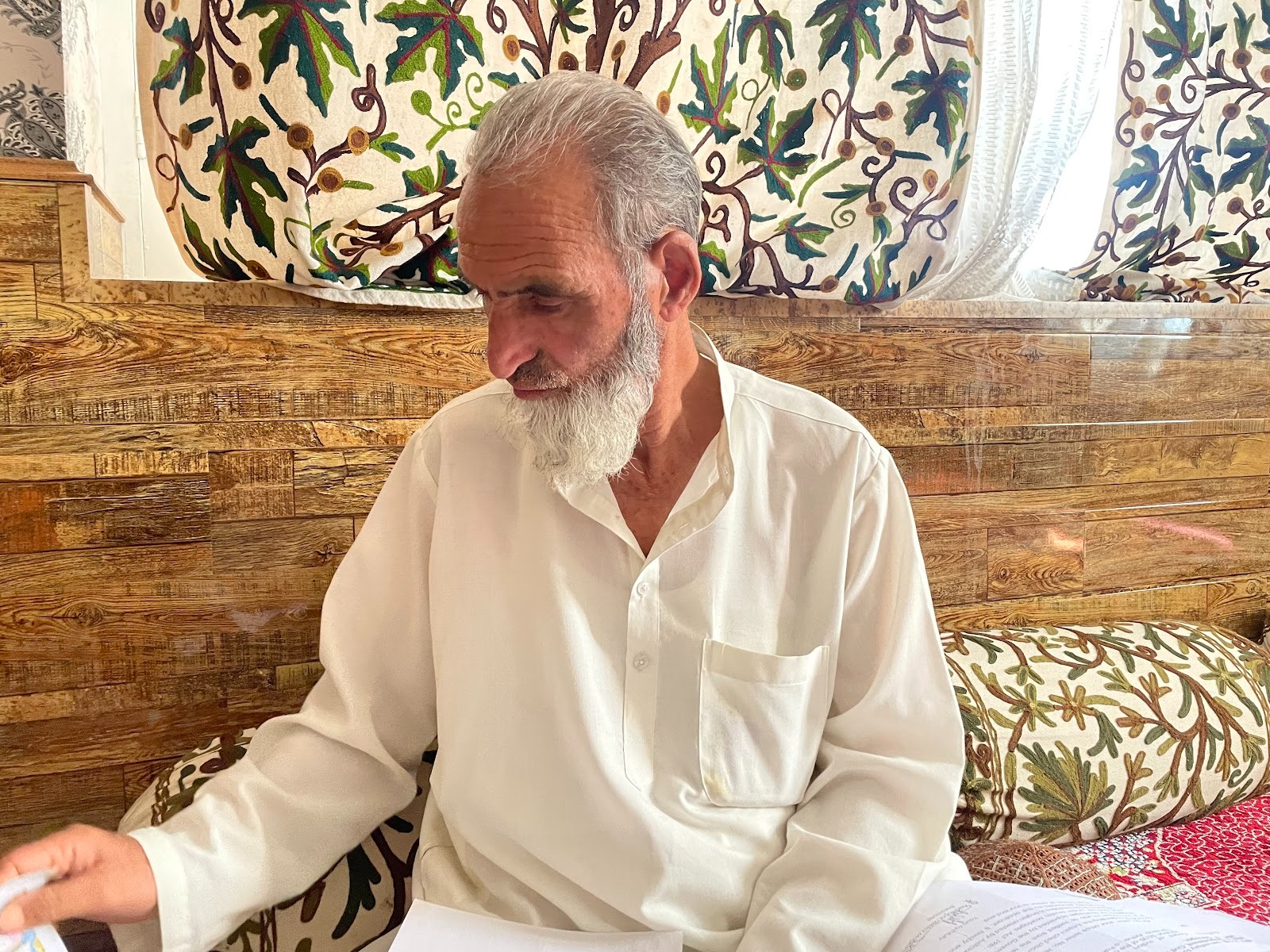
Ghulam Rasool Zargar, 73, a retired government employee from North Kashmir’s Baramulla district, had married his cousin Parveena Akthar in Pakistan in 1981. She had later moved to India on an LTV, which was periodically renewed. In 2018, the couple's son also married a Pakistani woman, a distant relative, who also moved to India.
On 30 April, Zargar had just finished serving dinner to his guests, when someone banged on the main door. Outside, he saw a battery of policemen. "Does Parveena Akthar live here?" one of them asked.
Both women (Akthar and her daughter-in-law) were taken to the district police lines in Baramulla, where they spent a night. The next morning, the women were driven to the Wagah border in Punjab, about 480 km southwest, along with nine other families.
Akhtar was deported to Pakistan, but her daughter-in-law, who had given birth just a month earlier, was allowed to stay.
Months on, a feeble Zargar was still trying to make sense of his wife's absence. “We spent 40 years together,” he said. “Now, when we are at the end stages of our lives, they have snatched my soul away from me.”
Zargar and Akthar raised two children over the course of four decades together. Zargar called the deportation the “worst form” of human rights violations. “Why punish the families for a crime they never committed?” he asked.
Documents accessed by Article 14 reveal that the couple had been living in India with proper permissions, completing various legal formalities regularly.
“The government had approved our visa, and my wife was living here legally,” Zargar said. The couple would apply for visa extensions from time to time. However, when they applied for a visa extension in October 2024, the visa extension was labelled as “in process” by the Foreigners Regional Registration Offices (FRRO).
In both Tanveer’s and Zargar’s cases, the women entered India with valid papers, and their LTVs were routinely extended, more than a dozen times according to the families.
In the deportation notices, police claimed their LTVs had expired, but both families had applied for timely extensions. These had not been processed, in Zargar’s case since 2022 and in Tanveer’s case since 2024.
In a statement on 24 April, the government said that the decision to suspend or cancel visas for Pakistanis did not apply to long-term visas, diplomatic visas and official visas, but Aslam and Akthar, their families said, were deported even though they had stayed on LTVs.
The government said that the revocation of visas did not apply to LTVs issued to “Hindu Pakistani” nationals.
Article 14 reached out to the ministry of home affairs for comment via email, but received no response. We will update this story if they do.
India issues several categories of visas depending on the purpose of travel. Each type has its own eligibility, duration and restrictions. These include tourist visas, business visas, employment visas, student visas, conference visas, medical visas, LTV and others. The LTV is often given for family reunification or on humanitarian grounds.
After a Kashmir court ordered the union ministry of home affairs on 2 August 2022 to repatriate a 62-year-old woman deported to Pakistan after the Pahalgam attack, the families grew hopeful. However, the court later clarified that the MHA’s decision to grant her a visa should not set a “precedent”.
The woman, identified as Rakshanda Rashid, was married to an Indian, and had lived in Jammu for 38 years on an LTV.
Advocate Ankur Sharma, a Jammu-based lawyer who represented Rashid in court, said their plea in court had been that his client was exempted from the MHA’s order of deportation as she held an LTV, and she should be brought back.
“They (Rashid’s family) used to take an LTV annually for the last 35 years. Before the deportation, they had applied for the extension of the LTV but she was still deported,” Sharma said.
Since she had completed all formalities and it was the government that had yet to grant the extension, they petitioned the court that Rashid be brought back, he said.
Sharma, who now represents Attiya Aslam in the High Court of Jammu & Kashmir and Ladakh, has made a similar plea before the court, arguing that Aslam was deported despite legally residing in India on a long-term visa.
‘Violation Of International Treaty’
A top police official told Article 14 that the deportation order was issued by the ministry of home affairs and the police had merely executed it.
“Since we already had a list of Pakistani nationals living in Kashmir, we immediately began the process and served notices asking them to leave,” the official said, wishing not to be named as he wasn’t authorised to speak to the media.
He said that there are two categories of such individuals—first, the wives and children of former militants who returned under the J&K government’s 2010 rehabilitation policy, and second, those who married relatives or acquaintances and came here on regular visas.
"However, after the government of India suspended all visas issued to Pakistani nationals following the Pahalgam terror attack, they no longer had a legal basis to stay," he said. "Many of them were also living here despite their visas having expired.”
But human rights activists say the actions are arbitrary and violate The Convention on the Nationality of Married Women, an international treaty adopted by the UN General Assembly in 1957 and in force since 1958.
The treaty ensures that a woman's nationality is not automatically affected by her marriage, and it allows her the right to acquire her husband's nationality by choice.
Meenakshi Ganguly, South Asia director for global watchdog Human Rights Watch, said these deportations threaten a range of fundamental human rights including the right to family unity, asylum from persecution, right to liberty and humane treatment in detention, and children’s right to protections.
“In some cases, these actions also abjure the pledges made by previous governments,” she added.
Ganguly said numerous lives had been “scapegoated” around the world, falling prey to politics of hate and discrimination.
“In India, we are seeing a sweeping crackdown on immigrants, a form of collective punishment based on identity because of the violent crimes of some individuals like the attackers in Pahalgam,” said Ganguly.
Aakar Patel, chair of the board of Amnesty International India, argued that family separations violate multiple fundamental human rights at once, including the right to family unity, the right to liberty, and the right to freedom from torture and other ill-treatment.
“Children’s rights are also violated in multiple ways through family separations, including by exposing them to extreme and unnecessary trauma after being separated,” said Patel.
In passing such deportation orders, he said, Indian authorities did not consider children’s best interests when separating them from their families.
This constituted a disproportionate response because it did nothing to bring the perpetrators of the attack to justice, according to Patel.
“Instead, it punishes families who had nothing to do with the violence by breaking them apart,” said Patel. “Such measures stand in clear contravention of international human rights law, as they separate families, tear apart communities, subject people of Pakistan origin to discrimination, spread fear, and undermine human security, prosperity, and dignity.”
Together For 40 Years
In their 40 years of marriage, 62-year-old Fazl-ul-Rehman Bhat had rarely seen his wife, Parveena Begum, break down in tears.
But these days, whenever Bhat calls her via WhatsApp, she breaks down crying, pleading with him to bring her back home.
Begum, who is also Bhat's cousin, married him in 1984 in Karachi, Pakistan, and arrived in India on 13 February 1984 with a Pakistani passport and visa. Begum, as per the documents accessed by Article 14, was issued a ‘Residential Permit Regular’, a legal document issued to certain foreign nationals, most commonly Pakistani citizens, upon their arrival in India, on 5 March 1984, with certain conditions.
The couple raised two children.
However, on 25 April, Begum was asked to leave the country immediately. As per the deportation notice from the J&K police, Begum entered India in 1984 for just 30 days and the visa was extended from time to time. The notice said Begum was staying in India illegally since 14 August 2010. She was asked to leave before 27 April 2025.
Bhat said his wife’s passport had expired and he had approached the Pakistan embassy in Delhi a couple of times, but had been told that she would need to complete passport renewal formalities in Pakistan.
“We couldn't afford to travel to Pakistan,” Bhat said. “In 2008, we were however provided a document by the authorities in Kashmir and my wife was allowed to stay here.”
Meanwhile, Begum’s close relatives in Pakistan had died, and there was no one to provide her shelter following the deportation. Ultimately, an acquaintance kindly took her in.
Bhat said his wife has a heart ailment and has been under treatment for 10 years.
"I don't even call her now because she cries profusely," Bhat said. “We lived together for 40 years. Why is our country punishing its own citizens for a crime that we never committed?”
His wife's words during their journey from Kashmir to the Attari–Wagah border would haunt him for the rest of his life, he said.
“This was the final stage of our lives, and now, at this stage,” she told Bhat, “We are being torn apart.”
(Auqib Javeed is an independent journalist based in Jammu and Kashmir.)
Get exclusive access to new databases, expert analyses, weekly newsletters, book excerpts and new ideas on democracy, law and society in India. Subscribe to Article 14.