
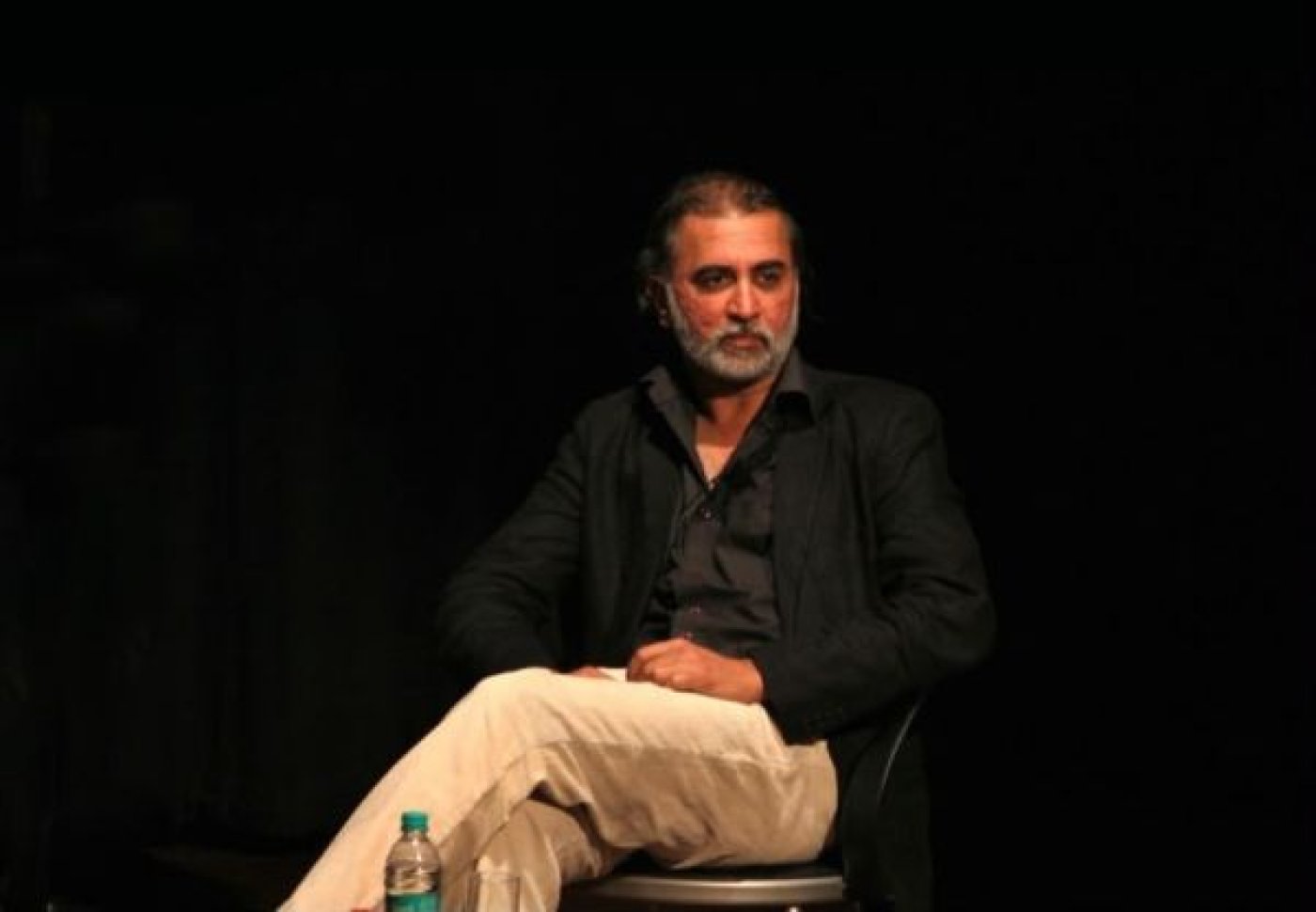
New Delhi: In July 2025, a Delhi court dismissed allegations of sexual harassment brought by India’s leading women wrestlers against former BJP MP and wrestling administrator Brij Bhushan Sharan Singh. In August 2026, the Bombay High Court overturned journalist Tarun Tejpal’s acquittal in a rape case that became one of India’s most closely watched sexual-assault trials.
This is not about discussing the facts in Tejpal or Brij Bhushan, but the systemic concern this raises, i.e. what rape myths are, and what fair trial is, and how would a system ensure fair trial while balancing the need to make convictions possible in cases where the sole witness is the survivor.
The cases involved different facts and legal questions. Yet together they raise a common concern: how courts distinguish doubts that genuinely arise from the evidence from those that rest, consciously or otherwise, on assumptions about gender, consent and victim behaviour.
Criminal cases span a wide spectrum. At one end are the open-and-shut cases: a man opens fire on three people in a crowded market, is caught on camera, arrested at the scene, the gun is recovered, and ballistic evidence links it to the bullets in the victims’ bodies. At the other end are cases built on circumstantial evidence, or where the complainant is the only witness, and the question is whether the doubt is reasonable.
A criminal judge need not decide what most probably happened. The prosecution must prove its case beyond reasonable doubt. The judge must be satisfied, to that standard, that the crime occurred and that the accused committed it. This protection is fundamental.
In Tejpal, there was no medical evidence and no eyewitness to the alleged incident other than the complainant. Tejpal did not claim the act was consensual; he denied that anything happened.
But there was video footage of the accused and complainant entering and leaving the lift; an email apology that the complainant said amounted to an admission, while Tejpal said he had been coerced into writing it; and several circumstances for which neither side provided a satisfactory explanation.
The judge was therefore required to determine whether the alleged incident occurred and whether Tejpal committed it, in each case beyond reasonable doubt.
But reasonable does a lot of work in “reasonable doubt”. A judge cannot say he doubts a murder because the accused is a respectable-looking man and respectable-looking men do not murder. The doubt may be genuine. It is still not reasonable.
Inherent Tensions In Criminal Law
Entrusting fact-finding to trained judges does not solve the problem if judges themselves import into the exercise the same instincts, prejudices and popular assumptions that concern us in lay fact-finders, the role once performed by juries in India.
The difficulty is especially acute in cases of sexual violence, where criminal law must negotiate two competing imperatives, both fundamental to a fair justice system.
On the one hand is the need to make convictions possible in crimes that often occur without eyewitnesses. On the other is the accused's right to a fair trial and the presumption of innocence. The tension is inherent.
Dhananjoy Chatterjee's 1994 conviction is one example. There was undeniable evidence of rape and murder, but no eyewitness because the victim was dead. The case rested entirely on circumstantial evidence. Yet the adequacy and reliability of that evidence have been questioned repeatedly, despite leading to Chatterjee's conviction and eventual execution.
The law can neither insist on corroboration in every sexual-violence case—since that would exclude countless cases where no witness exists or can be made to testify—nor can it hold that the complainant's testimony is sufficient per se, effectively displacing the presumption of innocence and the right to a fair trial.
Indian law has attempted to occupy this uncomfortable middle ground. The testimony of a prosecutrix does not require corroboration merely because she is the sole witness to a sexual offence. If found reliable, it can sustain a conviction on its own.
At the same time, this principle concerns the legal sufficiency of sole testimony; it does not mean such testimony must be accepted automatically. Phool Singh, a 2021 Supreme Court judgment upholding a rape conviction based solely on the prosecutrix's testimony, reflects precisely this position.
Legitimate Reasons For Disbelief
The possibility of conviction upon sole testimony cannot become a rule that sole testimony must result in conviction. But the requirement of a fair trial cannot, at the other end, become a rule that an offence committed without witnesses is practically incapable of proof.
The problem, therefore, is not whether courts may scrutinise the testimony of a woman alleging sexual violence—they must. The real question is what counts as a legitimate reason for disbelief.
This is where rape myths become an evidentiary problem, rather than merely an objectionable way of speaking about women.
A stereotype can supply the missing premise between a fact proved in court and an inference adverse to the complainant. Once it does that, prejudice begins to masquerade as common sense, and common sense as evidence.
The two ends of the line are belief in the survivor and scrutiny of the witness. Where the witness is a survivor and the sole witness to both the incident and the identity of the person who committed it, the judge is not merely deciding whether the accused did it. He also faces the question: did it even happen?
Doubt on this question can lead to the survivor’s entire testimony being rejected. But accepting or rejecting any witness’s testimony, survivor or not, happens through an established process—oath, demeanour, and cross-examination.
Where identity is disputed, the court must decide both whether the event occurred and whether the accused committed it. Where the sexual act is either admitted or otherwise undeniable, but consent or its validity is disputed, as in cases such as Chandraprakash Kewalchand Jain or in many cases involving ‘rape on the false pretext of marriage’, the contest may instead centre on consent and whether that consent was free.
Either way, an extraordinary amount may turn upon the court’s appreciation of one person’s testimony. This is also one of the first arguments made by those who support retaining the Marital Rape exception [Exception II to section 63 BNS, erstwhile section 375 IPC]: that there will inevitably be evidence of a sexual act within a marriage, and hence the entire case will turn on the wife’s testimony, making rape law a potential tool for settling matrimonial disputes.
Handling Contradictions
Appreciation of evidence is not a mechanical exercise. A contradiction does not arrive in court marked “material”. A delayed complaint does not arrive marked “suspicious”. Continued communication with an accused does not tell the judge, by itself, what inference to draw from it. Facts enter the record; human beings sitting as judges assign them meaning.
This is what makes the Bombay High Court’s recent judgment in State of Goa vs Tarunjit Tejpal worth reading alongside the 2021 sessions court judgment that it reversed. The trial judgment engaged at length with conventional evidentiary questions: alleged contradictions, omissions and improvements in the complainant’s successive accounts; CCTV footage and the functioning of the lifts; contemporaneous disclosures; the apology emails and the defence explanation for them; electronic evidence that was not collected; defence witnesses; and lapses identified in the investigation. The acquittal ultimately rested on the cumulative doubt that the court said these matters generated.
Those are legitimate subjects of a criminal trial. The feminist objection is not that courts should disregard material contradictions. It is that courts must distinguish contradictions that genuinely weaken an account from behaviour that appears contradictory only because it departs from an assumed model of how a victim should behave.
The High Court, too, did substantially more than reject stereotypes. Conscious that it was hearing an appeal against acquittal, it addressed the reinforced presumption of innocence and the restraint required before an appellate court substitutes a conviction merely because it prefers another possible view. It then reappreciated the evidence.
What the trial court treated as material contradictions, the High Court in several places regarded as minor discrepancies or natural variations in testimony recorded years later. It also differed on the CCTV and lift evidence, the apology emails and corroborative testimony.
Whether the High Court was correct on every one of those questions is a separate legal issue. One need not resolve it to identify another category of reasoning in the judgment of acquittal.
When Evidence Becomes Stereotype
Let us take two examples. If a complainant gives two accounts of a physical act and the defence says the later version contains a material improvement, a court must decide whether the difference affects the core allegation. The sessions court treated several such differences as serious; the High Court considered many insignificant or explicable. That is a familiar appellate disagreement about the weight of evidence.
Now take another kind of reasoning. The sessions court considered the complainant’s continued participation in the festival, her remaining in Goa, her interactions with Tejpal after the alleged incidents, and photographs in which she appeared cheerful. It considered whether her conduct reflected trauma and, at points, what it regarded as the “natural” response of those around her. The High Court saw in this the construction of a “perfect victim”: a woman whose behaviour after sexual violence must display vulnerability, passivity and visible rupture.
These are not the same species of reasoning.
If a witness says she stayed in Goa because the incident prevented her from travelling, and contemporaneous evidence shows she had already planned to remain there, that may legitimately contradict her account. But “she stayed in Goa” does not, without something more, establish that a sexual assault did not happen.
Similarly, continued communication with an accused is a fact. What that communication contained may be highly relevant. But the proposition that a woman who continued speaking to a man could not genuinely have been assaulted by him depends on another proposition: that a “real” victim would necessarily cut contact.
This is even more precarious where the relationship is unequal. Continued contact with an employer, mentor, teacher or anyone who exercises power over work, opportunities or professional reputation may say little, standing alone, about whether an earlier sexual interaction was consensual. It may reflect economic dependence, professional compulsion, fear of retaliation, or simply the difficulty of exiting a relationship structured by unequal power.
Nor does everyone possess an equal practical freedom to leave, complain or confront a powerful person. Economic dependence, institutional hierarchy, caste and class, and access to social and legal support all shape that freedom. Formal choice does not always translate into actual autonomy.
How Rape Myths Enter Evidence
This is where Mrinal Satish’s work on myths and stereotypes in rape prosecutions becomes useful. The movement is subtle: ordinarily, a woman who has been raped would do X; this woman did not do X; therefore her account becomes less probable.
Take delay in filing a complaint. The proven fact may only be that the complaint came later. For delay to become evidence of falsity, one must first assume that genuine victims ordinarily complain immediately. The same applies to demeanour. A witness may appear calm, angry, composed, confused or visibly distressed. For any reaction to become a marker of truth, one must first possess a reliable account of what truthful trauma is supposed to look like.
Pratika Baxi’s Public Secrets of Law: Rape Trials in India helps locate this within the larger social life of the rape trial. The courtroom does not encounter testimony stripped of gender. Ideas about sexuality, respectability, shame, consent and feminine conduct travel into court with the witness. Legal reform may close one route to these assumptions; they can find another through the language of credibility, probability and “natural conduct”.
This does not mean post-assault conduct must become legally invisible. It means that where a court relies on such conduct to discredit a complainant, it should identify the evidentiary link between the fact proved and the proposition it is said to establish, without relying on a generalised assumption about how victims normally behave.
That is not a rule favouring the prosecution. It is a rule demanding reasons.
It is also why a trauma-informed approach needs caution. The answer to the ideal victim cannot be to manufacture an ideal survivor. If the older stereotype was that a genuine victim must resist, scream, complain immediately and remain visibly devastated, it would be equally problematic to replace it with a new checklist under which a genuine survivor must freeze, dissociate or suffer fragmented memory. Trauma scholarship can explain why apparently counter-intuitive behaviour may occur. It cannot become another judicial lie detector.
Victoria, Australia, offers a useful model. Its Jury Directions Act 2015 addresses delayed complaints, differences in accounts, continued communication or relationships with an accused, and emotional demeanour. Its point is not that these facts must be ignored, but that there is no single “typical, proper or normal” response to sexual violence from which credibility can automatically be inferred.
Other systems address adjacent parts of the problem. England and Wales restrict the use of sexual-history evidence through section 41 of the Youth Justice and Criminal Evidence Act 1999, while South Africa’s Supreme Court of Appeal in S v Jackson rejected a special cautionary rule that treated complainants in sexual cases as an inherently suspect class of witness.
What Fairness Requires
A feminist approach to the criminal process does not require conviction merely because an allegation of sexual violence has been made. It requires, more narrowly, that a complainant suffer no evidentiary disadvantage merely because her conduct fails to conform to gendered expectations.
The protections afforded to an accused are not obstacles that feminist criminal law must overcome. They are indispensable. The court’s sympathy for the complainant cannot repair an investigative failure. A material contradiction does not cease to be material because sexual offences are difficult to prosecute. If the prosecution case, properly tested and without recourse to stereotype, leaves reasonable doubt, an acquittal is the criminal law doing what it is required to do.
But fairness runs in the opposite direction too. A woman should not have to prove the offence and then separately prove that she qualifies as the kind of person to whom the judge believes the offence could have happened. The accused is entitled to every doubt the evidence reasonably creates, but not to doubts manufactured by gendered folklore.
The criminal judge is not a soothsayer. Courts may describe adjudication as a search for truth, but criminal truth-seeking is a bounded exercise. The judge must look at the material lawfully placed on record, subject it to the rules of evidence and the adversarial process, and reach the most impartial conclusion the record permits.
The sharper question is therefore methodological: What in the evidence produces the doubt, and what assumptions had to be imported before that evidence could produce it?
If the answer is a material contradiction, an impossible chronology, objective evidence that undermines the account, a proven motive to falsely implicate, or an investigative failure that genuinely damages the prosecution’s case, the court is doing the difficult work criminal adjudication requires. If the missing premise is simply that this is not how a woman who was really raped would behave, then something else has entered the exercise.
The lesson that ought to be taken from such experiences, is that there is a clear lacking in the way we are building our institutions. Primarily, when we took away fact-finding from juries and entrusted that to judges, it should have also reflected in the amount of time, resources, and seriousness that is devoted into judicial training. The state of affairs in judicial academies is deplorable to say the least. A similar lacking is seen in how we as a legal system teach criminal defence in law schools. Legal defence as an ethical responsibility entails that there be an ethical boundary, and defending one’s client to the best of one’s capacity also mean capacity within the bounds of those ethics. To sum up, regardless of Tejpal getting convicted or Brij Bhushan getting acquitted, the systemic failures that we see run broader. The question therefore becomes of not whom, but what the system seeks to protect—and who benefits from those protected power structures?
A criminal conviction requires proof beyond reasonable doubt, as it should. A feminist criminal process does not ask that this standard be lowered. It asks only that when doubt is found, it actually be reasonable—not folklore.
(Aditya Krishna is a Delhi-based lawyer, trade unionist, and an independent researcher.)
Get exclusive access to new databases, expert analyses, weekly newsletters, book excerpts and new ideas on democracy, law and society in India. Subscribe to Article 14.