
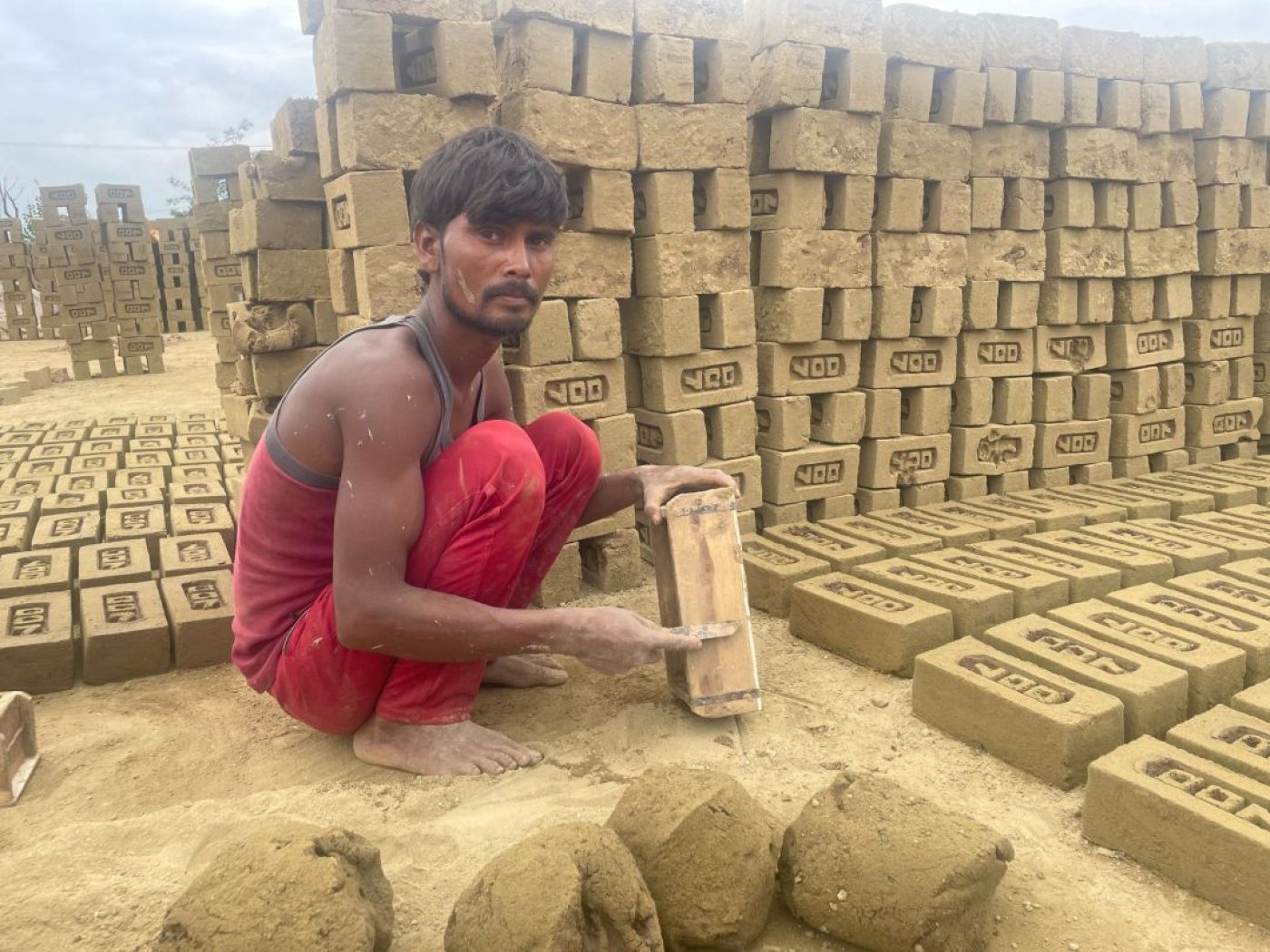
Kulgam (Jammu and Kashmir): It was around 7 pm on 31 July 2026 when Bihari Lal, 39, who had just returned to his shanty after a long day of work at a brick kiln here in south Kashmir, heard what he thought were firecrackers.
Minutes later, he heard a commotion. He rushed out to find two of his colleagues—who worked at another brick kiln—lying in a pool of blood.
“I was absolutely shocked,” he said. “Mera dil bohat bahri hogay, aisa laga jaise aasman toot pada (My heart became so heavy, as if the sky had fallen upon me).”
Terrorists had targeted two labourers, identified as Deepak Ratre, 24, and Bhupinder Bhaina, 25, from Bilaspur, Chhattisgarh, who were working at a brick kiln in a village called Kilgam. There are nearly a dozen brick kilns in Kilgam and Hablishi, another neighbouring village, in this picturesque rice- and apple-growing district.
The victims were shot at point-blank range, The Indian Express reported on 3 August 2026. Ratre died at the spot, while Bhaina, critically injured, was moved by ambulance 68 km north to Sher-i-Kashmir Institute of Medical Sciences (SKIMS) Hospital in Srinagar, where he died two days later.
Security forces rushed to Kilgam and launched a manhunt. It was the latest in a recurring series of killings of migrant workers by terrorists. At least 25 have been murdered between 2019 and 2026, according to data that this reporter has compiled.
For Bihari Lal, from Punjab, and seven others to whom Article 14 spoke, 20 days after the attack, the killing of their colleagues had shaken the sense of safety they had gradually developed over the years while working in Kashmir.
Most of the terrified labourers we met had come to the union territory to find work and support their families in distant states. They wore inexpensive, dust-covered clothes, their hands were stained with mud and their faces mirrored their exhaustion.
The workers earned between Rs 800 to Rs 1,500 a day in Kashmir—but this was up to twice as much as they did back home in poorer northern Indian states. Many said they had no option but to carry on.
When we visited, the brick kiln where the two workers were murdered was secured with concertina wire.
The workers continued making bricks.
Between Fear & Livelihood
Like Bihari Lal, thousands of migrant workers across the Valley were shaken by the attack. At the time, more than 500 workers were employed at various brick kilns in the village, prompting many to leave the Valley out of fear for their safety.
Since the abrogation of Article 370, non-local workers have repeatedly found themselves caught in the crossfire of Kashmir’s long-running conflict. More than 25 non-local workers, most of them labourers, have been killed by terrorists since the revocation of special status.
Terrorist groups have repeatedly warned against migrant workers in Kashmir, particularly after the Centre’s decision to abrogate Article 370, which ended the region’s special constitutional status and removed restrictions on land ownership for people from outside Jammu and Kashmir.
Every year, an estimated 300,000-400,000 migrant workers, both skilled and unskilled, come to Jammu & Kashmir for work. Many arrive in early spring and return home before winter. Most are from states such as Punjab, Bihar, Haryana, Uttar Pradesh, West Bengal and Maharashtra.
The attacks have pushed many to leave the Valley, said a brick kiln owner, speaking on condition of anonymity. This quiet exodus has not been reported in the media.
But for others, their earnings in Kashmir support families back home, making departure difficult despite the risks.
‘We Cannot Leave’
Rajender Kumar, 42, a resident of Uttar Pradesh, has worked in Kashmir for the past 20 years. He returns to the Valley every year for work and is the father of five children, including three daughters.
Working currently at a brick kiln, he has continued to work in Kashmir through some of the most challenging periods of militancy. He recalls being in the Valley during the killing of terrorist commander Burhan Wani in 2016, when the situation remained tense and normal life was frequently disrupted.
“I was working here during the killing of the terrorist commander in 2016, when the situation was not good. Locals helped us with food and other things. We never felt completely alone,” said Rajender Kumar.
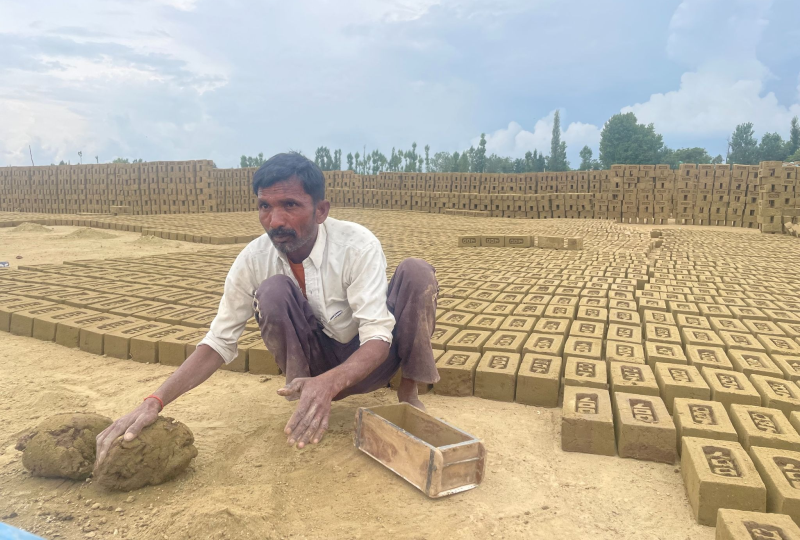
The recent attacks, however, have made him more apprehensive about his safety. According to him, both the police and his employer remain supportive, but his family back home is also worried.
“We are scared now, although the police and our employer are always with us,” said Rajender Kumar. “My family keeps asking about my well-being because they hear about the situation in Kashmir through the news.”
Despite the fear, he said returning home permanently is not an option because of limited livelihood opportunities there.
“We cannot leave because we don't have any other option back home,” he said.
The Economic Imperative
Rajender Kumar works at the brick kiln in central Kashmir’s Budgam district and earns him around Rs 800-900 a day. His wife and two children also work alongside him. Together, he said, the family earns nearly Rs 1,600 a day or about Rs 40,000 per month, making their work in Kashmir a key source of household income.
His wife, Rama Devi, says she regularly talks to her husband about the uncertain situation in Kashmir and whether they should look for alternatives.
But moving to another state is not easy. “The reason is we earn well in Kashmir, and the weather also remains pleasant,” she said.
The workers earned between Rs 300 and Rs 400 a day back home, working at brick kilns or doing other casual labour. Many came to Kashmir in search of work, encouraged by friends and acquaintances who had worked there.
“Rocky”, another north Indian who has worked in Kashmir for more than 15 years, sells toys and mosquito nets on a roadside in Srinagar. Asking that his name be changed to protect his identity., he said it was “obvious that we earn much better in Kashmir than in other states, that’s why despite the risks we are still here”.
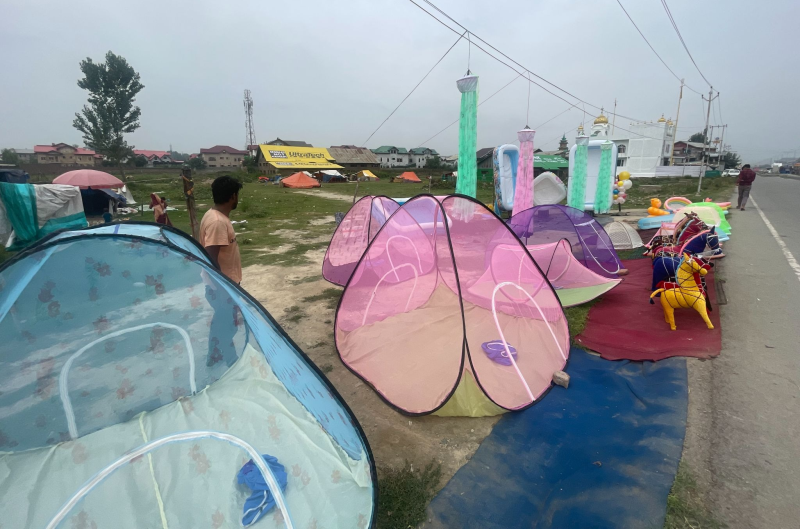
“Our earnings barely cover our basic needs,” said Rocky. “We can’t afford to buy property and settle here.”
Three years ago, Shravan Kumar, 29, travelled to Kashmir in search of a “decent living”, bringing his wife and two children. Back home, he earned around Rs 400 a day when work was available. “Here in Kashmir, we earn Rs 800,” he said.
Before leaving, his father repeatedly cautioned him to remain careful and avoid arguments or confrontations with anyone.
Since then, Shravan Kumar said, life in Kashmir has largely remained peaceful for his family. But the recent attack revived fears among those back home.
“Everything was going fine, but whenever an incident like these (Kulgam killings) happens, our families back home become very worried,” said Shravan Kumar. “They keep calling us and asking if we are safe.”
His father, who had initially been apprehensive about sending him to Kashmir, still becomes anxious whenever news of violence emerges from the Valley.
“They tell us to be careful and not to get involved in any dispute,” said Shravan Kumar. “They are far away and can only depend on what they hear through the news, so naturally they become scared.”
Leaving is not an easy choice.
“We have come here to earn and support our families,” he said. “We know there are risks, but we also have responsibilities at home.”
A Recurring Target In A Conflict Zone
The Kulgam attack was not the first instance in recent years in which non-local workers were targeted by terrorists. Migrant labourers and other workers have repeatedly come under attack in different parts of Kashmir.
The attack came nearly two years after the 20 October 2024 Ganderbal attack, in which terrorists killed seven people, including six non-local labourers and a local doctor working on a strategic tunnel project in central Kashmir’s Ganderbal district.
A week after the Ganderbal attack, terrorists shot and injured two migrant labourers in Budgam. On 18 October, a migrant worker from Bihar was killed by terrorists in south Kashmir’s Shopian district, while another worker, identified as Shubam Kumar, a resident of Bijnore in Uttar Pradesh, was shot and injured in the Tral area of south Kashmir on 24 October.
Earlier, on 9 April 2024, a cab driver from New Delhi was shot and critically injured by terrorists in south Kashmir’s Shopian district. Eight days later, on 17 April, terrorists killed another non-local labourer, identified as Raju Shah, a resident of Bihar, in Anantnag district, days before India’s general elections.
The attacks on migrant workers, however, predate 2024.
On 7 February 2024, two non-local workers from Punjab, Amritpal Singh and Rohit Masih, were shot dead by terrorists in the Shaheed Gunj area of Srinagar.
On 18 October 2022, two migrant labourers from Uttar Pradesh were killed after terrorists hurled a grenade at them in Shopian district. The victims, identified as Monish Kumar and Ram Sagar, both from Kannauj, were shifted to a hospital, where they later succumbed to their injuries, according to police.
In 2021, several migrant workers were also targeted. On 17 September, terrorists shot dead Shankar Kumar Choudhary, 34, from Bihar, in the Nehama area of Kulgam.
A month later, on 5 October, terrorists shot dead Virender Paswan, a street vendor from Bihar’s Bhagalpur district, in Srinagar’s Lalbazar area. Paswan was residing in Alamgari Bazar, Zadibal, and worked as a street vendor in the city.
On 16 October 2021, a labourer from Bihar, Arvind Shah, was shot dead by suspected terrorists in Srinagar, police said. The same day, another migrant labourer from Uttar Pradesh, Sagir Ahmad, was killed after terrorists opened fire on him in south Kashmir’s Pulwama district.
Shortly after the revocation of special status in 2019, terrorists shot dead Sethi Kumar Sagar, a labourer from Chhattisgarh, at a brick kiln in Pulwama district on 16 October 2019. Just eight days later, terrorists shot dead two truck drivers transporting apples in South Kashmir’s Shopian district on 24 October.
The most gruesome incident occurred on 29 October 2019, when terrorists lined up five labourers from West Bengal and shot them dead in Kulgam.
Taken together, these incidents illustrate the continued vulnerability of migrant workers in Kashmir, particularly those employed in labour-intensive sectors such as construction, brick kilns and street vending.
Why They Keep Returning
Mohammad Zahid, 42, from Uttar Pradesh, has travelled to Kashmir for work for nearly two decades. He has worked in the Valley since 2011 and keeps returning because the income is vital for his family.
“The attacks on labourers should not happen,” said Zahid. “We have nothing to do with any politics. Sometimes, we don’t even tell our families if something happens here because we don’t want them to worry. But when they hear about an incident through the news, they become very anxious.”
Despite the fear, he said his experience with local residents has largely been positive.
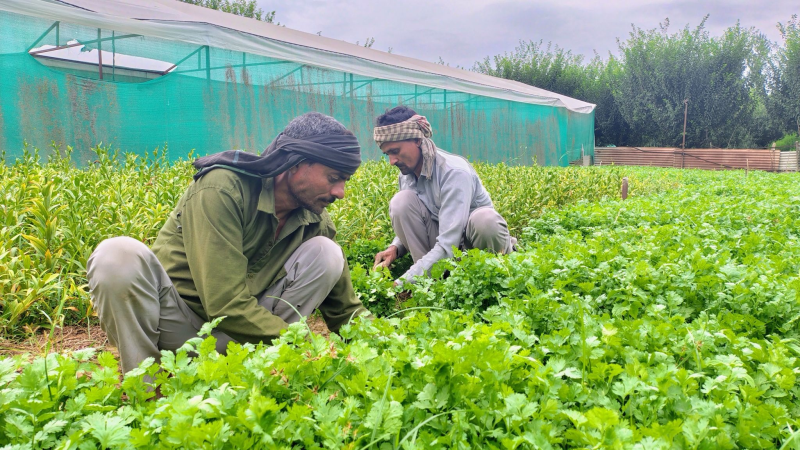
“Kashmiri people are good,” said Zahid, who works on a farm. “I have been coming here since 2011, and nobody has ever said anything against us. We have always worked peacefully.”
Zahid said the work also provides relatively stable earnings. “We earn Rs 700 or more a day,” he said, compared to the Rs 300-400 he worked as a labourer back home. “Our employer also gives us tea twice a day and lunch. This is why we keep coming back.”
Back-to-back attacks have, therefore, left many migrant workers caught between the danger of staying in Kashmir and the economic consequences of leaving.
For workers like Kumar, Sarwan and Zahid, the choice is not simply between safety and danger, but between staying in a place where they fear being targeted and returning home without a livelihood.
‘The Civilian Is A Soft Target’
Shortly after the Kulgam attack, lieutenant governor Manoj Sinha directed police officials to intensify anti-terror operations across the region, while the government talked about relocating migrant workers to designated clusters for enhanced security.
Kashmir's top cleric Mirwaiz Moulvi Mohammad Umar Farooq told Article 14 that Islam did not allow the killing of innocents and criticised the killing of migrant labourers.
“Targeting poor labourers who have come to earn an honest livelihood is completely contrary to the teachings of Islam and the values of humanity,” said Farooq. He added that “the spilling of innocent blood only brings more pain and suffering.”
Bilal Ahmad Bhat, a brick kiln owner from Budgam district, told Article 14 that almost all the brick kiln owners have installed high-end closed-circuit television cameras to ensure the safety of their workers.
“...Apart from that we provide them with wood for cooking, medical aid and other essential items. They hardly need to go outside,” Bhat said.
A police official, speaking on condition of anonymity since he is not authorised to speak to the media, told Article 14 that patrolling in vulnerable areas is conducted regularly and advisories are issued to labourers based on the prevailing situation.
“We have their (labourers) database. We advise them on do's and don'ts,” the official said, adding that providing security to every labourer was not possible.
He further said that while terrorists aim to instill fear, the labourers remain undeterred because they are in Kashmir solely to earn a livelihood.
Security experts argue that although attacks on migrants took place before 2019, terrorists have frequently targeted them since the revocation of special status.
K Rajendra Kumar, former J&K police chief, argued that terrorists see targeting migrant civilians as an easy way to show their presence because civilians cannot retaliate.
“The civilian is a soft target and attacks on them are out of sheer desperation just to mark their (terrorists) presence,” he said.
He said the situation has shown marked improvement in the Valley, with no shutdowns, stone-pelting and terror recruitment. “... now the aim is to create a fear psychosis and to be in the news”.
Asked about terrorist claims (here and here) that the revocation of special status would enable New Delhi to bring settlers to J&K, Kumar said, “J&K is an integral part of India, and any Indian can settle wherever he wants.”
This reportage was supported by The Reporters’ Collective Investigative Journalism Fellowship.
(Auqib Javeed is a freelance journalist based in Srinagar.)
Get exclusive access to new databases, expert analyses, weekly newsletters, book excerpts and new ideas on democracy, law and society in India. Subscribe to Article 14.