
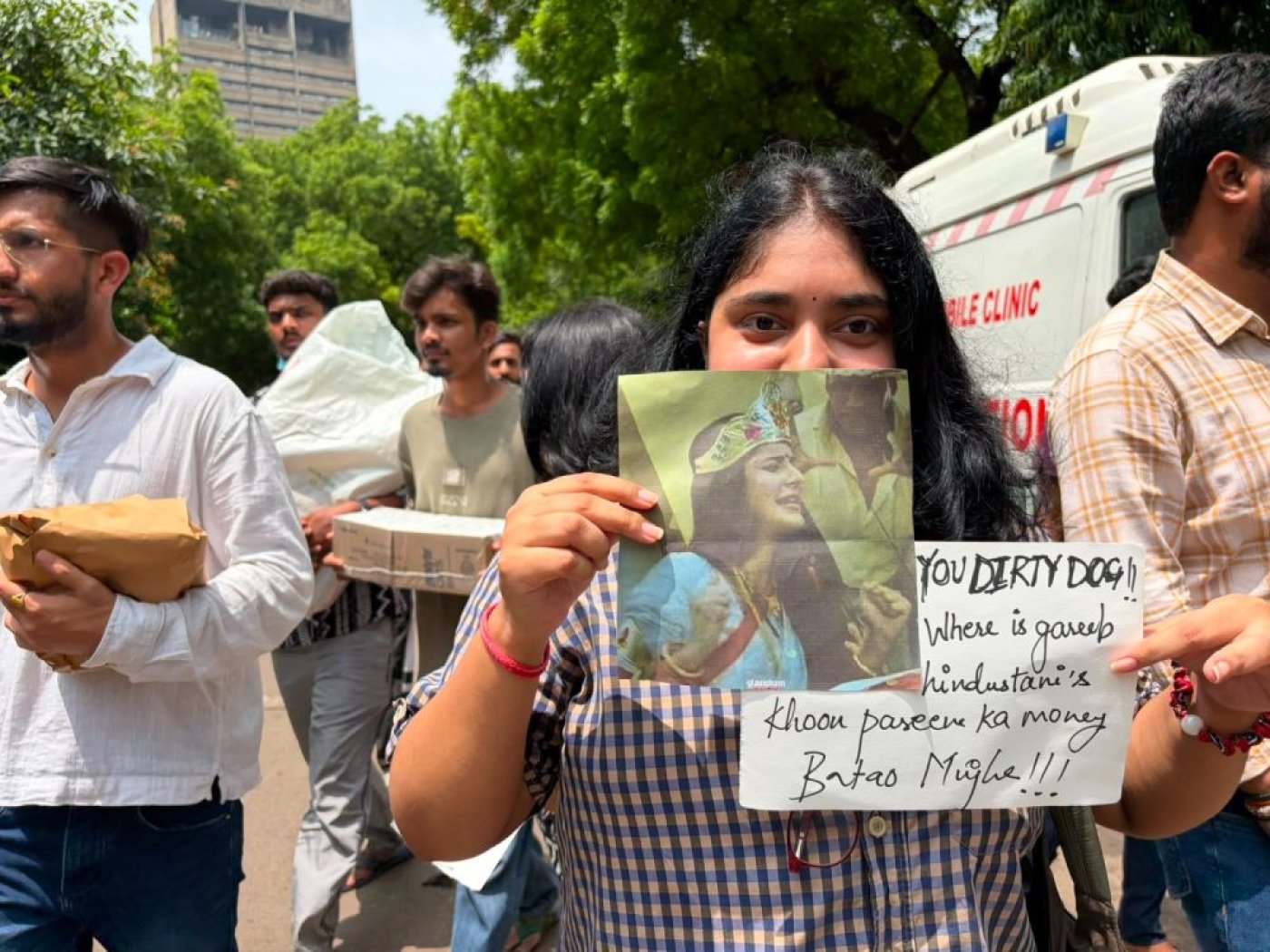
New Delhi: Amid the sea of protest placards and irreverent slogans that now fill Jantar Mantar—and increasingly, protest sites elsewhere in India—one sign on 24 July stood out. Addressed to education minister Dharmendra Pradhan, it read: “Please resign. My screen-time is 27 hours because of you.”
Finally, even for a government notorious for never backing down, it all became too much: a day later, Dharmendra Pradhan announced his resignation, the first cabinet minister in 12 years to leave the government in response to public demand for accountability. The last minister to resign due to public pressure was M J Akbar, who faced multiple allegations of sexual misconduct.
"Considering the situation that has arisen at Jantar Mantar and across the country, so that anti-national forces do not benefit from it, the unity of the country remains intact, no Indian student's future gets entangled in legal complexities, our children spend their time in studies, and focus on building their careers—keeping all these things in mind, I have sent my resignation letter to the respected Prime Minister,” Pradhan tweeted.
But the placard at Jantar Mantar was still funny because it captured something many around me appeared to feel. The protests were fuelled not only by anger over examination leaks, but by the endless scrolling, waiting and uncertainty that have come to define the lives of many young Indians.
That Prime Minister Narendra Modi posted two videos (here and here) on his official social media handles within less than 24 hours suggested these protests had become politically difficult to ignore. Whatever prompted the intervention, it reflected the growing visibility of a movement that began as a campaign against examination failures but increasingly appears to have become something broader.
The Cockroach Janta Party (CJP) began as a satirical social media account. Its campaign against the NEET (National Eligibility cum Entrance Test, a common undergraduate exam for medical admissions) paper leaks and wider failures in India's public education system gathered momentum after climate activist Sonam Wangchuk joined a protest and hunger strike at Jantar Mantar.
But something appears to have changed since the 20 July march to Parliament, the Sansad March as it came to be called, and the police crackdown that followed.
Walking through the protest site on the day Pradhan resigned, it no longer felt like a movement centred on Wangchuk or the CJP. Students who had never attended a demonstration before sat alongside activists, parents and professionals. Many told me they had come not despite the violence but because of it.
Few expected the Sansad March on 20 July to unfold as it did. Protesters attempting to march towards Parliament were stopped by Delhi Police and Rapid Action Force personnel near Jantar Mantar, Janpath and beyond Connaught Place.
Spurred By The Crackdown
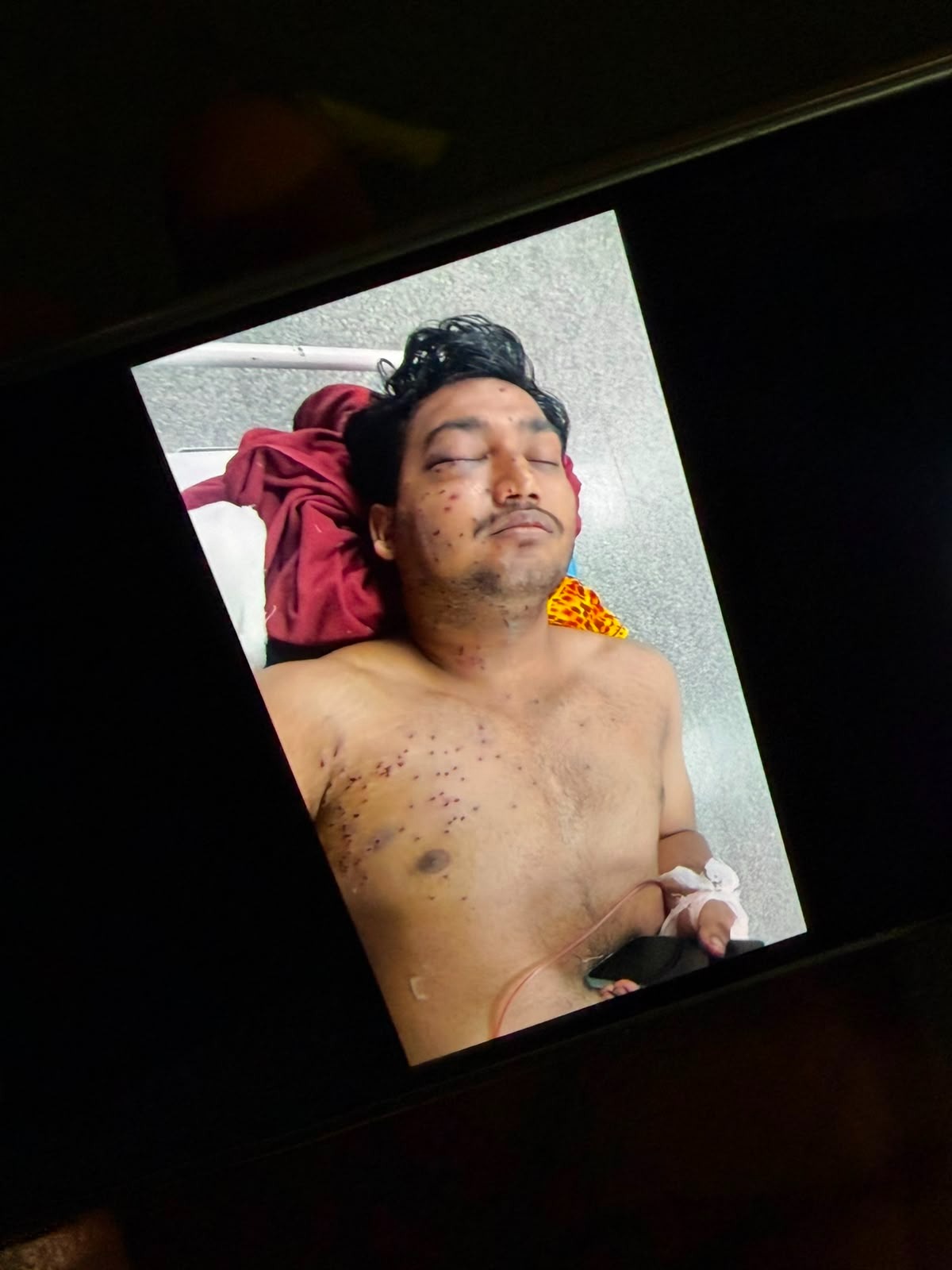
Videos, eyewitness accounts and news reports continue to emerge, including allegations that pellet guns were used against protesters. Police have denied the allegations, but my reporting and that of other media reveal otherwise, and the response on the ground has been striking: many of those arriving now say they came after watching videos of the crackdown.
It has been nearly six years since Delhi witnessed another defining confrontation between students and the police during the protests against the Citizenship (Amendment) Act (CAA). Images of police entering the campuses of Jamia Millia Islamia and Aligarh Muslim University helped spark a nationwide movement.
That movement was led in large part by Muslim students and women, who also became the principal targets of the state's response—and, as you read this, appear to be (here and here) singled out for special attention again. In the months that followed the CAA protests, activists and student leaders were arrested, charged under the Unlawful Activities (Prevention) Act (UAPA) and, in some cases, accused of terrorism in the Delhi riots conspiracy case.
This time, however, the police action was directed at a much broader cross-section of students and young people, united less by identity than by shared anxieties over examination leaks, public education and the scarcity of secure jobs.
The current protests were harder to characterise that way. They drew students and young people from a broader social spectrum, united less by identity than by anxieties over education, examinations and employment.
That anxiety is not without reason.
The Theft Of Opportunity
India's economy has continued to expand, yet employment generation has lagged behind growth. For millions of young people, competitive examinations have become one of the few perceived routes to secure employment.
When those examinations are repeatedly undermined by paper leaks and allegations of corruption, many see not simply administrative failure but the theft of opportunity itself.
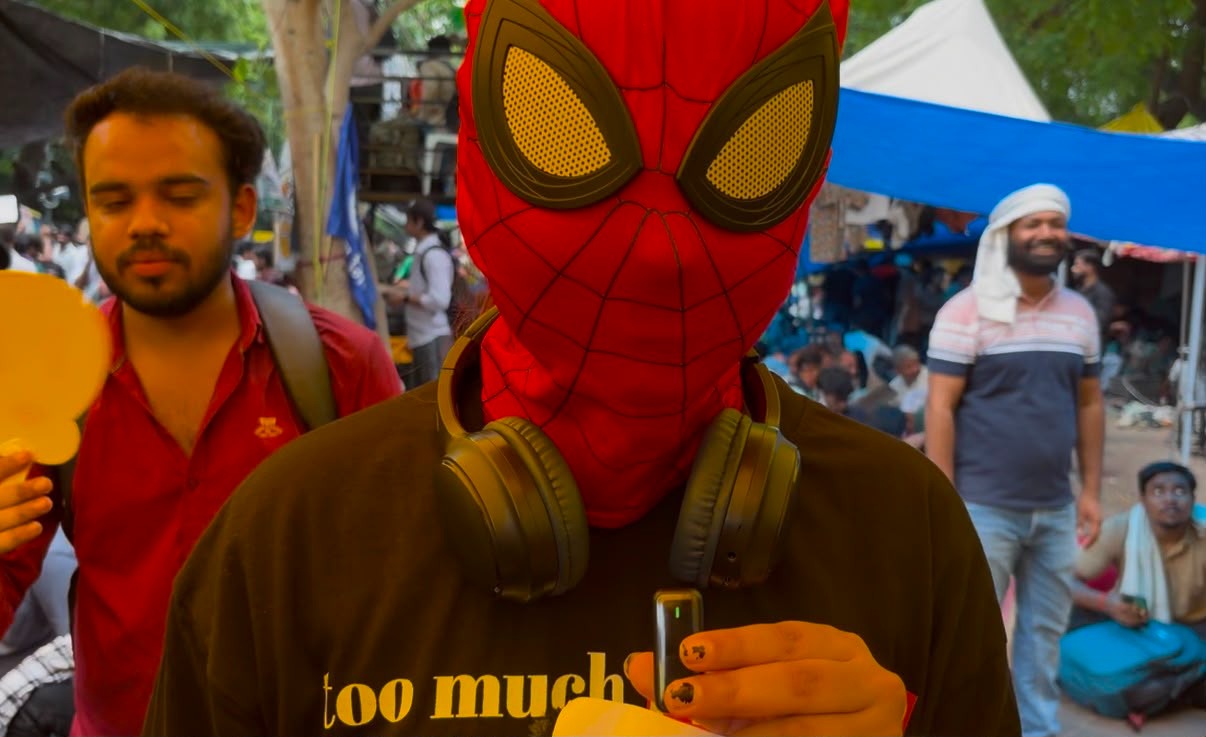
One 20-year-old woman, who asked not to be identified and wore a Spiderman mask over her face, told me she had intended only to attend briefly before returning home. She changed her mind after police fired tear gas.
At AIIMS Trauma Centre on 22 July 2026, I met the family of Sahil Lochab, who sustained pellet-like injuries during the protests. They said they were disappointed by the lack of response from the CJP leadership. But they also said the police action had strengthened, not weakened, their resolve to return to the protests in the coming weeks.
The protests spread nationwide. Student demonstrations, along with police detentions of Left student leaders, began in Bihar and West Bengal. In Mumbai, comedians posted videos of themselves being detained during demonstrations, alongside “get ready with me” protest reels filmed on their way to Azad Maidan and Dadar.
Whether this amounts to a wider youth movement remains too early to say.
What’s Different
Elsewhere, protests by Adivasis against displacement under the Ken-Betwa river-linking project have been suppressed with little national attention. Eight activists supporting factory workers in Noida remain in jail, some booked under the National Security Act. The Special Intensive Revision of electoral rolls continues amid allegations of mass disenfranchisement.
Yet something nevertheless felt different at Jantar Mantar.
Perhaps the most striking change was not the size of the crowds but their willingness to be seen. Mothers holding toddlers openly demanded the education minister's resignation. Young protesters readily spoke into reporters' phone cameras, criticising the government without the hesitation that has often characterised public dissent in recent years.
On Monday, as tear gas drifted through the crowd, I met 25-year-old Mohammad Anas wiping his burning eyes. He had travelled from Indore and told me he would like to stay on with the others, some who have now spent six days living on the pavements around Jantar Mantar.
It did not sound like optimism. It sounded like someone who had decided that returning home and accepting the silence was no longer possible.
(Sabah Gurmat is a freelance reporter based in New Delhi.)
Get exclusive access to new databases, expert analyses, weekly newsletters, book excerpts and new ideas on democracy, law and society in India. Subscribe to Article 14.