
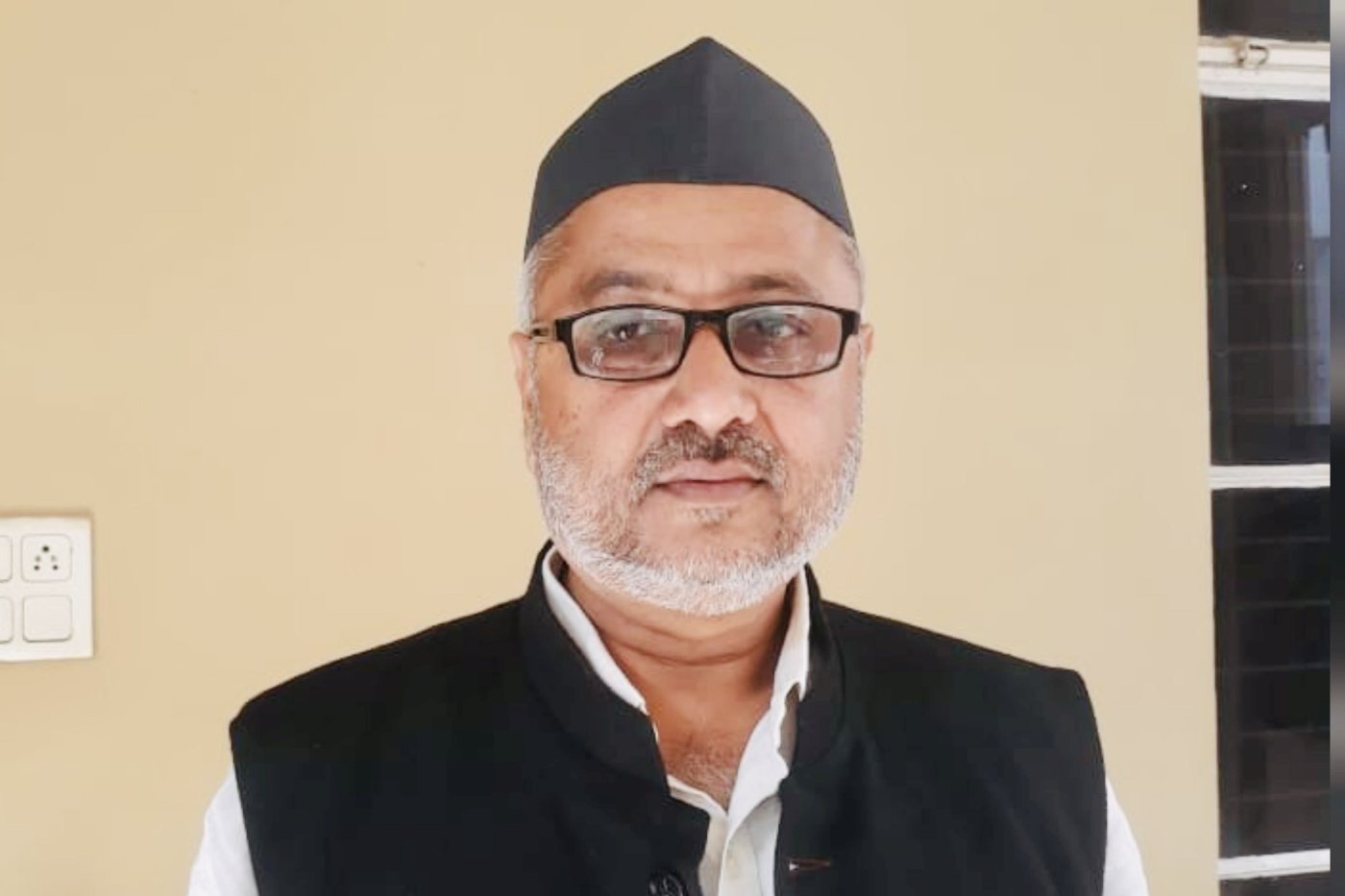
New Delhi: It was in his daughter’s home—a two-bedroom flat in New Delhi’s teeming Jamia Nagar—that I met Mohammad Jawed in April 2024. Government bulldozers had torn down his wife’s double-storeyed house in Prayagraj (formerly Allahabad), destroying much of his life’s savings.
A neat man with a trimmed, grey beard and a calm manner, Jawed, now 59, had spent 21 months in jail, fighting eight criminal charges and preventive detention. The judges did not find any convincing evidence that he had committed the crimes he was accused of and released him on 16 March 2024.
I met Jawed just weeks after his release. He was anguished but not broken. His spirited daughters—one 26 and a researcher and activist, the other 22 and a student (back then)—were still angry.
The spark that ignited the fire that consumed Jawed’s home and 21 months of his life was lit by demeaning remarks against the Prophet Mohammad by BJP national spokesperson Nupur Sharma in a television debate on Times Now on 27 May 2022. The recordings of her comments were circulated widely on social media and stirred outrage and protests by Muslims in India and abroad.
The first of these was protests in Kanpur in Uttar Pradesh on 3 June 2022 after the Friday prayers. The police dispersed the crowds and arrested many people. But the fires spread to many parts of the country, including Ranchi, Howrah, Bhiwandi and Udaipur, where stones were thrown, and people were killed in police firings and hate attacks.
In Prayagraj, Jawed, angered by the one-sided police action in Kanpur, posted on Facebook (now deleted after official pressure): “Why did the Kanpur violence occur? Why does the state government not investigate the real disease? Until when will people like Nupur Sharma and Yati Narsinghanand make obscene remarks against the Prophet Muhammad and the government and police will be quiet…”
After Friday prayers in Prayagraj the following week, on 10 June 2022, protestors gathered in large numbers. Some young men threw stones, but the police quickly dispersed the crowd with minimal use of force.
Jawed was not among the protestors. He even posted on Facebook, urging people to disperse peacefully. He appealed to Muslims not to gather after Friday prayers and instead to go home, and pray that harmony, peace and love would prevail.
*****
Later on 10 June, the police detained Jawed with around 125 other men. They were all forced to sit on the floor at the police lines the whole night. The next morning, Jawed said, a senior police officer hit him, asked him to lick his chappal and accused him of a “jihadi mindset”.
Many of the other men were also beaten and tortured, they alleged. No one gave them food or even water to drink.
That night, they were driven to the Naini Jail. Some who were badly injured and bleeding because of the police violence, and Jawed, whose blood pressure had soared, were admitted to the jail hospital.
Meanwhile, at home, his family—wife, two daughters and pregnant daughter-in-law—were fighting a mounting dread.
Social media posts called for the demolition of their home. The posts of government officials were openly intimidating. Chief minister Yogi Adityanath tweeted that his administration would deal firmly with the protests, with arrests under the National Security Act of 1980 and demolitions.
The NSA—most recently used against the Ladakhi activist Sonam Wangchuk in similar circumstances after a riot that police allege he instigated—allows police to detain those accused for up to a year without trial.
Data reveal the NSA’s misuse, as Article 14 reported in 2023, using 101 cases over nine years to show how the NSA and other laws like it are an obstacle to established principles of justice and fairness.
Jawed’s feisty elder daughter posted online a video about her fears that the state might bulldoze their home.
Around midnight on June 10, a police unit with women police officers visited their home. They said that Jawed’s family could visit him in the police lockup and give him some clothes and his medicines.
Jawed’s wife Parveen Fatima, and younger daughter Sumaiya Fatima packed his things and left with the women officers. However, instead of meeting Jawed in the police lockup, they, too, found themselves in a police station. They spent a fearful night sitting on its wooden benches.
The next day passed, yet the police did not release them. Another night came along. This time they were given some durries to lie on the ground and sleep at the police station.
On the morning of the third day, the police released his wife, Parveen Fatima, and daughter, but instructed them not to go home. Instead, they dropped them at the home of some relatives. That morning, bulldozers reached their home. Afreen and her pregnant sister-in-law had fled for fear of arrest.
There was no one home.
****
Nearly three years after Jawed’s family fled their home, 1,640 km to the southwest in the town of Malvan in Maharashtra, the teenage son of a Muslim scrap metal trader watched television with his parents in their small apartment. A cliffhanger cricket match between India and Pakistan was underway on 23 February 2025.
A local political activist, Sachin Sandip Waradkar, claimed to have heard the boy raising slogans supporting Pakistan as he passed their home. Waradkar complained to the local police.
A battery of crimes was mounted against the boy and his parents, including charges of disturbing communal peace and acting against national integration.
Three days later, the boy was detained and sent to an observation home for juveniles in conflict with the law, and his parents were arrested.
Bulldozers then arrived to raze the scrap dealer’s shop, without notice and with no indication of due process. It was notable that they did because less than three months earlier, on 9 November 2024, a Supreme Court bench of Justices B R Gavai and K V Viswanathan passed what was widely regarded as a landmark judgement.
By then, it was clear that demolitions in India had increase,d and Muslims were a particular target.
In a 2024 report, the Housing and Land Rights Network, a collective of lawyers, reported the highest ever number of demolitions since they began keeping a record in 2017. The same year, Amnesty International, the global advocacy group, released a report that studied 128 demolitions in four BJP states and found “an absolute failure of the state authorities to ensure that the survivors of these demolitions were afforded due process protections”.
The Amnesty report found that entire households were being punished, “including by arbitrarily detaining family members, and unlawfully demolishing their homes and businesses… a form of collective and arbitrary punishment that egregiously violates… the rights to a fair trial, adequate housing, dignity and non-discrimination”.
The Supreme Court judgement said that demolishing a person’s property without due process, solely based on alleged criminal activity, was unconstitutional, violating the fundamental right to shelter, derived from the fundamental right to life under Article 21 of the Constitution.
Justices Gavai and Vishwanathan forbade such demolitions because these amounted to unjust “collective punishment”, unfairly impacting not only the accused but also their innocent family members.
Yet, when the home in Malvan was demolished, a legislator from the ruling Shinde Shiv Sena, Nilesh Rane, now a minister in the Maharashtra government, posted visuals of the demolition on social media, applauding the swift response of both the police and the municipal administration.
In 2025, Article 14 reported how Rane accumulated political capital by calling Muslims Pakistani pimps, green pigs and green snakes; threatening to strip, beat them and urging Hindus to boycott them and demolish mosques. The police filed—on court directions—20 first information reports against him, 19 over the last two years.
On 15 December 2024, Rane, a former Congressman, who once criticised Narendra Modi and mocked the RSS, was sworn in as cabinet minister, conforming to a BJP pattern of not just political tolerance but reward for hate speech.
In February 2025, India Hate Lab, documented (if you cannot access this link, it could be because the Lab is frequently blocked by the union government) 1,165 instances of hate speech against minorities the previous year, with Prime Minister Narendra Modi and home minister Amit Shah among the most frequent purveyors—with Muslims the most frequent target, with 98.5% of recorded instances of hate speech directed against them.
***
The Supreme Court judgment did not go far enough, I argue, because it failed to acknowledge that several recent acts of demolition were lawless and unconstitutional, not just because of lapses of due process—something that has recurred through many decades—but because these overwhelmingly targeted only one community of citizens, Indian Muslims.
As we shall see in this series, the executive, both in the national government and in BJP-ruled states, continues to defy the explicit directions of the Supreme Court by persisting with these lawless demolitions targeting mainly Muslims in public demonstrations of masculinist performances of retributive justice.
I will argue that the paramount failing of the Supreme Court is that, at least until the time of my writing, it has not felt moved to remonstrate with the senior political leadership that orders and celebrates these acts of state lawlessness, let alone punish them.
Indeed, on 3 June 2025, Justice Gavai, speaking at the inaugural Sir Maurice Rault Memorial Lecture at the University of Mauritius, referred to his own 2024 ruling on illegal demolitions. “Legality alone does not confer fairness or justice,” he said. “It is important to remember that just because something is legalised, it does not mean it is just.”
“History offers numerous examples of this painful truth. The Rule of Law is not a mere set of rules,” said Justice Gavai. “It is an ethical and moral framework designed to uphold equality, protect human dignity, and guide governance in a diverse and complex society. The judgment sent a clear message that the Indian legal system is governed by the Rule of Law, not by the rule of the bulldozer.”
Demolitions are especially celebrative when they are brought to the aid of anti-Muslim hyper-nationalism. After the killing of 26 civilians by terrorists in Pahalgam in Jammu and Kashmir (J&K) on 22 April 2025, the state government used “controlled explosions” to raze the homes of at least eight men it suspected of being connected to the terror attack.
Such retribution was not confined only to Kashmir. Even in Gurugram, part of the National Capital Region, for instance, the homes of 300 Bengali-speaking Muslim informal migrant workers were razed, dubiously linking them to the terror attack only because of their religious identity.
Such state-detonated explosions were repeated half a year later, after a car exploded on November 10 near the historic Red Fort in the old city of the national capital, killing at least 12 people.
****
The union government announced that its investigations had shown that one Dr Umar Nabi was behind the wheel of the car that exploded, after DNA samples collected from the blast site matched those of Dr Umar’s mother.
In swift retribution, authorities detonated the family home of the prime suspect, Dr Nabi, in Pulwama in J&K. The house collapsed into rubble, and the blast damaged many neighbouring houses. The authorities possibly wore it as a badge of honour that they did not even issue a notice to the family before they devastated the house.
Criticising the demolition, Srinagar member of Parliament (MP) Aga Syed Ruhullah Mehdi on 14 November 2025 posted on X (previously Twitter) that “demolishing a home won’t deliver ‘punishment’”. It would only inflict “collective suffering”.
“Making an entire family homeless during the harsh winter of Kashmir without evidence/court order or any law linking them to the incident is an act of cruelty,” Mehdi said in his post. “It doesn’t bring justice to the innocent lives that we lost in the terror attack, and it doesn’t achieve the ends of justice.”
“Hold the actual perpetrators accountable through lawful investigation,” said Mehdi. “Mass detentions, coercive interrogations, and illegal demolitions will not bring peace; they will drag Kashmir back by decades.”
J&K chief minister Omar Abdullah also criticised the demolition of the home of the Red Fort blast accused. “If terrorism could be stopped by such actions, then it would have stopped,” he told reporters on 14 November 2025. “After the Pahalgam attack, how many houses were blasted? Did it (terrorism) stop? I fear instead such actions fuel anger.”
These demolitions in J&K were not exceptions.
The Jammu and Kashmir Coalition of Civil Society, headed by the well-regarded human rights activist Khurram Parvez—incarcerated for four years now—and the Legal Forum for Kashmir have documented at least 1,172 civilian homes demolished by the army or paramilitary forces on the pretext of military operations or retribution against Kashmiri men charged with militant violence between 2020 and 2024.
There is nothing in national or international law that lawfully sanctions or prescribes such demolitions.
The 2024 Amnesty International report on demolitions reviewed state municipal and land regulation laws, and found they fell below international human rights standards about prior “genuine” consultation, adequate notice, compensation, and alternative settlement.
“The state authorities failed to follow even the exiguous procedures laid down in the domestic laws while carrying out these demolitions,” said the report.
****
In Jawed’s hospital ward, where he was admitted under armed guard, there was a large television. On 12 June 2022, a Sunday, he listened to news reports that described him as the “mastermind” of the Friday protests.
On Sunday morning, he watched—stunned and heartbroken, he said—as images poured in of bulldozers razing his home. In their relatives' home, his wife and daughters, too, watched on television their home being brought down by bulldozers.
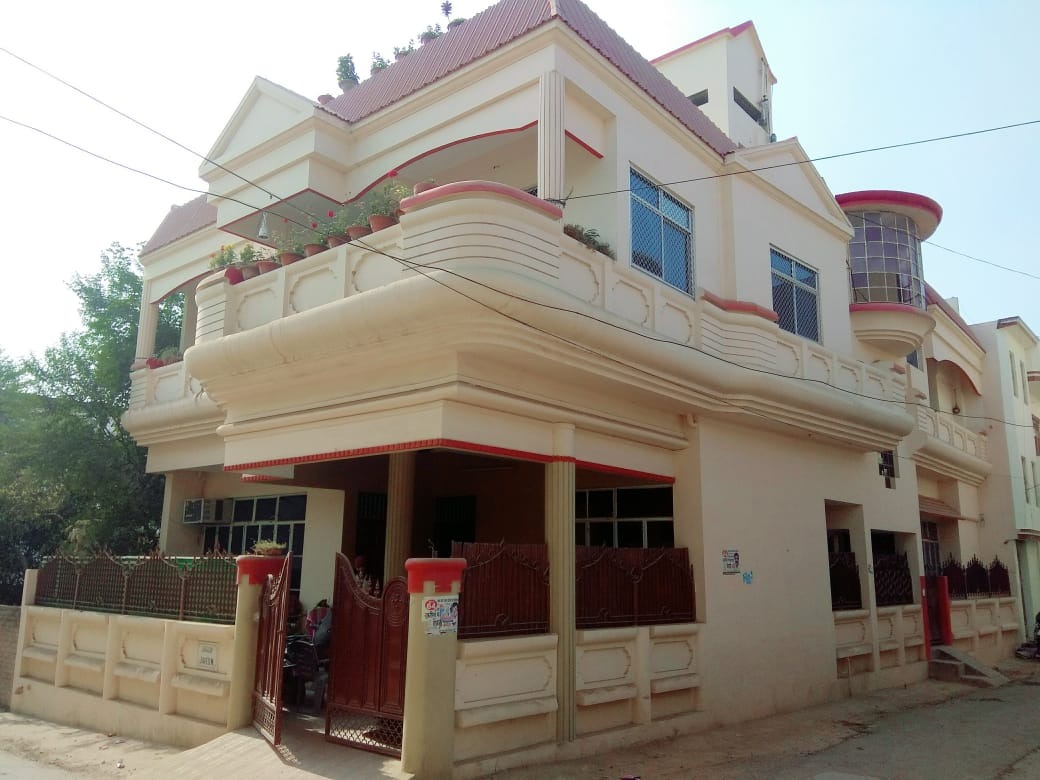
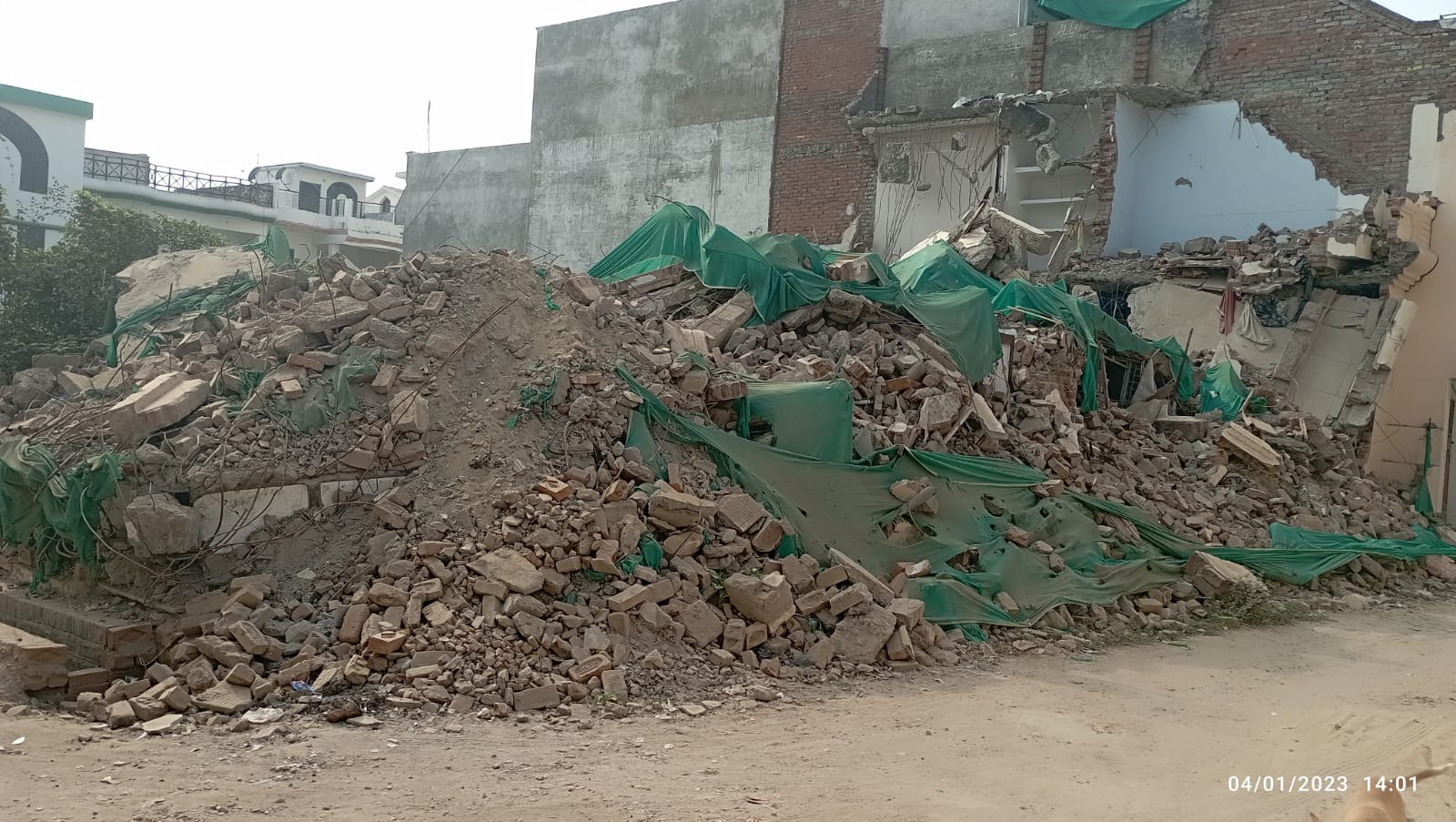
The two-storeyed house and the land on which it stood belonged to Jawed’s wife Parveen. If the house was being demolished to punish Jawed for his alleged role in the Friday protests, it mattered little to the administration that he did not own the house.
The municipal authorities claimed that the house was illegally built and that they had sent a notice on 25 May. This, the family denied. The officials pasted a notice only the night before on the door of the house, after all the residents of the house had been detained by the police or had left.
The municipality had collected taxes for years from the house, but never said the building was illegal. And, if indeed the house was illegally built, he argued, why were tens of houses on the same lane and other lanes not brought down when they were of identical legality as Parveen Fatima’s home?
Before the bulldozers moved in to pull down the house, the officers asked the neighbours to retrieve anything of value in just a few minutes. Most neighbours were too terrorised to move. A couple of neighbours ran into the house and pulled out a few things of value that they saw.
After that, the house was razed as a large crowd, and reporters with television cameras bore witness.
Reporting live, some television reporters revelled in the sight of the house crumbling before them. “This is not the home of a man”, one said. “It is the home of a rioter, and he has been given what he deserves”.
Another said, “Look at how many books he has. He should have read these instead of turning into a terrorist!”
The house razed, the bulldozers left, the journalists left, and then people converged to scour the ruins for anything they could loot.
Jawed recalled to me that as he watched his home being destroyed from his hospital bed, “Andar se meri aatma ro rahi thi (my soul was weeping inside me).”
“I began to weep, and soon tears welled up also in the eyes of the other men with me. They urged me not to watch, but how could I look away?” said Jawed. “All our life savings were reduced to rubble. I thought—my family is being made to suffer because of my social service?”
“How often have my wife and younger daughter pleaded with me to give all of that up, and to live a quiet life at home. If I had listened to them, they would not have become homeless.”
Jawed’s wife and daughters indeed had nowhere to go. Some relatives sheltered them for a few nights. But everyone was terrified that if they harboured them too long, bulldozers might reach their homes as well.
The daughters teared up as they explained, “No waste is greater than the demolition of your home. Even prison is not so bad”. People were scared even to rent them a home in Prayagraj. Ultimately, a distant relative rented them a small house in the periphery of the city.
They learnt that nine days later, Jawed and some other prisoners were moved to another prison, some 320 km away in Deoria. This made it harder for his family to visit him in prison.
“Prison is expensive”, his daughter explained to me. “Each time we visited him, this cost money. We would hand him money for his monthly expenses. And then there was rent to pay. But our home and all our belongings had been destroyed. Our father was in jail, there was no one to earn money every month, and the community was too frightened to be seen helping us. Those were very hard months.”
****
Jawed was charged first with five crimes connecting him with the protests and violence after the Friday prayers. After this, he was charged under the NSA. No lawyer was permitted to defend him before the advisory panel set up under this statute, pre-empting bail.
The Allahabad High Court took 10 months to hear his petition against his preventive detention, but it did not immediately pass any orders.
Next, three more criminal cases were filed against him. He was then charged under the Gangsters and Anti-Social Activities (Prevention) Act, 1986. After the Allahabad High Court finally granted him bail, the Uttar Pradesh police charged him under the Arms Act, 1959.
The allegation now was that the police recovered a 12-bore and a 315-bore pistol from his home after it was demolished. But no one from among the throngs of crowds of journalists and onlookers watching the demolition saw any pistols during or after the demolition. Jawed denies that he owned any pistols.
Finally, after 21 months and this battery of criminal charges under a range of stringent statutes, he was released.
What were the findings of various courts hearing these cases against Jawed? District court judges observed that Jawed was not named as an accused. While the police claimed he had a criminal history, it submitted no information about any convictions.
Justice Vikram D Chauhan of the Allahabad High Court, in his order granting Jawed bail on 5 February 2024, concluded that the allegations of the police against him were “vague in nature” with no “factual foundation”. The police had disclosed “no specific instance” to show he was the leader or organiser of a gang.
There was no evidence to show that Mohammad was an “instrument” of violence or instigated a mob, said Justice Chauhan.
“General allegations without material particulars and evidence against the applicant could not by itself (sic) be a ground to deny bail to the applicant in view of Article 21 of the Constitution of India,” said Justice Chauhan
Justice Ajay Bhanot absolved Jawed of any involvement.
“He is a law-abiding citizen who holds the unity of the country and amity between various communities very close to his heart. The applicant has neither posted nor shall post any messages which disrupt social harmony in the society,” said Justice Bhanot. “Several people had gathered after Friday prayers, for which the applicant cannot be held responsible. Neither is the applicant culpable for irresponsible acts of violence committed by some persons.”
First of a six-part series.
(Harsh Mander is a peace and justice worker and writer. Omair Khan provided research support. This work was supported by Diaspora In Action for Democracy and Human Rights.)
Get exclusive access to new databases, expert analyses, weekly newsletters, book excerpts and new ideas on democracy, law and society in India. Subscribe to Article 14.