
Bengaluru: History reminded me this week that physical barometers of segregation and discrimination are less insidious than the mental dehumanisation of an entire community. In an essay called Notes on Nationalism written 80 years ago, George Orwell—that prophet of the coming era of the “unperson”—wrote how human beings can be reduced to the status of insects “and that whole blocks of millions of people can be confidently labelled ‘good’ or ‘bad.’”
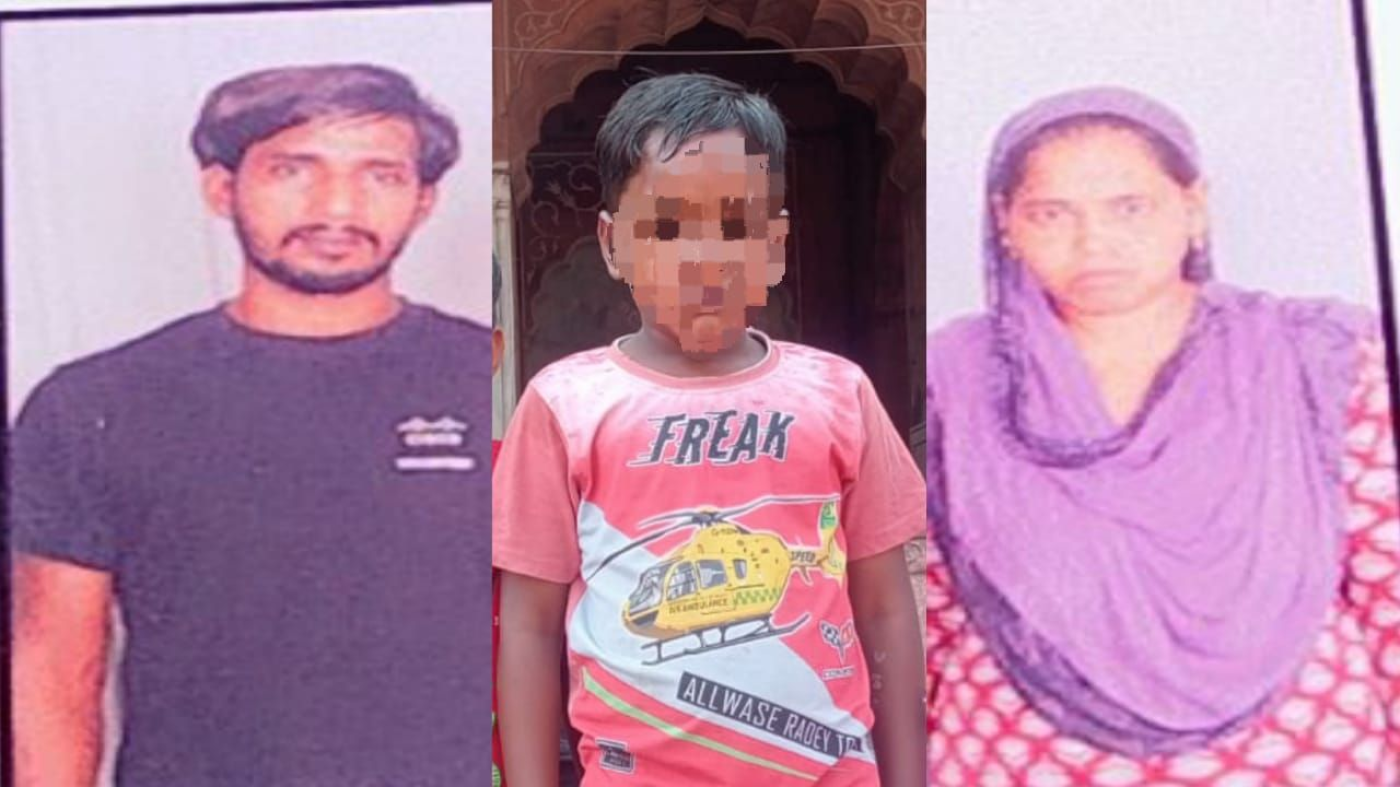
Sunali Khatun, 26, is among the millions that India’s majoritarian process is trying to move into the category of “unpersons”, those to be labelled bad and erased from existence and memory and denied legal protection. Khatun’s case gained nationwide prominence only because it appeared to be not only a blatant violation of the law, but was perpetrated by those meant to be its custodians in a country where the dehumanising terminology of “termites” and “infiltrators” flows from the home minister and Prime Minister. Her case provided a link between the government’s actions and the larger ideological project to reclassify or invisibilise India’s largest minority.
On 3 December 2025 the Supreme Court ordered the return of a heavily pregnant Khatun, a Bengali, and her nine-year-old from Bangladesh, a country foreign to her and to which she had been deported in June, after being detained from a Delhi slum during a police sweep. When Khatun could not immediately produce papers, she was bundled into a plane, flown to the border and, as they say, “pushed back”, meaning forced across the border along with another Bengali woman and her two little sons.
Even a government notorious for denying straws and spectacles to aged political prisoners in jail had to reluctantly agree with the Supreme Court—before whom it was contesting a Calcutta High Court order to bring the deportees home—that Khatun and her child could be brought back on “humanitarian grounds”. Even though it sounded like it, there was little magnanimity involved. The Chief Justice mildly noted that Khatun’s father was Indian, which meant she and her son were too.
(We also found that this week that the Chief Justice was no advocate of humane treatment to refugees: “Do we roll out a red carpet?” he said of Rohingyas who had disappeared from state custody. He might want to take inspiration from a movie I saw recently, Jolly LLB 3, where a smarmy, somewhat greasy district judge had something useful to say: “In our constitution, two things are very important. One letter and one spirit. Meaning what's written in the law and the sentiment behind it. Everybody focuses on the letter. Follow what's written. Close the files and go home, right? Is chakkar mein na, the spirit is left far behind. Sometimes, I try to hold on to the sentiment”).
It was no coincidence that Khatun and her fellow deportees were Muslim, and it was no coincidence that due process was denied to all of them.
Denying the protection of the law to Muslims, handing out arbitrary punishments for crimes imagined or otherwise or creating a raft of new laws to restrict their fundamental rights to eat, pray, live or love is normal in Modi’s new India. In March, I argued that an apartheid state was rising in India, the pressure on the police from down below and up high, from the masses and the people they elect, to follow a bullying, majoritarian agenda that effectively discards the requirements of the law and the Constitution and cleaves Hindu from Muslim.
The attempts to institutionalise apartheid and dehumanise India’s Muslims are apiece—as many have noted (here, here and here)—with the early days of the Third Reich and the darkest days of Rwanda, the former Yugoslavia and South Africa. If Rwanda radio broadcasts urging the extermination of “termites” led to the genocide of that country’s Tutsi minority by Hutu mobs, the parallels in India are disquieting.
But there are important degrees of separation between the terms that explain—and the processes that lead to—the physical brutalising of a people. In Playing the Enemy, a 2008 book that inspired the movie Invictus and described the era of Nelson Mandela and how he used rugby to heal his fractured nation, British journalist John Carlin writes that Mandela had described apartheid as a “moral genocide”, not annihilation by death camp but the “insidious extermination of a people’s self respect”.
The agenda to scrub that self respect and push Muslims into second-class status has been so effective that instances of official and unofficial bias and intimidation are either not reported or, if they are, barely register with India’s pliant media and radicalised or indifferent majority. That majority has been, as I wrote in September, narcotised by the incessant drone of State and non-state propaganda delivered via some of the world’s cheapest bandwidth.
Two days ago, India’s News Broadcasting and Digital Standards Authority, a self-regulatory body, issued the latest of what are now routine censures, this time against five news channels (News18 MP Chattisgarh, ABP News, Zee MP Chattisgarh, Zee News, and India TV), for spreading the anti-Muslim conspiracy theory of “love jihad”, based on a fictional letter featured in a Class 3 text book written by a girl named Reena to a boy named Ahmad. Of the dehumanising “jihads” that media and social media have accused Muslims of in the Modi era, there is no shortage.
In such a malevolent atmosphere, routine indicators of discrimination barely register: Muslims warned by Hindu extremists to stop working on construction sites in Assam; a Muslim hectored to give up a property he bought in a “Hindu” area (the latest of many cases); or the state of Uttar Pradesh withdrawing murder charges against Hindus who battered to death ironsmith Mohammad Akhlaq in 2015, a case that launched an era of lynchings. In the Akhlaq case, most notable is the government’s intent: to exonerate the alleged murderers for the sole reason that they were Hindu and their victim was Muslim.
In any case, laws to institutionalise discrimination and dehumanisation are already in place, and they are spreading.
Last month, a BJP government in Rajasthan said it would promulgate a Disturbed Areas Act, similar to the Gujarat Disturbed Areas Act, 1991, which prohibits “distress sales” of properties in areas of potential unrest, a thinly veiled reference to segregation. We would do well to recall South Africa’s Group Areas Act 1950, which racially segregated people and forced millions into grim townships and so-called “homelands”. A year earlier, the evolving apartheid state had given birth to the Prohibition of Mixed Marriages Act, an extreme version of India’s conversion laws, the primary and unstated aim of which is to stop mixed marriages—or, to be accurate, Hindu women from marrying Muslim men..
In October, we reported how Rajasthan had become the 12th Indian state to promulgate legal measures to curb so-called forced religious conversions by passing the Rajasthan Prohibition of Unlawful Religious Conversion Bill, 2025, the most draconian in India yet. By providing for life imprisonment, seizure and demolition of property of those accused of conversions, the Rajasthan law effectively legalises arbitrary bulldozer demolitions that especially target the properties of religious minorities—an extrajudicial method now given legal sanction and a phenomenon Article 14 first documented in 2022 as collective illegal punishment.
Anti-conversion laws, many euphemistically called “freedom-of-religion” laws, violate fundamental rights and trample on personal decisions about beliefs and partners, rights guaranteed under Article 21 (life and personal liberty). These legislations hand the State wide powers to restrict marriages and empower vigilantes, allowing them to effectively become a gatekeeper of personal relationships. The targets of these laws, as ever, are Muslims (and Christians). The Supreme Court began hearing challenges to the anti-conversion laws of nine states in January 2023 on grounds that they were unconstitutional. There’s no saying when a judgement might come. Judicial delays and reluctance to intervene swiftly means that such laws are likely to only grow in strength.
Late on the night of 6 December, an exhausted looking Khatun and her little boy finally walked back into her country, a small moment of triumph—and no more than a blip in the moral genocide grinding its way onwards.
(Samar Halarnkar is Founding Editor of Article 14. This is a version of an editorial sent to subscribers.)
Get exclusive access to new databases, expert analyses, weekly newsletters, book excerpts and new ideas on democracy, law and society in India. Subscribe to Article 14.