
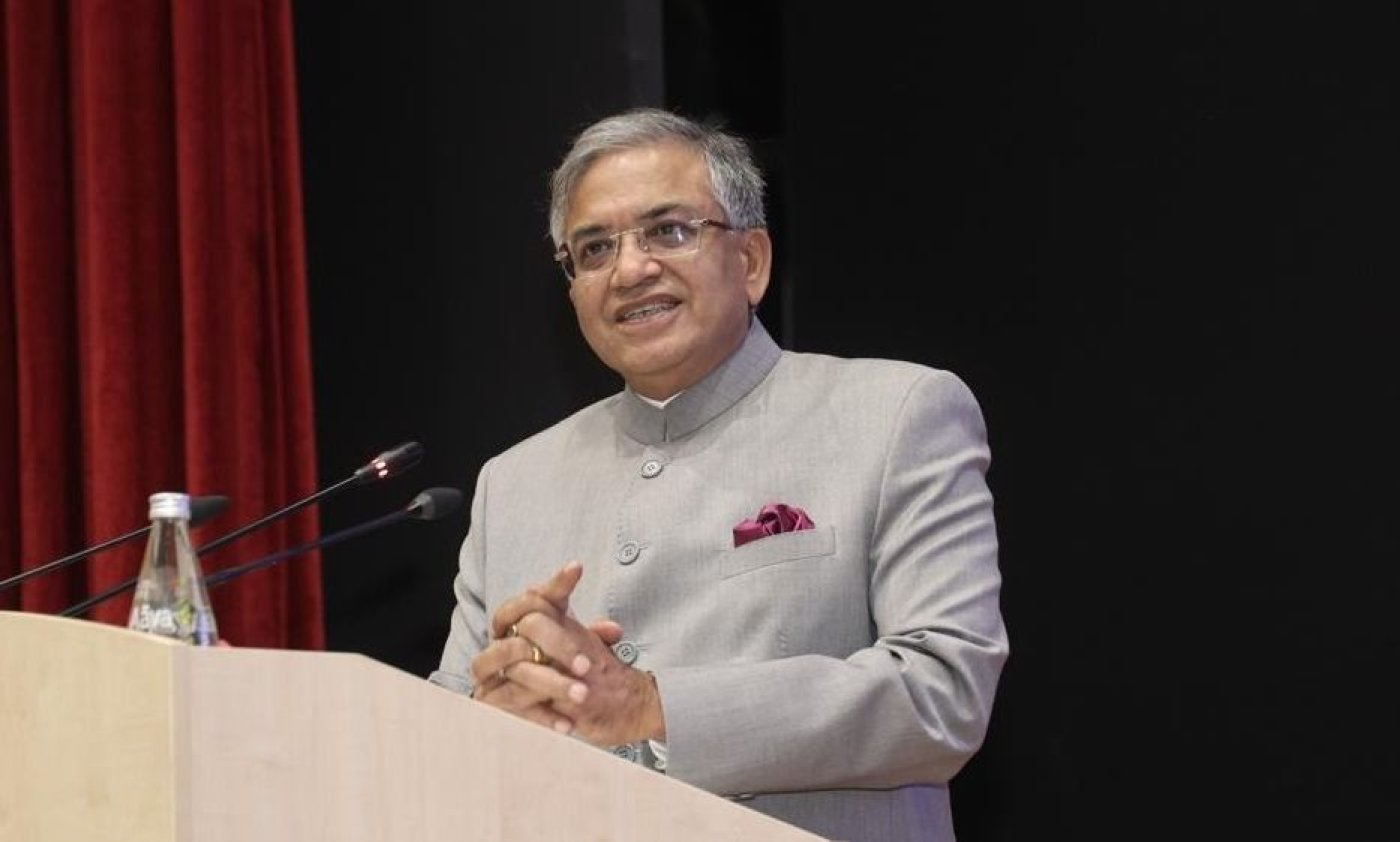
Bengaluru: On the face of it, the Election Commission has conceded considerable ground in the six weeks since an Indian Express investigation revealed that two of chief election commissioner Gyanesh Kumar’s colleagues had repeatedly objected to his decisions. Protests have grown, and more of us than ever have been drawn into a battle that should never have been ours to wage. Forms 6, 7 and 8, once arcane electoral jargon, are now the stuff of living-room and tea-shop conversations and Instagram reels.
This week, caught in a chaotic tangle of its own contradictions and false claims, the Election Commission pulled the special intensive revision (SIR) declaration out of Form 6, the online form used to enrol new voters. That reversed a change election commissioner Vivek Joshi had called “illegal” in May, saying it could not be made without amending the law.
On 6 November 2026, it went further.
Only three days earlier, the Commission had insisted that deleted voters re-register through Form 6, the form meant for first-time voters, even though the Supreme Court had asked why people already on the rolls should have to do so. Now it has given 45.2 million voters dropped from draft rolls in seven states a fresh chance. Those still at the same address can submit their original enumeration form with a note explaining the delay, and those who moved within the state need not file a separate address-change form.

The messy reprieve covers only the seven states whose final rolls are yet to be published, not states such as West Bengal, where they already are. With about 130 million names excluded across 20 states and union territories, the Commission has also announced special camps to bring back voters missing from the draft lists, and Delhi’s schedule has been revised three times in three months.
The biggest climbdown appeared to come on 26 September.
New Delhi Is Still In Control
Joshi and the other election commissioner, Sukhbir Singh Sandhu, had lodged at least 14 objections, including to central control that had eroded the powers of electoral registration officers (EROs) across states and union territories. The law makes EROs responsible for the country’s electoral roll.
In response to the grievances of messrs Joshi and Sandhu, a Commission press note ordered a review of legal compliance on ECINET, the Election Commission of India's unified digital platform, its front end that combines over 40 voting services—like registering to vote, checking voter lists, and finding candidate details—into a single website and mobile application.
The Election Commission has indeed retreated from many previously defiant positions, but here’s the thing: it apologises for nothing; the implementation of claimed concessions is often dubious; the retreat is piecemeal and riven with disorder; and it does not concede ground on a critical issue—a kill switch that appears embedded in ERONET, the backend software that runs the electoral system.
Consider the committee, headed by the Commission’s own senior deputy election commissioner, that will carry out the ECINET review, with, according to its press note, a single expert from an Indian Institute of Technology or Indian Institute of Information Technology. Neither has the Commission said whether it will ever make the report public nor has it given up the kill switch.
Sandhu had warned that control from the Commission’s IT division in Delhi had stripped state, district and constituency officers of their legal powers. The Election Commission says only that its systems are secure and that those powers remain intact.
Evidence from journalists and independent watchdogs, such as Charchagram (a civic technology watchdog that revealed the kill switch in the Election Commission’s own code—I recommend you follow them), confirms central control of the electoral system. Much of the damage runs through Form 7, the application to object to someone else’s name on the roll, on the grounds that they have died, moved or are ineligible, or to remove one’s own.
Deletions: Tip Of A Dark Iceberg
A Form 7 is meant only to start an inquiry: the Commission itself says no name can be deleted without the voter being heard. Remember that deletions—automated or otherwise—are so widespread that whatever is being revealed appears to be flashes in the great darkness that is Kumar’s electoral system:
- In Uttar Pradesh, where state elections that may decide the BJP’s fate are only months away, ERONET generated deletion forms on its own, stamped them with officers’ digital signatures and sent them up for approval. Four officers said the software produced these forms in their name even when they had refused to approve a deletion, though the state’s CEO rejects the findings.
- In Karnataka, Form 7 abuse has attracted criminal investigation: in Aland, before the 2023 election, 6,018 deletion requests were filed, and only 24 proved genuine. The police have since filed a 22,000-page chargesheet naming a former BJP MLA. During this year’s SIR, the state received 91,278 Form 7 applications in under four months, and police have registered multiple FIRs over bulk filings against voters still living at their addresses, most of them Muslim. The Hindu then found that election staff themselves had filed auto-generated Form 7s, with no reasons given, against 61,059 voters. Almost all of these came after the claims period closed on 23 September, and 10,105 were filed on 22 October alone, the last day for deciding objections.
- In Goa, EROs who found deleted voters eligible had no way to restore them, despite eight requests from the state’s CEO. On 5 November, the Bombay High Court at Goa ordered the Commission to restore six members of a family struck off during the SIR, and refused its request to stay the order while it appeals to the Supreme Court, which should be inspired by such decisive action to protect voting rights.
- In West Bengal, the Commission’s re-enrolment drive—launched after Supreme Court orders—leaves out voters whose appeals against deletion are still pending before tribunals, and about 2.2 million of the 2.7 million deleted have appealed. Meanwhile, the Commission has filed appeals to remove nearly half the voters judges had cleared, more than 1.6 million of them, and records show these were generated in bulk by a centralised batch system rather than filed by individual officers. Even after 26 September, a Charchagram audit found code that could hide two roll tools from West Bengal officers. It was still present as of 19 October.
- In Rajasthan, the Election Commission declared about 875,000 voters dead during the SIR. Yet the state election commission, while revising its own panchayat rolls, found 182,440 of them alive and entitled to vote in the village polls now under way, The Reporters Collective reported today. If both lists are right, these citizens can elect their sarpanch but not their MLA or MP.
Millions Of Mysterious New Voters
Unexplained deletions are only part of a story of electoral malfeasance stretching back at least eight years, as I said in my last edit note. I wrote that superficial damage control was unlikely to affect the hostile takeover of the Electoral Commission.
In recent years, the electoral rolls and voter counts have also swelled in ways that have never been explained.
For instance, in the five months between the 2024 Lok Sabha and Assembly elections, Maharashtra added more than 4 million voters, against about 3.1 million in the previous five years, a rise the Election Commission called not abnormal. On polling day, turnout stood at 58.22% at 5 pm and reached 66.05% the next day, a jump of roughly 7.6 million votes. Maharashtra’s chief electoral officer dismissed the 7.6-million jump, saying it worked out to an average of just 76 extra voters per booth. The Election Commission called it a misconception to treat the 5 pm figure as anything close to the final count.
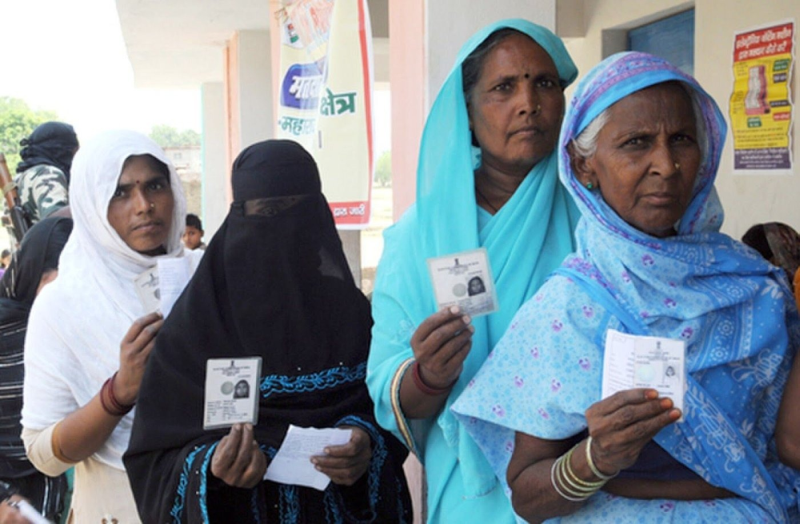
Jharkhand, which voted on the same day, saw turnout rise by less than one percentage point after polls closed in the second phase of voting. In Bihar, the rolls jumped by half a million in a single month, and the SIR added 2.1 million names when, by the Opposition’s count, only 1.69 million Form 6 applications had come in by the deadline. No one has shown that these numbers were entered from Delhi. But when the roll is controlled centrally, and its logs are sealed, no one can show they weren’t.
ERONET took away the EROs’ legal discretion, and it is being handed back to them the same way: by changing an application and announcing it in a press note, with no published specification, no audit, and no account of what the software did before. A petition before the Supreme Court now seeks full, decentralised access for EROs and preservation of the audit trail. One of the two petitioners, the indefatigable transparency activist Anjali Bhardwaj, has said, “The ECI is doing someone else's bidding, and we have proof.”
While the Supreme Court has forced the Election Commission to make concessions, it is unlikely to examine the proof Bhardwaj claims to have or the trail leading to the ruling party, which now expends considerable effort and energy strenuously defending a supposedly independent but deeply compromised institution. What the Supreme Court can and must do now is somehow disconnect or smother the kill switch in New Delhi.
Without that, concessions and protests may lead nowhere; Kumar will continue to do what he will, and a boycott of elections—as some have suggested—may be the only option left.
(Samar Halarnkar is the founding editor of Article 14.)
Get exclusive access to new databases, expert analyses, weekly newsletters, book excerpts and new ideas on democracy, law and society in India. Subscribe to Article 14.