
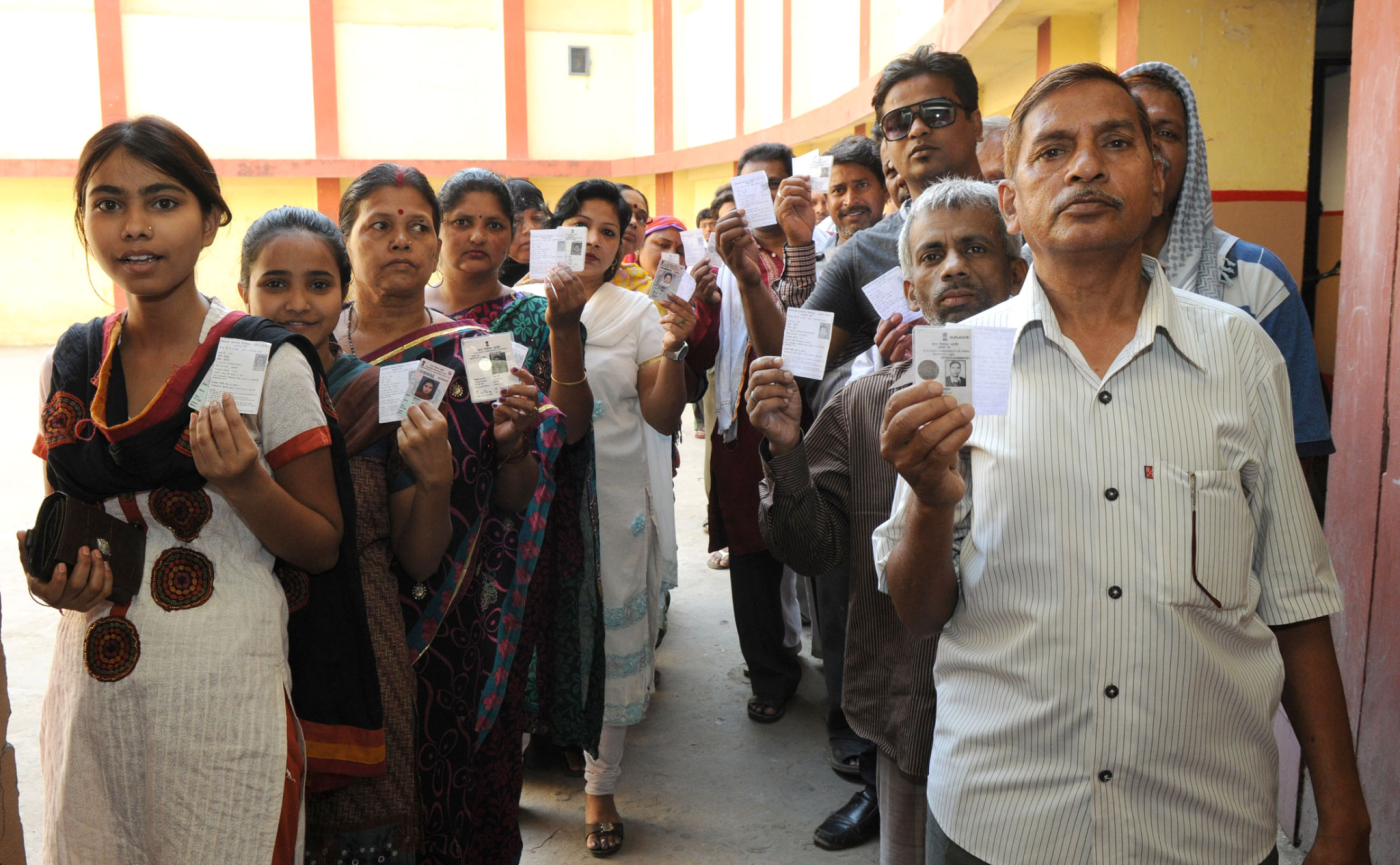
Bengaluru: As you read this, about 60 million names have been deleted from India’s voter rolls across 14 states and union territories since 2025, under what the Election Commission calls a special intensive revision (SIR). This is the net figure after adding new names. In a nation where such numbers attract as much attention as potholes on a road, some perspective is relevant—it would be like disenfranchising the population of Italy, Argentina or South Korea in one fell swoop.
In any democracy with a growing population and a truly committed commitment to universal adult franchise, a revision of voter rolls should have led to a net increase in voters. Instead, the opposite has happened in India, as the psephologist Yogendra Yadav has pointed out: 625 million people live across the 14 states and union territories in question, with 610 million voters. But instead of an increase, he notes, the number of voters has fallen to 550 million.
Two phases of the SIR are over, and the third is rolling out in 16 states and union territories. The rough deletion rate is about 10%. Project that onto the Indian voting population of nearly 969 million voters, and it is safe to say that by the end of the third phase about 100 million are likely to be deleted from the rolls. That is more than the population of Iran or Germany. Put another way, those deleted would form the world’s 17th most populous country—of un-citizens.
If you have not been a subject of the first two phases of the SIR, you would do well to gather your wits and documents. Disquiet is entirely in order. Ask me. I voted in the last two general elections from Bengaluru, but the Election Commission says you must prove that you voted in 2002 to be added to the electoral roll easily. But I lived in Delhi then, and I was never a voter there.
I have an Election Commission identity card, Aadhaar, Passport, and an electricity bill linked to my current address, but SIRs from the first two chaotic phases, with their arbitrary, shifting guidelines, indicate there is no guarantee that the local Election Commission office will accept any of them. I do have a 10th standard marks card from Delhi, but I cannot find my birth certificate, which in any case would be useless because it says my name is “Baby Shailaja”.
I am more privileged than the vast majority of less-fortunate Indians. I do not use any government schemes, but not being able to vote would be catastrophic, even to me.
After disenfranchisement, millions of Indians find themselves not just without a vote but faced with the prospect of losing access to government social-security programmes and bank accounts, as the new BJP governments of Bihar and West Bengal have already declared, preparing to cast them into a twilight zone of existence as un-citizens, a vast underclass without rights, India’s untermenschen. West Bengal’s new BJP chief minister Suvendu Adhikari laid out his party’s vision this week. “No deceased person, illegal infiltrator, or non-Indian individual will be allowed to avail benefits meant for citizens of the state,” he said, referring to those deleted from the SIR.
Second-Class Citizens
Electoral exclusion, as US history and the latest developments in New India confirm, is rarely about voting alone.
Whoever controls Parliament and other elected bodies controls policies, resources, policing, funding, meaning all of government. So, denying the vote is an efficient way to subordinate a group of people across all aspects of life. In other words, make them second-class citizens, dependent on the mercy of the majority.
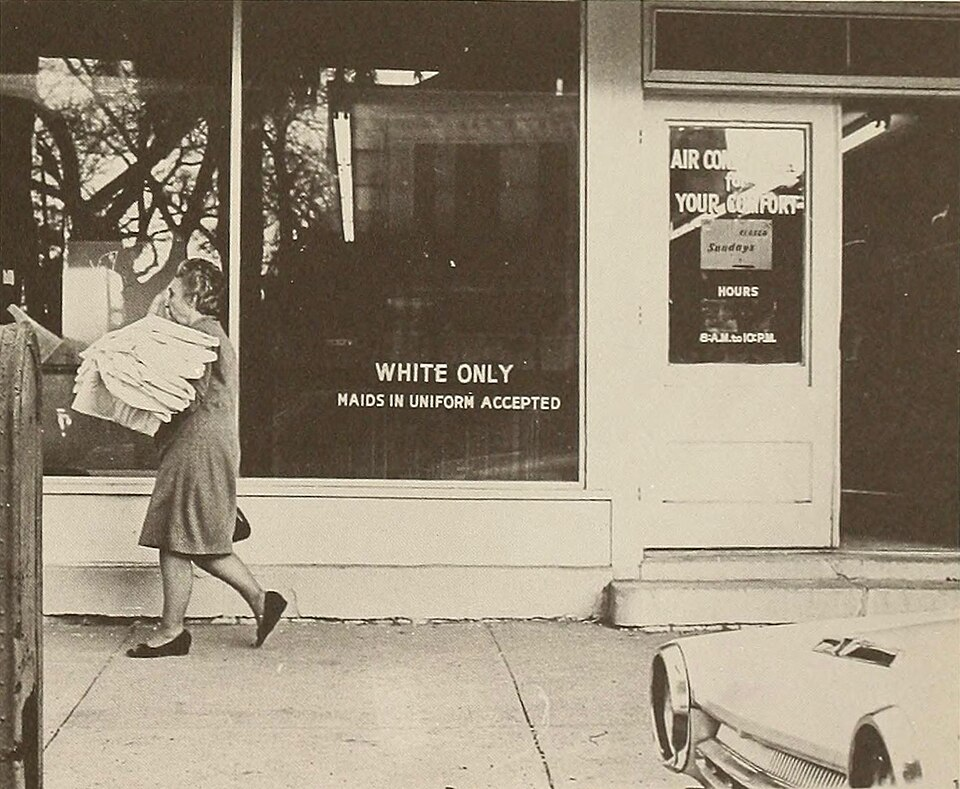
In the era of Jim Crow America (which ran for a little less than a century before the year I was born, 1965), the southern states, used the 15th Amendment of the Constitution in 1870 to nullify the Constitutional right of black men to vote, even though this amendment granted voting rights regardless of race.
But it did not guarantee the right to vote; it only prohibited denial of the vote on specific grounds. The southern states were quick to introduce a raft of what they argued were race-neutral requirements to vote, such as literacy tests, poll taxes, property ownership, and white-only primaries. Most blacks could not meet these qualifications, and once they were disenfranchised, all-white legislatures passed and enforced segregation laws for housing, schools, and public life.
In India, a majoritarian project to erase, segregate or dehumanise Muslims is already underway. In March, I wrote about the rise of an apartheid state, enforced by Hindu fundamentalists and the police and drafted into law. Almost every BJP state now has anti-conversion or cow-slaughter laws, which many non-BJP states also have.
The Modi government will doubtless carve out escape routes for poor Hindus who are disenfranchised. That was clear in Assam, where the National Register of Citizens was pioneered, laboured over for years, presided over by the Supreme Court, and eventually discarded after it found more Hindus than Muslims to be non-citizens. Many are still interned in detention camps.
So, too, in Bihar and West Bengal, where government ministers this week indicated that exceptions would be made for those who stand to lose welfare benefits after being deleted from voter rolls and classified as “non-citizens” or “illegal infiltrators”: Those who have applied for citizenship under the Citizenship Amendment Act of 2019, namely Hindus, will likely be exempted from immediate exclusion or allowed a pathway to retain citizenship.
The ‘Grandfather Clause’
Such exceptions, delivered by political and administrative sleight of hand, were pioneered by the land of the free and the home of the brave.
When it was apparent that poor whites would also be disenfranchised through, say, poll taxes or property requirements, southern states in the US introduced a “grandfather clause”, as it was called. Avoiding any mention of race, it said that Americans whose grandfathers or ancestors were eligible to vote before a certain date, such as 1 January 1867 or the end of the Civil War of the late 1800s, were automatically exempt from voting restrictions.
That automatically excluded African-Americans because the 15th Amendment was passed only in 1870, and slavery was officially abolished only in 1865, which meant enslaved blacks and their descendants could not possibly have had grandfathers who voted before 1867. Poor or illiterate whites would have no problems claiming voting rights.
As the SIR progresses and disqualifies Hindus along with Muslims, the list of creative carveouts for Hindus may grow, but possibly not for all Hindus. Millions who do not vote for the BJP are Hindus, with 2019 election data showing the poorer, less educated and lower castes tend to be wary of the party. In 2019 and 2024, data from the think tank Lokniti-CSDS and subsequent analyses (raw data is here and here; the interpretations here, here, here, here and here) showed that a clear majority of upper-class, upper-caste voters chose the BJP, although the BJP’s base and support among the lower castes and classes have grown since 2014.
Yet, three fault lines—tampering with electoral rolls, manipulation of the voting process, and skewed counting of votes—fuelled by partisan misuse, opaque systems, and an Election Commission increasingly unaccountable after new legal immunities, have clearly emerged, as this October 2025 Article 14 analysis showed, one of several questioning the declining reliability of India’s voting machinery.
A Govt Choosing Its Voters
Despite the dubious nature of the SIR, with the Election Commission changing and shifting goal posts and consistently refusing transparency, the last port of hope for those deleted, the Supreme Court, has done little to ensure electoral justice.
“This election, yes, perhaps they can't vote,” Justice Joymala Bagchi said in April 2026 when it was apparent millions would not vote in Bengal elections. “The more valuable right to remain on the rolls shall be preserved.” There is no indication that is happening.
India, as I have written before, appears to be moving inexorably towards a one-party state. If it all falls apart, the Supreme Court will have played a significant role in enabling the disenfranchisement of millions without providing clear or accessible remedies.
Before the Assam and West Bengal elections, serious questions were asked of the 2019 general election results and many state elections, such as those in Haryana and Maharashtra (if you’re interested in the Election Commission’s denials, here they are). A study of the 2019 Lok Sabha elections by the economist Sabyasachi Das found evidence that suggested planned deletion of Muslim names from the electoral rolls and discrimination against Muslim voters on polling days in closely contested seats, which the BJP won. His evidence was not conclusive, but the questions have only grown since.
The one-nation-one-election commitment that Narendra Modi made in 2024 makes sense now, dovetailing as neatly does with his desire for a “Congress-mukt Bharat” in 2014, perhaps progressing towards an Opposition-mukt country. There is now mounting evidence that India’s electoral system is being steadily undermined to produce a dispensation in which, as one wag put it, the government chooses its voters rather than voters choosing their government.
(Samar Halarnkar is the founding editor of Article 14.)