
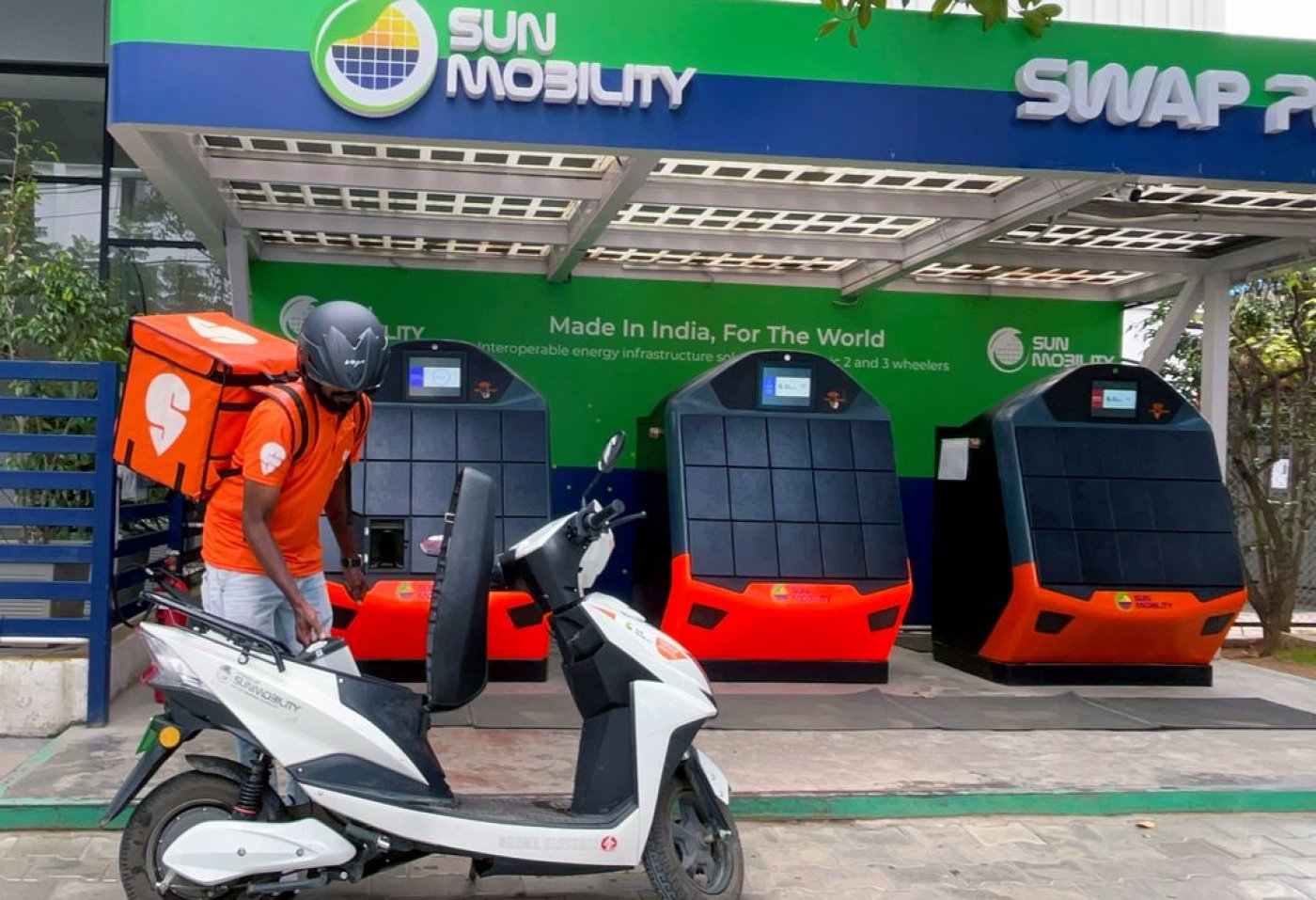
We’ve recently seen several pieces of excellent writing on India’s gig workers, all of which should unsettle even the cheerleaders of platform capitalism.
Vivek Kaul dismantles the claim that platforms are engines of job creation, by returning to what free-market capitalism actually entails. Andy Mukherjee argues that while gig work may look capitalistic to consumers, its labour conditions are pre-capitalistic, with riders supplying their own vehicles and fuel.
“Even a sharecropper who bought his bullocks and paid for seeds could aspire to an assured tenancy,” Mukherjee writes. Also read professor Ravikant Kisana’s The Fragile Tantrums of India’s ‘Tech Bros’; Himanshu’s assessment of gig workers as the new casual labour, and Soumyarendra Barik’s finely reported account of three days he spent working as a delivery partner, with granular insight into the platforms’ exploitative practices.
With consumers appearing to sympathise with the workers, despite Zomato founder Deepinder Goyal’s indignant posts on X, including presenting the 31 December 2025 strike as a non-issue, the government rapped Blinkit, Zepto and Swiggy on the knuckles over the ’10-minute’ service, citing fears of rash driving by riders and low pay for not completing orders within the stipulated 10 minutes.
Expectedly, this has produced a familiar ritual. A symbolic concession dressed up as reform now has “quick” commerce companies promising to drop the 10-minute delivery guarantee. If you ordered anything on any of these platforms over the last few days though, you know that your emergency requirement for spray-on car wax or eyelash glue was fulfilled in 16 or 25 or 45 minutes.
It’s theatre, not transformation, but some segments of the urban upper middle class families who supported the workers’ strike on new year’s eve will likely be satisfied. On social media, they’ve already rejected well-researched and carefully argued critiques, including all those I mentioned earlier, of the gig economy as “Marxist”, that sloppy use as a pejorative of a world-view they have not studied.
It is among them that the idea, peddled by the startup class and political leadership, of gig economy’s “job creation” wonder has the most purchase. The phrase “job creation” itself is a talisman invoked to shut down criticism, as if the mere existence of work absolves its dreadful quality and the utter contempt for workplace laws and norms that we expect must protect the more privileged among us.
The migrants coming into the metro cities from rural India, a relentless flow driven by agrarian collapse, climate shocks, debt and the slow withdrawal of the state from livelihood-creation, experience this model very differently from claims that technology is inherently empowering.
A platform-based delivery partner’s autonomy and skill are not enhanced by technology. The optimised route, the forecast of demand, the estimated time of arrival calculation are all embedded in the platform, owned by the company, and used to manage the worker.
The Uber driver never familiarises herself with the city; the map leads and the worker follows. Where the machinists in the post-industrialised world became ‘operators’ while knowledge and skill rested in managerial cabins, the delivery worker becomes an animated scooter zig-zagging on cellphone screens, executing instructions.
Erosion Of Skilled Labour
This is not at all abstruse. The men and women being penalised Rs 30 every time they cannot agree to deliver an order were once, not so long ago, skilled craftspersons—I’ve met a former gold kaarigar, a weaver and a marble stonemason driving cabs—or farmers or aspiring policemen.
Whether driving a cab or riding to make a delivery, gig workers’ tasks are a series of micro-tasks. Accept order, pick up, drop off, confirm. Every task is timed, rated and scored. They do not “do a job” so much as complete a sequence controlled elsewhere. Their value is limited to their moving bodies that must be “quick”, compliant and absorb all the risks (traffic, weather, injury) of the business model.
They must also be completely replaceable.
In every other kind of employment, this perpetual replaceability of workers is seen as systemically unjust. Gig work in India is designed to be successful through exploitative labour practices in metropolitan settings where surplus labour is guaranteed and where consumers are conditioned to expect the convenience of urgent home deliveries at no real cost. Here, this worker precarity is seen as acceptable business churn.
Despite a years-long trend of formalisation, employment in India continues to be dominated by “poor-quality employment in the informal sector and informal employment”, according to the International Labour Organization’s India Labour Report 2024. Very large numbers of Indians are self-employed or in casual jobs, mainly an outcome of over-dependence on agriculture. Nearly 90% of labour is informally employed.
In 2020-21, the gig economy employed 7.7 million workers according to the NITI Aayog. That was 2.6% of the non- agricultural workforce, and 1.5% of the total workforce in India. This number is expected to grow to 23.5 million workers by 2029-30. Within this, the Indian Q-Commerce sector, not the entire platform economy, saw gross order values of Rs 65,000 crore in 2024-25, pegged to grow to Rs 2 lakh crore in 2027-28.
Losing Hard-Won Labour Rights
Yet, the delivery worker is not covered under most labour laws because the platforms fail to recognise an employer-employee relationship with the workers who are seen as independent and “partners”. These workers are, however, managed much more closely and watchfully than a factory worker, without any of the protections that industrial workers fought for, and won.
Unfortunately for consumers who enjoy this inexpensive convenience, this double-engine of productivity growth alongside erosion of workers’ power will not be limited to gig work.
The mechanisation of processes did it on the factory floor—extract labour, erase the worker. The algorithms now do the same on the streets.
Algorithmic management is already spreading, from logistics and warehouses to offices, newsrooms and creative work. There is growing evidence that many more kinds of work will offer less protection while extracting more productivity
Instead of assuaging our guilt with 30-minute deliveries in place of 10-minute ones, we should be looking more closely at the small class of people truly profiting from gig work. Because the algorithms they use won’t stay confined to scooters and delivery bags.
The gig worker is not an outlier; he is the prototype. And the gig economy is not hyper-capitalism; it is regression disguised as innovation.
(Kavitha Iyer is a senior editor with Article 14 and the author of ‘Landscapes of Loss’, a book on India’s farm crisis. This is a version of an editorial sent to subscribers.)
Get exclusive access to new databases, expert analyses, weekly newsletters, book excerpts and new ideas on democracy, law and society in India. Subscribe to Article 14.