
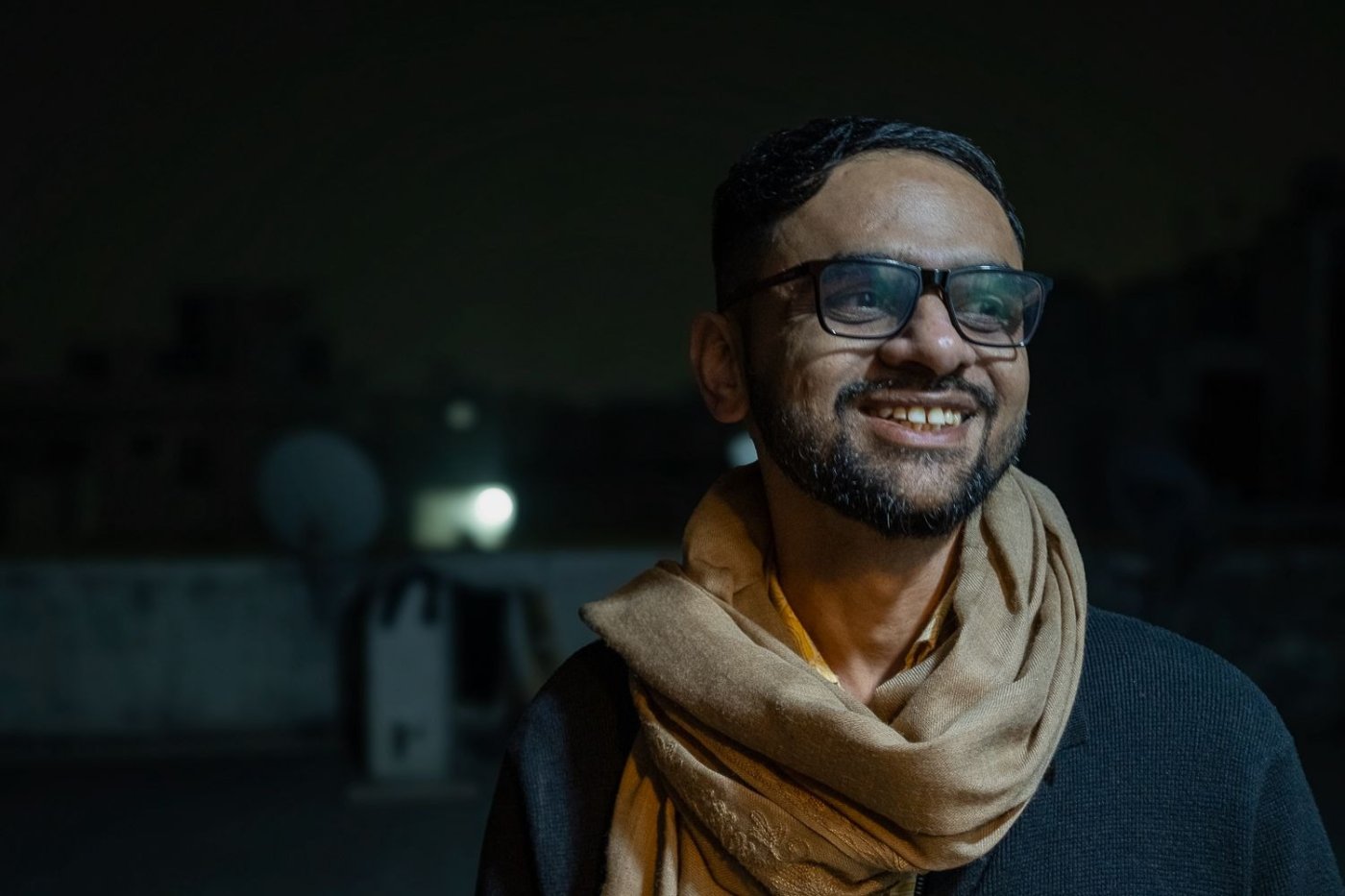
I found myself at a loss for words after the Supreme Court denied Umar Khalid bail in a UAPA case connected with the Delhi riots.
I have been asking the same question again and again: Why has BJP’s Kapil Mishra, who said, “Till Trump is here we will go peacefully, but after that, we will not listen to you (police) if the roads are not cleared...”, not been arrested?
Mishra is now a cabinet minister in the BJP government in Delhi. Anurag Thakur, who shouted “Goli maro saalon ko” (shoot those opposing the Citizenship Amendment Act, 2019), was a former union minister and continues as a BJP MP.
I’m a Kashmiri law student who was detained under the UAPA— the Unlawful Activities (Prevention) Act (UAPA) and the PSA (Public Safety Act), and spent over two years in prison in connection with the case before I was granted bail in the UAPA case, and the PSA order against me was quashed.
I have been labelled a “white-collar terrorist”, and even after four years, I continue to carry that tag. My case is still pending in court. With each hearing, I hope a witness will appear, and the case will move toward closure. Yet every time, I return disappointed, clinging to the hope that something positive will happen on the next date. In this way, the courts have turned the very process of justice into a form of punishment.
My bail conditions restrict me from leaving the court’s jurisdiction or changing my address. The conditions require me to inform the court about my phone. To travel outside Jammu and Kashmir, I must seek prior permission from the court—only then am I allowed to travel.
While denying bail to Umar and Sharjeel Imam, who have been jailed for more than five years without trial, the Supreme Court granted bail to five others, who were jailed for nearly six years without trial.
How can we overlook the court's stringent bail conditions? While some are routine—such as not leaving the jurisdiction, and appearing before the police as required—others include prohibitions on participating in rallies, accessing social media, and circulating pamphlets.
In the name of granting them the “right to bail,” almost every other right has been taken away. What this bail offers is only physical freedom, while fundamental rights remain suspended. The right to speech and expression is curtailed. The right to participate in peaceful protests is taken away. Even social media, now an essential space for expression, has been placed off-limits.
So the question is: what is this freedom really meant for? To move from a confined prison to open air prison?
The Supreme Court, while denying bail to Umar and Sharjeel, appears to have gone against its own principle of “bail is the rule, jail is the exception.”
In this 142-page judgment on bail, I found no reference to two important decisions authored by Justice Pardiwala—Javed Gulam Nabi Shaikh vs State of Maharashtra and Sheikh Javed Iqbal vs State of Uttar Pradesh—both bail-related cases under the UAPA.
In both cases, the court held that Article 21—the fundamental right to life and liberty—applies regardless of the nature of the offence, and that the prosecuting agency should not oppose bail merely on the ground of the seriousness of the crime when it lacks the capacity to ensure a speedy trial.
The court further emphasised that the foundational principle of criminal jurisprudence—that an accused is presumed innocent until proven guilty—cannot be lightly disregarded, no matter how stringent the penal law may be.
The bail order concerning Umar Khalid and Sharjeel Imam is a tragedy for justice. It has only widened the distance between the justice system and the people it is meant to serve. As matters stand, under the Supreme Court’s order, they must now wait another year before they can even apply for bail.
The court effectively set aside the well-established doctrine of delay in trial. It categorically stated that this doctrine would not apply in their case, but did not clearly explain why. One way or another, the intention is to keep Sharjeel and Umar behind bars.
This raises a troubling question: why are individuals who played an active role in instigating violence during the CAA protests free, while those who spoke of holding the Constitution in their hands remain in jail?
Both Sharjeel and Umar have expressed happiness for those who were granted bail, but they have also expressed disappointment that their own bail applications were denied. Umar Khalid’s words—“Good, good… aa jana. Ab yehi zindagi hai”—keep playing in my mind on a loop.
I had the very same thoughts when the J&K High Court rejected my bail in the UAPA case. It felt as though my chances of ever leaving prison had come to an end, as if this was now my life forever. When you are in jail, the one question that keeps returning to your mind is: “When am I leaving this place?”
Sharjeel, reacting to the bail order, said, “I remain optimistic…the truth will ultimately prevail.”
“Dil na-umeed to nahin, naakaam hi to hai
Lambi hai gham ki shaam, magar shaam hi to hai,” Urdu poet Faiz Ahmed Faiz wrote.
“The heart is not hopeless; it is merely defeated. The evening of sorrow is long, but after all, it is just an evening.”
You keep working, talking, and going about your daily routine, but this thought keeps playing in your subconscious while you are in prison.
Nobody wants to stay in that place. You are away from your family, with no privacy, no favourite food, no friends, no outings. Just strangers—people who, like you, want to get out of prison.
One of the inmates once told me, “Main pagal ho gaya hoon roz roz inke chehre dekh kar”—I’ve gone mad seeing the same faces every single day. He just wanted to see new faces.
Even talking to each other feels boring. When you spend a long time in jail, you get to know everyone so well that words stop being necessary. Silence slowly takes over.
Raqif Makhdhoomi
Guest Edit
Editor’s note: Raqif Makhdhoomi is a law student from Kashmir. He was detained under the UAPA and the PSA, spending over two years in jail. He was granted bail in November 2022. Immediately after that, a PSA order for preventive detention was issued against him, which was quashed in August 2023. He is accused by the J&K police of running an online blog, which allegedly ran a smear campaign and prepared a “hit list” of prominent personalities in Kashmir. A judge, while granting bail to his co-accused, said the police had produced no evidence against them.