
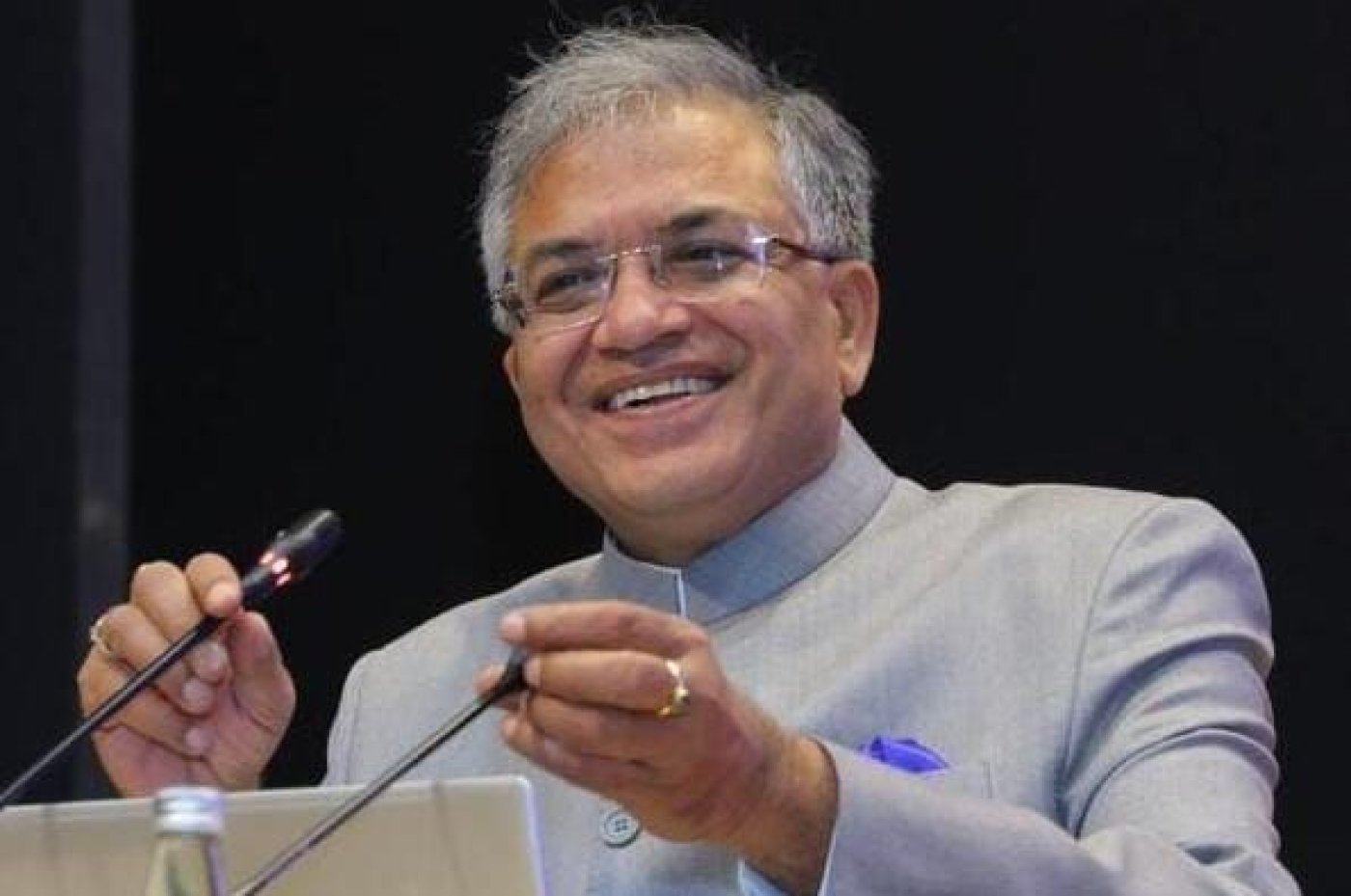
Bengaluru: It is now clear that India’s chief election commissioner (CEC), Gyanesh Kumar, has breached his constitutional duties and presided over a systematic erosion of the Election Commission’s independence, with decisions that benefit the ruling Bharatiya Janata Party (BJP). Evidence of a hostile takeover has accumulated for at least eight years, even before Kumar, but we now know its inner workings better.
Recent damage-control attempts after the latest revelations have made the Commission’s internal breakdown harder to ignore. The central issue is no longer whether its independence is under threat, but whether the safeguards needed to protect the right to vote can be restored.
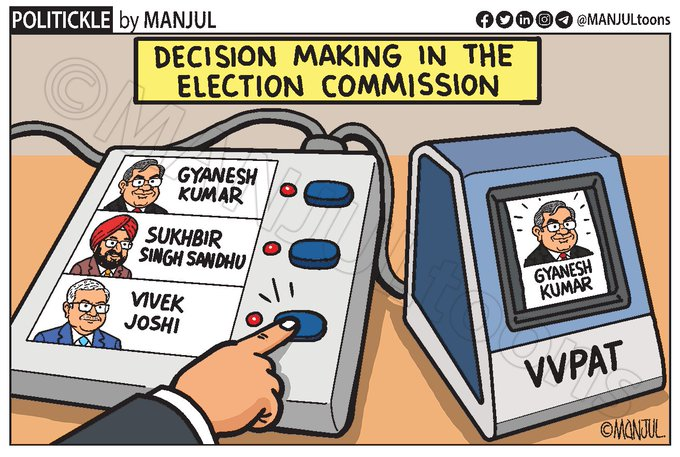
A major investigative revelation from The Indian Express went beyond finding that Kumar’s fellow commissioners, Vivek Joshi and Sukhbir Singh Sandhu, repeatedly objected to Kumar’s “unauthorised, illegal” decisions to add new voters, delete names, and launch the disastrous and traumatic special intensive revision (SIR) of electoral rolls, with more than 133 million now excluded. To me, the Express investigation's key revelation was the attempt to take over the software controlling India's decentralised electoral database and move it to Delhi, where voters can then be added or deleted.
It is not an exaggeration to say the government, or more accurately, the BJP, controls the CEC and can choose—to some extent—its voters and jettison the rest. We are now told there will be an independent audit of the flawed and biased software used to delete or add voters and bypass local officials. Don’t hold your breath because it is also plain that the ruling party, through its agents in the Commission, has created a backdoor it is unlikely to give up so easily.
The BJP and Hindu groups have repeatedly rallied to the Election Commission’s defence. On September 28, 12 BJP chief ministers publicly backed the Commission amid allegations of internal dissent, while Hindu organisations held protests in support of the SIR.
A government-ordered takedown of the cartoon below from Instagram raises further questions about official efforts to contain scrutiny of the Commission.
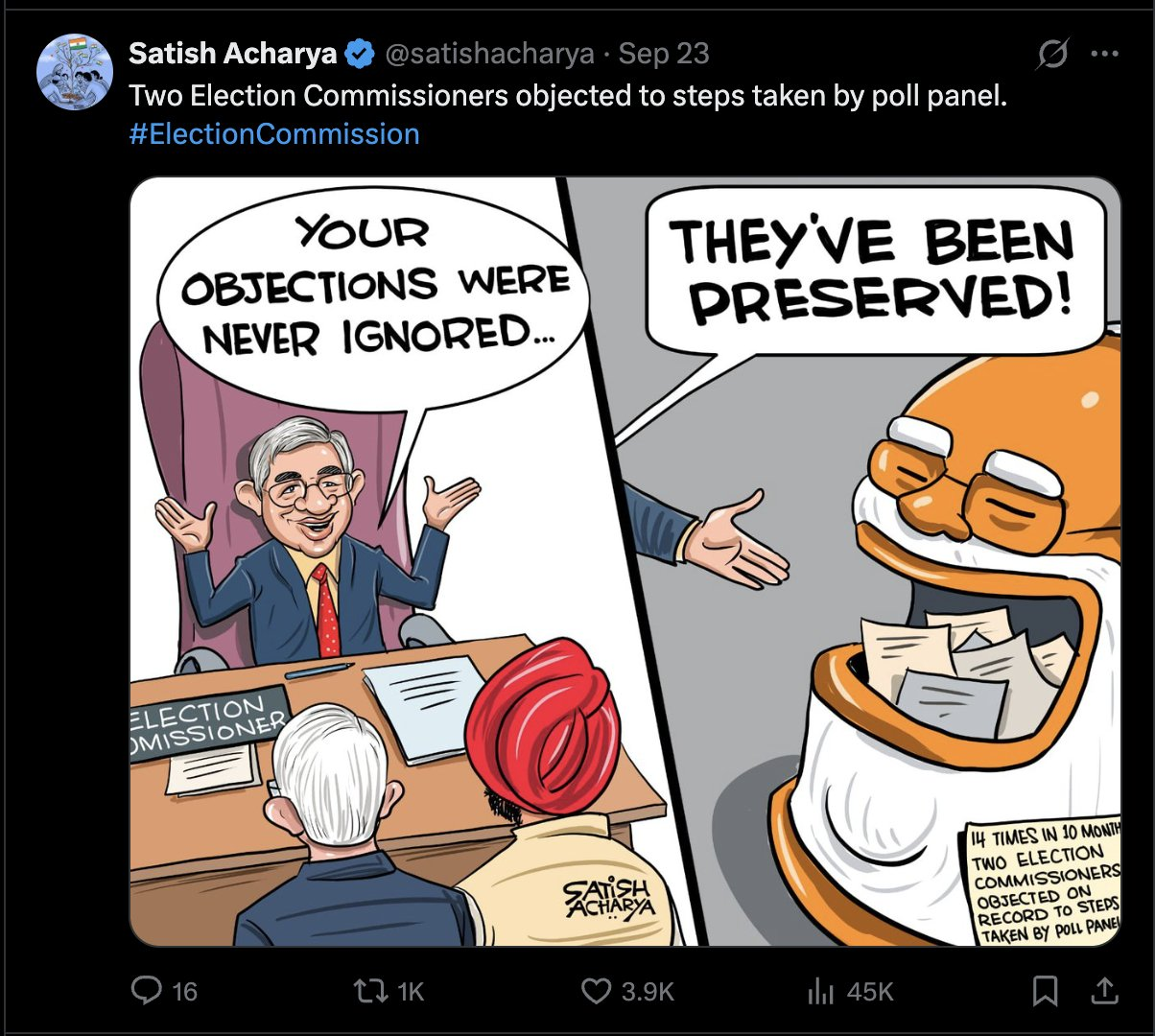
The Instagram handle of another cartoonist, Satish Acharya, was blocked on government orders. Here is one of his recent cartoons about Kumar and the Election Commission:
The Commission’s declaration that already harried block-level officers (BLOs) will now come to voters’ homes is no more than a fantasy meant to soothe outrage. For the marginalised or dispossessed in particular, the promise means nothing: Even if BLOs reach them, millions nationwide have no papers or proof of acceptable identity or that they voted in 2002. As Article 14 managing editor Betwa Sharma found in so-called re-enrolment camps running in Delhi, Muslims, especially, live in constant fear of losing home, country & freedom.
The Commission has also refused to rescind the dubious election in West Bengal, where 3.73 million voter appeals against deletion remain pending. At the current rate, it will take more than 12 years to address them all. Of the 120,000-odd decided, about 92% of appeals were successful, underscoring the travesty of justice. The only way to restore the credibility of the election process appears to be Kumar’s resignation and scrapping the SIR. Getting the BJP’s claws out of the Commission is a harder task.
And don’t look for succour from the Supreme Court, where a bench led by Chief Justice Surya Kant allowed the SIR to go ahead, even though it was evident that millions would be deprived of their constitutional right to vote. On 24 April, Justice Joymalya Bagchi (in line to be Chief Justice) on the same bench suggested that thousands whose names were struck off in the West Bengal SIR could vote next time. On 27 May, the Supreme Court held that the SIR did not detract from the “constitutional imperative of free and fair elections”. The Chief Justice’s latest intervention came on 26 September, when he declined an urgent hearing for two by-polls in that state, saying, “These are only by-elections.”
The illogical processes of the SIR appear to subject ordinary voters—even army generals, diplomats and ministers—to the same arbitrary demands for documents, forcing millions to scramble for papers, queue and plead for inclusion. Yet Kumar has provided an escape hatch for the influential and the famous.
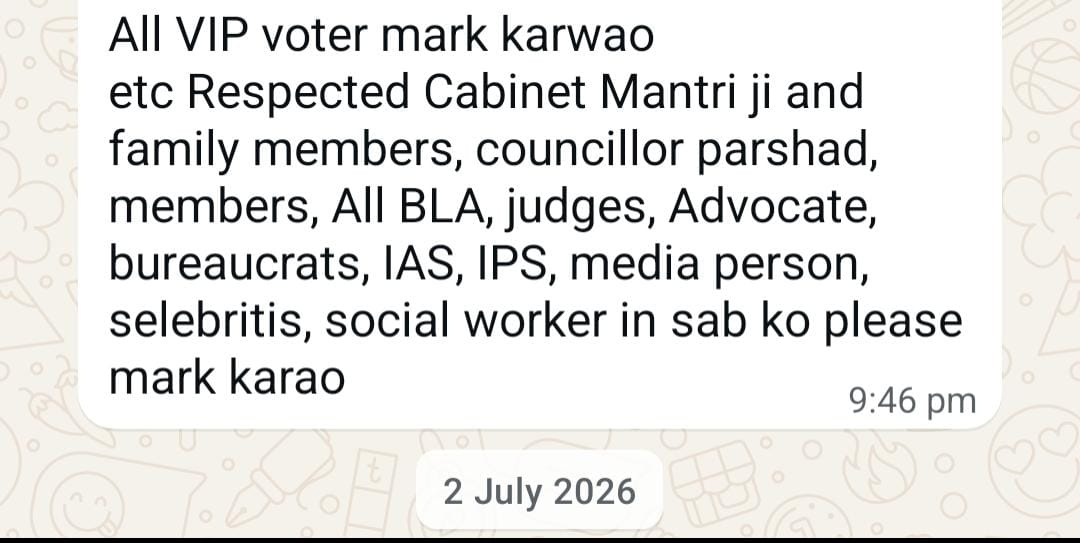
The Reporters’ Collective revealed how the Commission bypassed its own SIR rules to grant “VIPs” special treatment, with orders sent from Delhi over WhatsApp. Meanwhile, The Economic Times reported that divisions within the Commission had stalled the annual revision of electoral rolls to include 18-year-olds—Gen Z, the generation whose protests shook the government—missing its May-June announcement deadline.
While the specifics of the operation to sweep away checks and balances and remake a once decentralised and independent Election Commission into one man serving the government have emerged, the contours, effects, and evidence of the takeover have been clear for some time: tampering with electoral rolls; the sabotage of the voting process; and the manipulation of the counting of votes.
In October 2025, before the launch of the SIR, we reported—building on the work of other independent journalists and media—how these three fault lines appeared to be fuelled by partisan misuse of India’s voting system and its increasingly opaque operation by an Election Commission granted legal immunities by the government of Prime Minister Narendra Modi. There were allegations from different corners of the country of systematic manipulation of electoral rolls favouring the BJP and its allies, for instance, in Kerala, Delhi, Haryana, Maharashtra, West Bengal, Karnataka and Bihar.
Removing Checks & Balances
In 2023, a research paper by Sabyasachi Das, an assistant professor of economics at Ashoka University, found evidence that potential “voter manipulation” helped the BJP win the 2019 Lok Sabha election. The Modi government sent Intelligence Bureau officials to question Das. The university distanced itself from the paper, and Das resigned.
In August 2025, Poonam Agarwal, the investigative journalist who first uncovered and tracked voting mismatches over the previous six years, told us how the Election Commission’s embrace of secrecy was imperilling free and fair elections. What she found in 2018, 2019, and 2024—state and Parliamentary elections—was this: there were more votes than voters.
Remember the BJP slogan, abki baar, 400 paar? This time, over 400. The BJP got 240. After those elections, Agarwal found at least 140 Lok Sabha seats where electronic voting machines recorded more votes than were polled.
The Election Commission initially released turnout percentages but withheld the absolute number of votes polled, publishing them weeks or months later, sometimes after public or court pressure. Former CEC S Y Quraishi questioned the delay, telling Dainik Bhaskar in May 2024 (translated by The Wire) that the data was available in real time. “To this day, we do not have an answer as to why these mismatches are happening,” said Agarwal. “The Opposition started looking into the matter primarily during the 2024 Lok Sabha polls.
A July 2024 report from Vote For Democracy, a civil society group of retired civil servants and academics, found a mismatch of nearly 46 million votes between turnout figures released on polling day and revised data published days later. It estimated that this discrepancy could have helped the BJP-led NDA win 79 additional seats where victory margins were smaller than the mismatch.
Agarwal’s right-to-information (RTI) requests for the data were resisted or ignored. The EC also refused to disclose the names of 6.5 million voters removed from Bihar’s rolls during the SIR, and repeatedly refused machine-readable voter lists, limiting scrutiny of potential errors.
Over the years, the EC has weakened other checks and balances, including by restricting public access to election footage and cutting its retention period from as long as a year to 45 days, after which it can be destroyed if no election petition is filed. It has also failed to act decisively on complaints against BJP leaders, especially Modi, over communal speeches and inducements to voters, despite its own rules prohibiting such conduct.
Control Through Selection
One major reason for the CEC's confidence and growing brazenness is how he and his fellow commissioners are appointed: by a committee that comprises the Prime Minister, the home minister (or a cabinet minister) and the leader of the Opposition, which means the majority is with the government, which can and has subverted the process.
In October 2024, documents that Suchak Patel, one of our reporters, obtained via RTI revealed how changes to the selection process of election commissioners enabled hasty overnight appointments with little scrutiny.
For instance, Patel found that 10 minutes before a March 2024 meeting to appoint two election commissioners to the Election Commission, the selection panel received a shortlist of six names. A longlist had been sent to them only the previous night: it had 212 names. The selection meeting proceeded despite the apparent paucity of time—for the leader of the Opposition at least; for the other two, the final choice was presumably their first—to assess the candidates. Two candidates were picked, their names sent to the President of India, and the President signed their appointment letters, which were issued hours later.
In November 2022, senior bureaucrat Arun Goel's sudden voluntary retirement from the service and his near-instant appointment as election commissioner the same day sparked controversy and a challenge in the Supreme Court. This led the Court to form a committee, including the Chief Justice of India, to oversee such appointments and ensure the Commission was insulated from political interference. In 2023, Modi’s government amended the law, replacing the Chief Justice.
Now, even the facade of a full Commission has been discarded. The Express reported that Kumar’s colleagues were kept out of decisions 14 times in the last 10 months. All three commissioners are meant to decide jointly; if they disagree, a majority prevails. “If two [election] commissioners say that they were bypassed, they are not a dissenting minority,” former CEC Quraishi wrote last month. “They constitute the statutory majority.”
Was the public at large aware of the slow disintegration of their electoral rights? Only some were, and only in a vague and academic manner. Public trust in the Election Commission fell over this decade, and the V-Dem Institute's Global Electoral Democracy Index, which measures how free and fair elections are globally, calculated that India’s score plummeted from 0.62 in 2014 to 0.38 in 2025, with 1 representing the highest level. Yet, the assumption always remained that the people's will would—somehow—prevail. We can no longer make that assumption.
A sliver of hope remains. More Indians than ever before are now aware of the Election Commission's hostile takeover; protests are mounting, and more can connect the dots and conclude that—unless they do something about it—their vote may count for nothing.
(Samar Halarnkar is the founding editor of Article 14.)
Get exclusive access to new databases, expert analyses, weekly newsletters, book excerpts and new ideas on democracy, law and society in India. Subscribe to Article 14.