
Leh, Ladakh: What Nawang Zotpa, a 48-year-old manager of a grocery store, didn’t know was that he was pushing the stretcher, with his son lying on it, to the morgue, not the operating theatre.
After hearing that his son had been shot in a protest on 24 September 2025 in Leh, a Buddhist city in the breathtaking, seemingly boundless mountains and valleys of the cold, arid Himalayas, Zotpa had rushed to the hospital, which was filled with the injured. It took him about 20 minutes to find his son, being wheeled along on a stretcher by two young nurses. Believing they were taking him to the operating theatre, he helped push the stretcher down the corridor.
He never once imagined that his son was dead. Even if the protest had turned violent and the police had fired, he thought, they would have aimed for the legs, not to kill.
He clung to this certainty as he rushed to the hospital.
Only when he entered the morgue and saw two other bodies did he realise that his son was dead, and that he had pushed the stretcher carrying him there himself.
“The pain was too much,” said Zotpa, soft-spoken, in a blue baseball cap, his face lined and tired. He was a man of a few words, more often matter-of-fact than sentimental.
But as he drove past the place where his son had been shot, pointing it out, and then recalled the scene at the hospital, he was overcome by how a few minutes had changed the life he and his son had known.
“I don’t know if I cried or not, but the pain was too much,” he said. “I remember thinking, 'What is going on? Where have I brought my son? This must be a mistake.’”
‘Our People Have Suffered A Great Injustice’
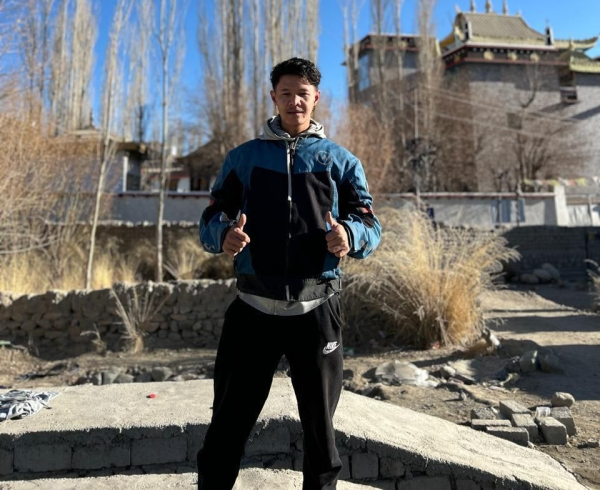
Stanzin Namgyal was 23 years old. He wasn’t particularly interested in school, dropping out after class 11 to start working at a motorcycle rental shop. He loved cricket and won trophies in local matches. He also loved motorbikes and dreamed of running his own showroom one day.
He was one of the four civilians killed after protests demanding statehood and stronger constitutional protections for Ladakh’s land, culture and environment turned violent on 24 September, with clashes between protesters and the police in the centre of the city.
The decision to use lethal force against the protesters has been questioned as disproportionate, with allegations from civil society groups—the Leh Apex Body and the Kargil Democratic Alliance—that AK-47 assault rifles were used.
“Our people have suffered a great injustice,” Chering Dorjey Lakrook, chairman of the Leh Apex Body, said on 4 September. “Here, they have fired AK-47 indiscriminately on unarmed people.”
Following widespread public outrage over the deaths of Namgyal, Tsewang Tharchin, 46, a former Ladakh Scouts soldier and Kargil War veteran, Jigmet Dorjey and Rinchen Dadul, both in their twenties, Prime Minister Narendra Modi’s government set up a judicial inquiry commission headed by retired Supreme Court judge Justice B S Chauhan to probe “the circumstances leading to the serious law and order situation, the police action and the resultant unfortunate death of four individuals”.
Article 14 cannot independently verify the use of AK-47 assault rifles.
Neither Ashish Kundra, Ladakh’s chief secretary, nor the director general of police (DGP) Anand Jain offered a response.
Kundra said he was not in office last September and could not comment on the judicial inquiry. Jain, appointed this year, ended the call after hearing this journalist’s query and did not respond to further calls.
A Judicial Inquiry
As the first anniversary of the civilian killings approaches, Ladakhis, including family members of the deceased, are furious that the judicial commission has still not released its findings, and there are no final answers on what happened, who ordered the firing, or where accountability lies.
At a press briefing in March, joint secretary to the judicial inquiry commission Rigzin Spalgon said the administration had examined a large number of affidavits submitted by the public and officials and would record statements from civilians.
Spalgon told Article 14 that the commission had recorded and submitted all statements from civilians and police officers.
Mohan Singh Parihar, the judicial secretary of the commission, a retired district and sessions judge, told Article 14 that the “inquiry was almost complete” and Justice Chauhan was “preparing” the report.
Justice Chauhan told Article 14, “We will do it as soon as possible.”
Judicial inquiries into police killings in India can take years and sometimes decades, and even when they finally conclude, justice is elusive.
The families of victims would have spent years fighting for justice, grown old or even passed away. The errant officers too would have grown old or died. The delay itself becomes a form of impunity. Even when inquiries are eventually concluded, police officers are rarely held accountable.
In Nakodar, Punjab, for instance, four Sikh youths were killed in a police firing in 1986. A commission found the firing unjustified within nine months, but it tabled its report only 15 years later, and a missing section is still being traced 40 years on. Only one parent of the four victims is still alive.
In Kolkata, 13 people were killed in a 1993 police firing. The inquiry began 18 years later and found the firing unwarranted, recommended disciplinary action, but no action followed. The report became public 33 years after the killings.
The Use Of Lethal Force
At the same time, the repeated use of lethal and disproportionate force against protesting citizens, after a protest turns violent, or the police claim it has, raises serious questions about how the police respond to dissent under Modi and the ruling Bharatiya Janata Party (BJP).
In many cases, it remains unclear why a peaceful protest turned violent, who triggered the violence, and whether the government or its supporters deliberately planted individuals to derail the protest.
Meanwhile, it is innocent protesters and policemen who are left injured, and peaceful protesters who face criminal charges.
During the recent protests in Delhi against a medical entrance exam paper leak and for the resignation of the education minister, police fired pellets at protesters, causing serious injuries, yet there has so far been no accountability for the officers involved.
In Bihar, a police constable was suspended for firing an AK-47 into the air during protests over the same leak, but such quick action is rare.
It came amid global coverage of the State’s use of force, but also, crucially, the public humiliation by Gen Z of a prime minister who, for more than a decade, had appeared infallible: a beloved strongman who enjoyed the subservience of much of the mainstream media and his supporters while silencing dissent.
‘The Lives of Ladakhis’
The difference is that Delhi is the national capital, and events there, as well as in Bihar, receive far more attention than those in remote Ladakh.
As Dorjey, chairman of the Leh Apex Body, put it, “The lives of Ladakhis are not so cheap. We are all Indians. Everyone should be treated equally.”
In his affidavit to the judicial inquiry commission on 28 November 2025, Stanzin Namgyal’s father, Zotpa, said he saw a bullet injury on his son’s left chest and bullet injuries on the bodies of the others deceased.
Zotpa wrote that he had been told the standard operating procedure was shooting at the legs, “but this suggests that the firing incident on that day was shoot to kill instead of a warning shot.”
In her affidavit to the judicial inquiry commission on 27 November 2025, Thinlas Angmo, the wife of Tsewang Tharchin, the Kargil war veteran, said that he was “brutally beaten” before he was killed with a “close range shot in the posterior side (enter) and out from right chest (exit).”
“No personnel responsible for opening fire have been interrogated, nor have ballistic and forensic details been disclosed for the heinous act of Ladakh police and CRPF personals [sic],” she wrote.
Mohd Shafi Lassu, a lawyer and a member of the Leh Apex Body, said the police did not first try non-lethal measures to control the mob, such as tear gas, water cannons, firing below the waist, or using pellet guns, which can cause serious injuries without being usually fatal.
“There were unprovoked, indiscriminate firings with AK-47s. The firing was illegal, murder, culpable homicide,” said Lassu. “In Delhi, where the use of pellet guns was suspected, the whole country was shaken. But in Ladakh, there were cold-blooded murders with AK-47s, but no Indian media is covering this.”
While leading a candlelight march on 24 August in Leh to remember the four dead civilians, Ladakhi engineer and environmentalist Sonam Wangchuk said, “The State has committed atrocities” and that a former soldier was “killed brutally.”
The Past Year
The protest and ensuing violence were near Shaheed Park, where Wangchuk had been on a 14-day hunger strike.
He was detained for six months under the National Security Act, and 87 people were booked in connection with the violence, many of them young men who had taken part in the protests.
The Modi government has directly administered Ladakh since August 2019, when it revoked the semi-autonomous status of the state of Jammu and Kashmir (J&K), split Ladakh from J&K, and designated both as union territories.
The government said the mob, “incited” by Wangchuk's “provocative statements”, set the offices of the BJP and the autonomous hill council on fire, torched a police vehicle, and attacked security personnel, injuring 30.
“In self-defence,” the government said, “police had to resort to firing, in which unfortunately some casualties were reported.”
Following enormous pressure by civil society groups, the Modi government revoked Wangchuk’s detention in March 2026, and the administration has said it would withdraw cases against 25 people.
After the Supreme Court’s decision to quash all cases against those who protested the medical entrance exam paper leak in Delhi, except those with criminal antecedents, Ladakhi activists are also seeking the withdrawal of all cases.
In talks scheduled with the ministry of home affairs on 9 September, they want compensation for the deceased and injured in the 24 September protest, withdrawal of all cases, and the findings of the judicial inquiry.
If their demands are not addressed, they have warned of further protests in Ladakh.
“If after one year, you are not giving the findings, no relief, it becomes irrelevant,” said Lassu, the lawyer. “You are just fooling people.”
‘Who Ordered The Shooting?’
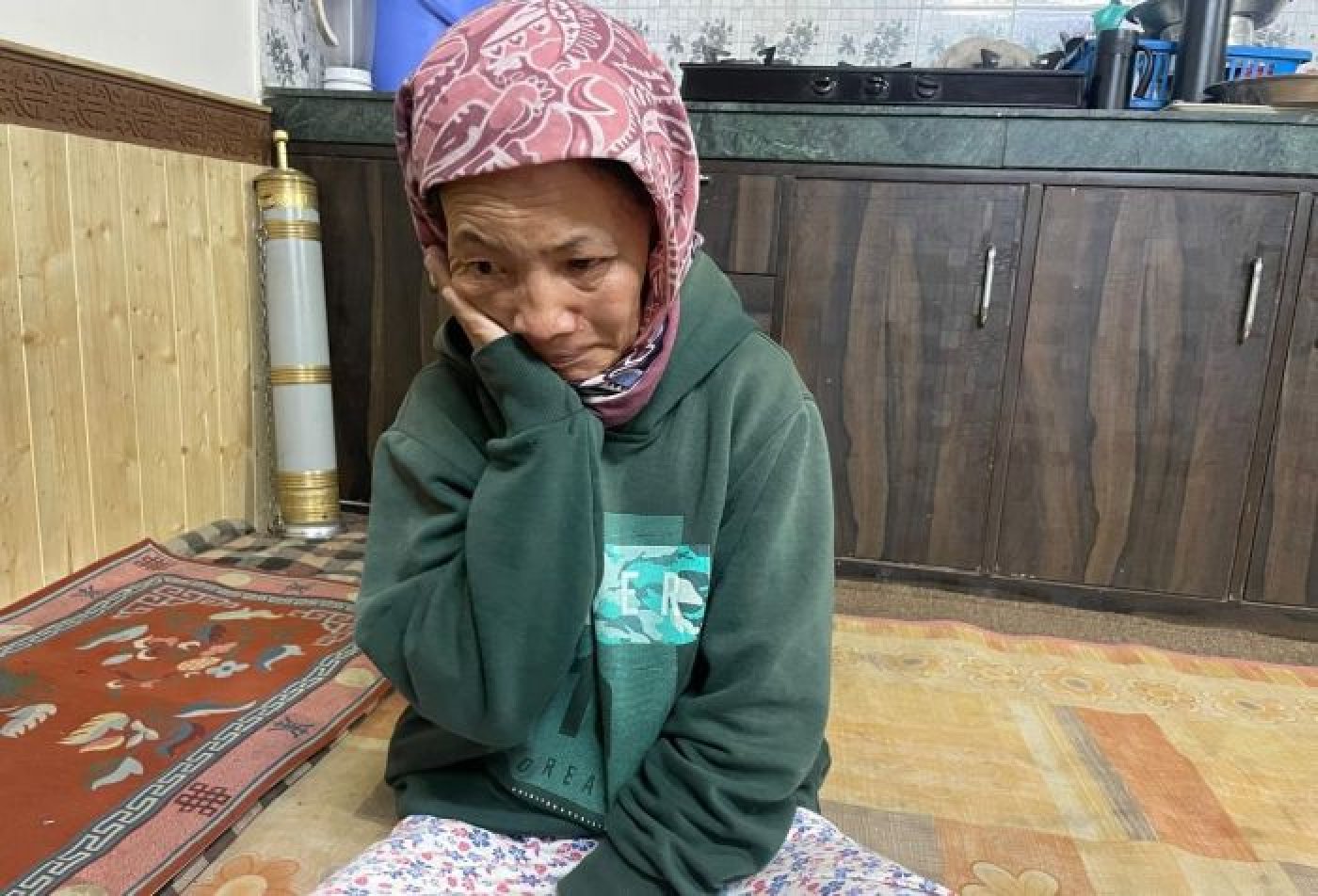
At home, less than 5 km from where Stanzin Namgyal was shot, Rigzin Chondol, his mother, a slight woman seemingly swallowed by an oversized sweatshirt, was raw with anger and grief.
Tears made their way down her face, while the 46-year-old school teacher asked why the police had resorted to shooting.
“Why did they not use tear gas or water cannons? Why did they shoot?” she said. “More than any compensation, I want to know who ordered the shooting. I want justice.”
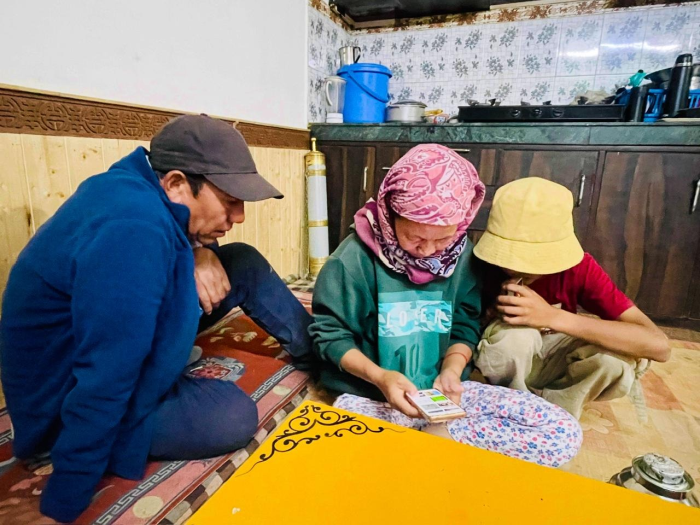
For many months, Chondol, who teaches kindergarten at a school run by the army, felt she could not go on. Yet she carried on for the sake of her other two sons, an 18-year-old and a 10-year-old, who sat beside her, shuffling UNO cards.
Many times during the conversation, Chondol returned to those two hours—the two hours in which, she said, her life changed forever.
She had called her son and told him to stay home. But he went to see the protest because his friends told him to, because in this city, in one of the most beautiful yet remote parts of the country, it was not often that something happened that got young people excited.
“I had just spoken to him at twelve o’clock,” she said over and over again. “When I came home, they told me he was dead. My life was shattered.”
“I had just spoken to him at twelve,” she said.
Sitting in a room that doubled up as a kitchen and living room, with Namgyal’s cricket trophies neatly arranged on a shelf on one side, Zotpa said their family was not very well off and that he had hoped their eldest son would soon start contributing to the household.
Chondol said it had never really mattered to her that her son had dropped out of school and was more earnest about cricket and bikes. And now it seemed inconsequential.
What mattered was that he was good and decent and that he was someone they could depend on in their old age.
“They have taken away my past, my present and future,” she said. “My heart is broken.”
Demanding To Be Heard
Ladakh is a vast region of around 59,000 sq km—roughly the size of Croatia or 1.5 times Switzerland—with contested mountainous borders with China and Pakistan. It has only about 300,000 people, most of whom are from tribal communities recognised by the Constitution as socially and economically disadvantaged.
Heavy snowfall isolates Ladakh for almost six months each year, making unemployment and limited opportunities, especially for young people, major concerns. Most depend on small-scale farming, tourism or the army.
This is the landscape where the Kargil War was fought against Pakistan in 1999 and where Indian soldiers famously fought to the last man and last bullet against a better-equipped Chinese army at Rezang La in 1962.
Unlike J&K, where militancy has created a fractious relationship between the people and the army, Ladakh has a far more cohesive one, which explains the outrage over the killing of a Kargil War veteran in last September’s violence.
Leh is 65% Buddhist while Kargil is 65% Shia Muslim.
The BJP has sought to exploit this divide through religious polarisation, largely unsuccessfully.
When Ladakh became a union territory after being separated from J&K in August 2019, many Buddhists welcomed the move hoping for greater attention from Delhi. Instead, Buddhists and Muslims have increasingly come together to demand statehood, stronger political representation and protection of land and jobs.
For years, Ladakh’s political and social leaders have negotiated with the Modi government for statehood with an elected legislature, Sixth Schedule status granting greater constitutional autonomy over land and resources, a dedicated public service commission and a second parliamentary seat for Kargil.
The government has agreed to higher reservations in government jobs, greater representation for women in hill councils, recognition of Bhoti and Purgi as official languages and a more powerful elected body with greater control over local governance, administration and development. It has also offered constitutional protections, making it harder for the Centre to change decisions affecting local interests.
But its refusal to grant statehood or Sixth Schedule status has fuelled protests since last year.
‘They Called A Soldier An Anti-National’
On the outskirts of Leh, in a house bathed in sunlight, with massive, barren mountains stretching across the horizon, two women sat huddled together, both crying: the wife and sister of Tsewang Tharchin, the 46-year-old soldier who was killed on 24 September.
A year later, Thinlas Angmo, his wife, a 41-year-old pharmacist, a government employee, and mother of four, remains deep in grief, but grief has given way to rage.
“They killed an Indian soldier. Then they put a case against him. Then they called him an anti-national and a terrorist,” she said. “And now one year has gone by, and they have held no one responsible for his death. Not one word from them.”
“Who shot my husband? Who gave the order to shoot?” she said. “We need to know.”
As if the State’s killing of her husband was not enough, the case registered against protesters following the violence was complicating her insurance claim.
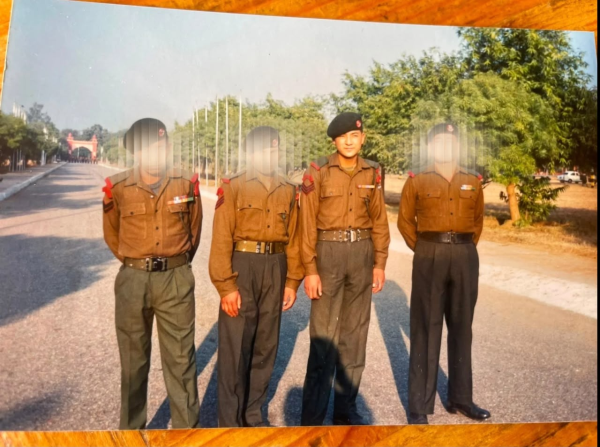
Tharchin served with the Ladakh Scouts, a regiment whose soldiers are recruited mostly from the local population and trained for high-altitude and mountain warfare.
He fought in the Kargil War and later served four times on the Siachen Glacier, one of the highest and most inhospitable places where soldiers are stationed, volunteering for two of those deployments.
When he was shot and wounded during the Kargil War, Angmo said he asked to be sent back to the front after just 15 days of recovery.
Theirs was a love marriage.
But the six-foot-tall soldier was more than a brave man in a uniform. He was also a devoted father, and he took early retirement from the army at 35 as a hawaldar. The couple had worked out that one of them would need to stay home to care for their children. As a government employee, she earned more and would also receive better post-retirement benefits.
And so, he stayed home with the children while running a small clothing store on the side.
Tharchin’s father had also served in the army as a Ladakh scout, retiring as a subedar major.
Tharchin’s sister, who asked that her name not be published, said after the shooting last year that her ageing father’s feelings towards the army and the country had soured.
“His heart is broken,” she said. “He says they don’t even shoot criminals like this.”
Growing up on stories of Kargil and his father and grandfather’s army legacy, Angmo said her 18-year-old son had once been determined to join.
Now, he had completely abandoned the idea.
“He says,” Angmo said, “‘Mama, I want to become a judge because I want justice for my father and for people who don’t get it.’”
As she served noon chai, the region’s traditional salty tea, and small orange apricots, Angmo wondered if the change in her son also reflected what his father had come to care about, and why he had taken to the streets on 24 September to protest for statehood and constitutional protections for Ladakh.
“I want you to write that he cared very deeply for Ladakh and for the rights of the Ladakhi people,” she said. “And, like always, he was willing to sacrifice his life.”
(Betwa Sharma is managing editor of Article 14.)
Get exclusive access to new databases, expert analyses, weekly newsletters, book excerpts and new ideas on democracy, law and society in India. Subscribe to Article 14.